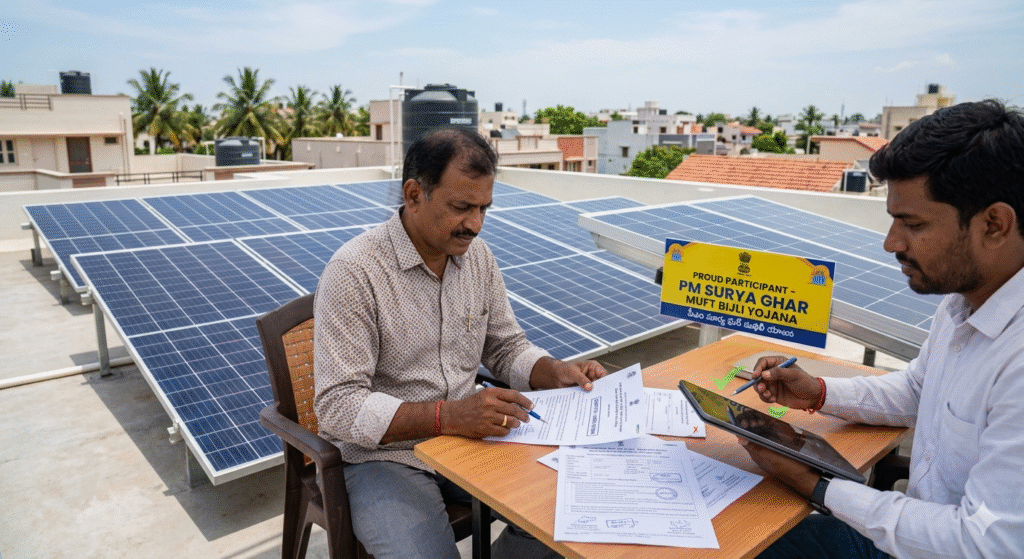
The PM Surya Ghar Muft Bijli Yojana has made rooftop solar more accessible for homeowners across India. In Andhra Pradesh, interest in residential solar systems has increased rapidly because of:
- Rising electricity bills
- Government rooftop solar subsidies
- Net metering benefits
- Growing awareness of renewable energy
But many homeowners assume that once they install solar panels, subsidy approval is automatic.
It’s not.
In reality, subsidy applications can get delayed—or rejected entirely—because of documentation errors, non-compliant systems, or approval mismatches.
And here’s the uncomfortable truth:
Many rejections happen not because homeowners are ineligible, but because they don’t understand the process properly before installation begins.
For homeowners working with providers like VMJ Solar Solutions, understanding these common mistakes can prevent expensive delays and frustration later.
Why PM Surya Ghar Subsidy Compliance Matters
The PM Surya Ghar scheme is linked to strict procedural and technical requirements.
Subsidy approval depends on:
- Correct documentation
- Approved vendors
- DCR-compliant solar panels
- Proper net metering approvals
- Valid installation details
Missing even one requirement can create problems.
That’s why rooftop solar installation should never be treated as just a “panel purchase.”
It’s also an administrative and compliance process.
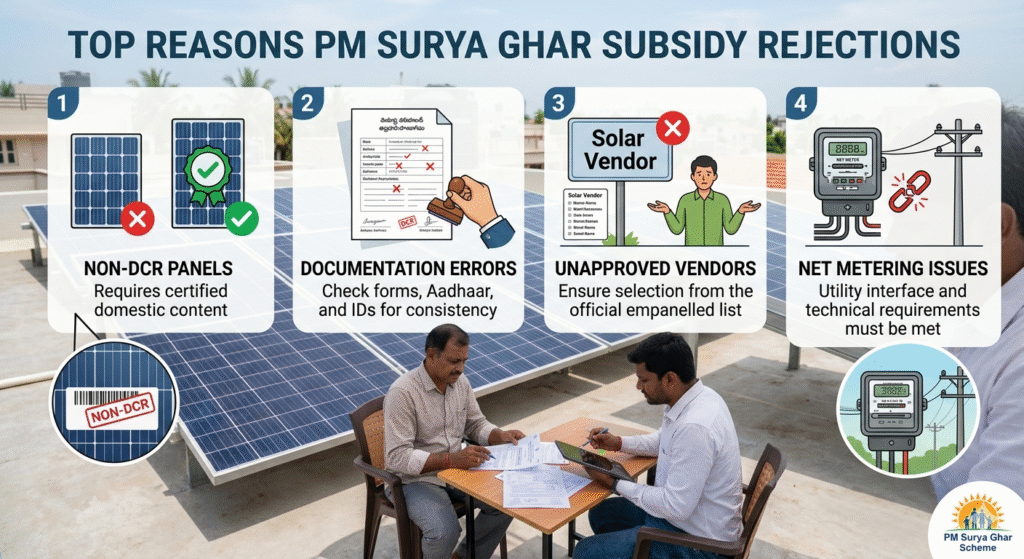
1. Using Non-Approved or Unregistered Solar Vendors
This is one of the most common reasons subsidy applications fail.
Under PM Surya Ghar:
- Installations generally need to be completed through approved vendors registered on the official portal.
Some homeowners:
- Choose cheaper local installers
- Skip vendor verification
- Focus only on lowest price
Then discover later that:
- The installer is not subsidy-approved
- The installation is not eligible for subsidy processing
Important:
Before installation, homeowners should verify:
- Vendor registration status
- MNRE compliance
- Portal approval eligibility
The cheapest installer can become the most expensive mistake.
2. Installing Non-DCR Solar Panels
Another major issue involves panel selection.
For most residential subsidy schemes under PM Surya Ghar:
- DCR (Domestic Content Requirement) panels are generally required.
Many homeowners unknowingly install:
- Non-DCR panels
- Imported cell modules
- Non-compliant systems
because they:
- Receive incomplete information
- Prioritize lower upfront pricing
- Don’t verify subsidy requirements
Result?
The system may function technically—but subsidy eligibility can still be rejected.
3. Incorrect or Incomplete Documentation
This sounds simple, but it causes a huge number of delays and rejections.
Common documentation problems include:
✔ Name mismatch
Example:
- Electricity bill name differs from Aadhaar or bank account
✔ Wrong bank details
Incorrect IFSC codes or account numbers can delay subsidy disbursement.
✔ Address inconsistencies
Minor mismatches between documents sometimes create approval issues.
✔ Missing uploads
Applications may remain incomplete if required files are not submitted correctly.
Practical reality:
Most subsidy issues are administrative—not technical.
4. Problems with Net Metering Approval
Net metering is a critical part of most residential rooftop solar systems.
Without proper DISCOM approval:
- Subsidy processing may stall
- System activation may get delayed
Common net metering problems include:
- Delayed application submission
- Incomplete electrical approvals
- Transformer capacity limitations
- Technical compliance issues
In Andhra Pradesh, approval timelines can vary depending on:
- DISCOM processes
- Local infrastructure conditions
- Documentation quality
Homeowners often underestimate how important this stage is.
5. Installing a System That Doesn’t Match Approved Capacity
This is another overlooked issue.
Subsidy approval is tied to:
- Approved system size
- Technical specifications
- Registered installation details
Problems happen when:
- Installed capacity differs from approved capacity
- System modifications happen without update
- Inverter or panel details mismatch application records
Even small inconsistencies can create verification issues during inspection.
Other Common Reasons Applications Face Delays
While the top five issues cause most rejections, other problems also occur.
Delayed Inspection Scheduling
Subsidy release usually requires inspection after installation
Poor Installation Quality
Unsafe or non-compliant installations may fail verification.
Incomplete Portal Updates
Sometimes installers fail to update installation progress properly on the portal.
The Biggest Mistake: Starting Installation Before Understanding the Process
Many homeowners:
- Compare only solar panel prices
- Rush into installation
- Assume subsidy approval will happen automatically
That’s backwards.
The smarter sequence is:
- Verify eligibility
- Choose approved vendor
- Confirm DCR compliance
- Understand documentation requirements
- Proceed with installation
Skipping these steps creates avoidable risk.
Why Andhra Pradesh Homeowners Need to Be Extra Careful
Rooftop solar adoption in Andhra Pradesh is growing quickly.
Popular searches now include:
- PM Surya Ghar Andhra Pradesh
- Rooftop solar subsidy AP
- Subsidy approved solar company
- DCR solar panels India
- Residential solar installation Andhra Pradesh
- Solar subsidy application process
As demand rises, so does misinformation.
Some installers prioritize closing sales rather than explaining compliance details properly.
That’s where homeowners need to ask sharper questions.
How to Improve Your Chances of Approval
Before installation, verify the following:
✔ Approved vendor registration
✔ DCR-compliant solar panels
✔ Correct Aadhaar and electricity bill details
✔ Proper bank account information
✔ Net metering application process
✔ Accurate system sizing and documentation
The goal is not just installing solar.
It’s installing a system that qualifies successfully.
Realistic Expectations About PM Surya Ghar Subsidy
The subsidy process has improved accessibility—but it still requires patience and accuracy.
Homeowners should expect:
- Verification steps
- Inspection timelines
- Documentation review
- DISCOM coordination
A professional installation provider helps simplify this process, but homeowners still need awareness and involvement.
Conclusion
The PM Surya Ghar subsidy can significantly reduce the upfront cost of rooftop solar installation—but approval is not guaranteed automatically.
Most rejections happen because of:
- Non-approved vendors
- Non-DCR panels
- Documentation mismatches
- Net metering issues
- Technical inconsistencies
For homeowners in Andhra Pradesh, the smartest approach is to treat subsidy compliance as seriously as the solar installation itself.
For providers like VMJ Solar Solutions, the real value lies not just in installing panels—but in helping customers navigate the complete rooftop solar process correctly from start to finish.
Because a subsidy-eligible solar system is not only about generation capacity.
It’s about compliance, accuracy, and long-term reliability.
Frequently Asked Questions (FAQs)
1. Are DCR panels mandatory for PM Surya Ghar subsidy?
In most residential cases, yes. DCR-compliant panels are generally required for subsidy eligibility.
2. Can I apply for subsidy after installation?
Usually the process must follow approved procedures and vendor guidelines from the beginning.
3. Why is net metering important for subsidy approval?
Net metering approval is often part of the rooftop solar system verification process.
4. Can documentation mistakes delay subsidy payments?
Yes. Incorrect names, bank details, or address mismatches can delay or reject applications.
5. How do I know if my installer is approved?
You should verify vendor registration and eligibility through the official PM Surya Ghar portal.
6. Does cheapest solar installation mean better savings?
Not always. Cheap installations often create compliance and long-term performance problems.