
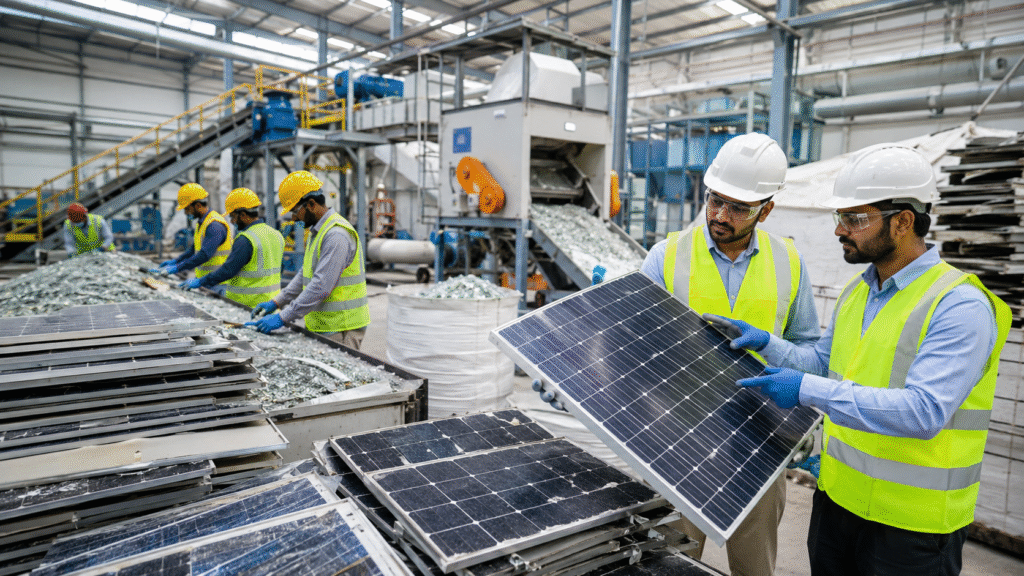
Solar energy has become one of the fastest-growing renewable energy sources in India. Across Andhra Pradesh, homeowners, businesses, industries, schools, and agricultural facilities are increasingly investing in solar power systems to reduce electricity costs and support sustainable energy goals.
Most modern solar panels are designed to last 25 to 30 years or more. While this long lifespan is a major advantage, it also raises an important question:
What happens when solar panels reach the end of their useful life?
As India’s solar capacity continues to expand, the country will eventually face a growing volume of aging solar panels that require responsible disposal, recycling, or reuse.
Rather than ending up in landfills, many components within solar panels can be recovered, recycled, or repurposed, helping support a more sustainable circular economy.
At VMJ Solar Solutions, we believe understanding the full lifecycle of solar technology is essential for responsible renewable energy adoption.
Do Solar Panels Need to Be Replaced?
Not all older solar panels need immediate replacement.
Many solar systems continue generating electricity beyond their warranty periods.
However, replacement may become necessary due to:
- Reduced energy production
- Physical damage
- Technological upgrades
- System expansion
- Severe weather events
- Manufacturing defects
- End-of-life degradation
In some cases, replacing older panels with newer, higher-efficiency models can significantly improve system performance.
How Long Do Solar Panels Last?
Most quality solar panels are designed for long-term operation.
Typical Lifespan
- 25–30 years or more
Performance Degradation
Solar panels gradually lose efficiency over time.
This process is known as solar panel degradation.
Many panels continue producing electricity after decades of operation, although output may decline compared to original performance levels.
What Are Solar Panels Made Of?
Understanding solar panel composition helps explain why recycling is valuable.
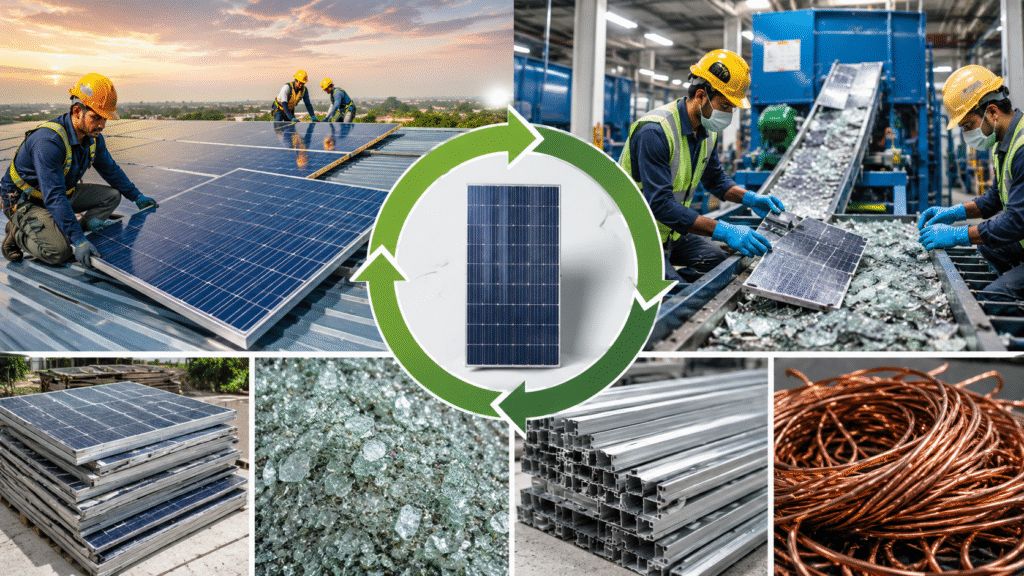
A typical solar panel contains:
Glass
Glass often represents the largest portion of the panel by weight.
Aluminum Frames
Highly recyclable and commonly recovered.
Silicon Cells
Used to convert sunlight into electricity.
Copper Wiring
Valuable conductive material that can be recycled.
Plastic Components
Used for encapsulation and protection.
Small Quantities of Other Materials
Depending on panel technology and manufacturing processes.
Many of these materials can potentially be recovered and reintroduced into manufacturing supply chains.
Why Solar Panel Recycling Matters
As solar adoption increases, so does the importance of managing end-of-life equipment responsibly.
Environmental Benefits
Recycling reduces waste and conserves valuable raw materials.
Resource Recovery
Recoverable materials can be reused in future manufacturing processes.
Reduced Landfill Burden
Proper recycling prevents unnecessary disposal of recyclable components.
Support for Circular Economy Goals
Recovered materials contribute to sustainable resource management.
Can Solar Panels Be Recycled?
Yes.
Many components of solar panels can be recycled through specialized processing methods.
Materials Commonly Recovered
✔ Glass
✔ Aluminum
✔ Copper
✔ Silicon materials
✔ Other recoverable metals
The exact recovery rates vary depending on panel design and available recycling technologies.
How Solar Panel Recycling Works
Step 1: Collection
Panels are collected from residential, commercial, industrial, or utility-scale solar installations.
Step 2: Inspection and Sorting
Panels are evaluated to determine whether they can be:
- Reused
- Refurbished
- Recycled
Panels that remain functional may be suitable for secondary applications.
Step 3: Dismantling
Technicians separate:
- Frames
- Glass
- Wiring
- Junction boxes
This allows materials to be processed individually.
Step 4: Material Recovery
Specialized recycling facilities recover reusable materials for future manufacturing applications.
Step 5: Reintroduction into Supply Chains
Recovered materials can potentially be used in:
- Construction products
- Manufacturing industries
- New energy products
- Industrial applications
The Current State of Solar Panel Recycling in India
India’s solar industry is still relatively young compared to some global markets.
As a result:
- Most installed solar panels have not yet reached end-of-life.
- Recycling infrastructure is developing.
- Regulatory frameworks continue evolving.
- Industry awareness is increasing.
With India’s ambitious renewable energy goals, solar waste management is expected to become an increasingly important sector over the next decade.
What Is Solar Panel Upcycling?
Recycling and upcycling are not the same.
Recycling
Materials are broken down and processed into raw materials.
Upcycling
Existing products are repurposed for new applications without complete material breakdown.
Upcycling can extend the useful life of solar equipment and reduce waste.
Creative Upcycling Options for Old Solar Panels
Low-Power Agricultural Applications
Panels with reduced efficiency may still generate useful electricity for:
- Water pumps
- Irrigation systems
- Farm lighting
Rural Electrification Projects
Older but functional panels may support:
- Community lighting
- Small educational facilities
- Basic power needs
Solar-Powered Outdoor Structures
Panels can be repurposed for:
- Garden lighting
- Security systems
- Outdoor charging stations
Educational Demonstrations
Schools and technical institutions may use older solar panels for training and learning purposes.
Research and Testing Projects
Engineering students and researchers often use retired solar modules for experimentation and innovation.
When Should You Replace Old Solar Panels?
Replacement may be worth considering when:
Significant Performance Decline
Energy production falls well below expected levels.
Physical Damage
Cracked glass, corrosion, water ingress, or severe structural damage is present.
Major Technology Improvements
Newer systems may produce significantly more electricity using the same roof space.
System Expansion Requirements
Additional capacity may require redesigning existing installations.
How to Dispose of Old Solar Panels Responsibly
Avoid:
❌ Dumping panels in landfills
❌ Breaking panels apart without proper handling
❌ Selling damaged equipment without disclosure
❌ Using unqualified disposal services
Instead:
✔ Consult professional solar installers
✔ Explore refurbishment options
✔ Use authorized recycling facilities when available
✔ Follow local waste management guidelines
Challenges Facing Solar Panel Recycling in India
Although the future is promising, several challenges remain.
Limited Recycling Infrastructure
The number of specialized solar recycling facilities remains relatively small.
Transportation Costs
Moving large volumes of panels to recycling centers can be expensive.
Emerging Regulatory Frameworks
Solar waste management regulations continue evolving as the industry matures.
Public Awareness
Many consumers remain unaware that solar panels can often be recycled or repurposed.
The Future of Solar Panel Recycling
The solar recycling industry is expected to grow rapidly as more systems approach end-of-life over the coming decades.
Future developments may include:
- Advanced material recovery technologies
- Improved recycling efficiency
- Dedicated solar waste management networks
- Greater manufacturer participation
- Expanded circular economy initiatives
These advancements could significantly reduce environmental impacts while supporting India’s renewable energy transition.
What This Means for Andhra Pradesh
Andhra Pradesh is one of India’s leading solar energy states.
The region has experienced substantial growth in:
- Residential rooftop solar
- Industrial solar installations
- Commercial solar systems
- Utility-scale solar projects
As these systems age, responsible recycling and reuse strategies will become increasingly important for sustainable energy development.
Businesses and homeowners planning solar installations today should consider not only installation and maintenance but also eventual end-of-life management.
Why Choose VMJ Solar Solutions?
VMJ Solar Solutions supports customers throughout the complete solar lifecycle.
Our services include:
✔ Residential rooftop solar installations
✔ Commercial solar projects
✔ Industrial solar solutions
✔ Solar system upgrades
✔ Solar panel replacement assessments
✔ Performance optimization
✔ Maintenance and inspections
✔ Renewable energy consulting
We help customers maximize the value of their solar investments while supporting responsible energy practices.
Frequently Asked Questions (FAQs)
1.Can solar panels be recycled in India?
Yes. Many solar panel components such as glass, aluminum, and copper can be recycled through specialized processing methods.
2.How long do solar panels typically last?
Most solar panels are designed to operate for 25 to 30 years or more, although performance gradually declines over time.
3.What happens to old solar panels?
Depending on their condition, they may be reused, refurbished, upcycled, or recycled.
4.Are solar panels hazardous waste?
Solar panels should be handled responsibly at end-of-life and disposed of through appropriate channels rather than general waste streams.
5.Can old solar panels still generate electricity?
In many cases, yes. Older panels often continue producing power, although at reduced efficiency levels.
6.What materials can be recovered from solar panels?
Commonly recoverable materials include glass, aluminum, copper, and silicon-based components.
7.Is solar panel recycling expensive?
Costs vary depending on transportation, processing methods, panel type, and local recycling availability.
Final Thoughts
Solar energy is one of the most sustainable power sources available today, but true sustainability extends beyond installation. As solar adoption continues to grow across India and Andhra Pradesh, responsible recycling, reuse, and upcycling of aging solar panels will become increasingly important.
The good news is that many solar panel materials can be recovered, recycled, or repurposed, helping reduce waste and conserve valuable resources. While India’s solar recycling industry is still developing, future advancements are expected to create more efficient and accessible end-of-life solutions.
For homeowners, businesses, and industries investing in solar today, understanding the complete lifecycle of solar technology is an important step toward building a cleaner and more sustainable energy future.