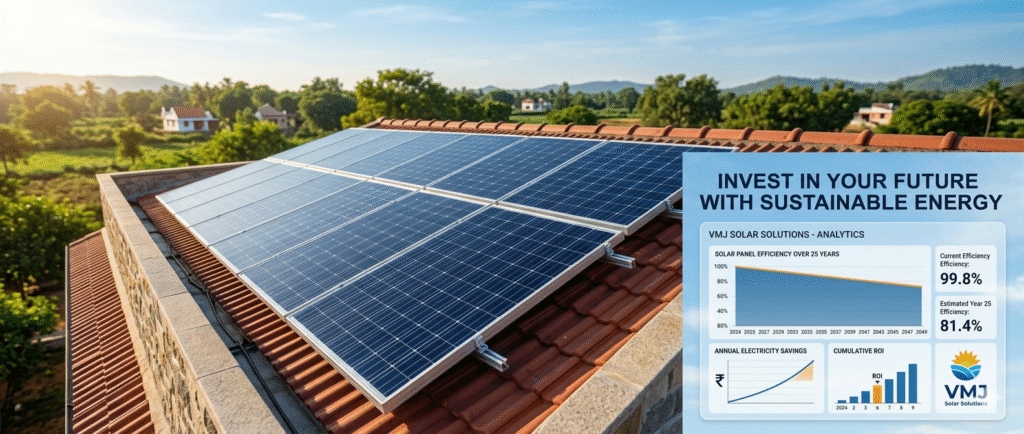
One of the biggest misconceptions about rooftop solar systems is that they produce the same amount of electricity forever.
In reality, all solar panels gradually lose a small portion of their efficiency over time. This natural process is called:
Solar Panel Degradation
For homeowners and businesses investing in solar energy, understanding degradation is extremely important because it directly affects:
- Long-term electricity generation
- Financial savings
- System performance
- Return on investment (ROI)
At VMJ Solar Solutions, many customers across Andhra Pradesh ask questions like:
“Will my solar panels still work efficiently after 10 or 20 years?”
The answer is:
Yes — but at slightly reduced performance levels.
This article explains:
- What solar panel degradation means
- Why it happens
- How it impacts ROI
- What degradation rates are considered normal
- How homeowners can maximize long-term solar performance
without relying on unrealistic marketing claims.
What Is Solar Panel Degradation?
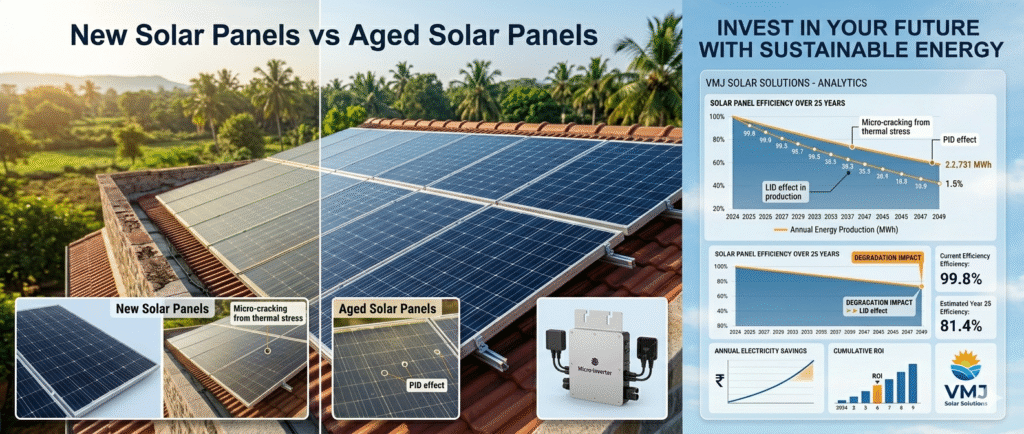
Solar panel degradation refers to the gradual reduction in a solar panel’s electricity-producing capacity over time.
Simply put:
A solar panel installed today will usually generate slightly less electricity each year as it ages.
This happens naturally due to:
- Weather exposure
- Heat
- UV radiation
- Material aging
- Environmental stress
However, degradation is generally slow and predictable for quality solar panels.
Understanding Solar Panel Efficiency Loss
Example
Suppose a solar panel produces:
- 100% output in Year 1
If the panel degrades at:
- 0.5% annually
then after one year:
- Output may reduce to approximately 99.5%
After several years, the reduction becomes gradual but cumulative.
This is why degradation rate matters when calculating:
- Long-term energy generation
- Electricity savings
- Solar ROI projections
What Is a Typical Solar Panel Degradation Rate?
Modern quality solar panels generally degrade slowly.
Typical industry estimates often range around:
- 0.3% to 0.8% per year
depending on:
- Panel quality
- Manufacturing standards
- Environmental conditions
- Installation quality
Premium solar panels may degrade more slowly compared to low-quality products.
Why Andhra Pradesh Climate Matters
Andhra Pradesh offers strong solar potential due to:
- High sunlight availability
- Long sunny seasons
However, local environmental conditions also affect panel aging.
Factors include:
- High summer temperatures
- Coastal humidity
- Dust accumulation
- Cyclonic weather in some regions
- Salt exposure near coastal areas
Cities such as:
- Visakhapatnam
- Kakinada
- Nellore
may experience higher coastal moisture exposure compared to inland regions.
Proper installation and maintenance become especially important in such conditions.
How Degradation Impacts Solar ROI
What Is ROI in Solar?
ROI (Return on Investment) refers to:
- The financial benefit gained from solar compared to installation cost over time.
The better the panel performance over decades:
- The stronger the long-term savings potential.
Example of Degradation Impact
If a system produces:
- Lower electricity output over time
then:
- Electricity savings gradually reduce as well.
However, because degradation is usually slow, quality solar systems can still provide substantial long-term value over 20–25 years or more.
Why Low Degradation Matters
Lower degradation generally means:
- Better long-term generation
- More stable savings
- Improved financial returns
- Longer effective system life
This is why panel quality should not be judged only by upfront cost.
Cheaper panels with faster degradation may reduce long-term ROI.
What Causes Solar Panel Degradation?
1. Heat Exposure
High temperatures can gradually stress solar cell materials over time.
This is particularly relevant in hot Indian climates.
2. UV Radiation
Constant exposure to sunlight slowly affects panel materials and protective layers.
3. Moisture and Humidity
Water penetration or humidity can damage internal electrical components if panel sealing quality is poor.
4. Thermal Expansion and Contraction
Panels expand and contract due to daily temperature changes.
This repeated stress may slowly impact internal connections.
5. Poor Installation Practices
Improper mounting or wiring can accelerate wear and reduce system performance.
Difference Between Panel Warranty and Performance Warranty
Many homeowners confuse:
- Product warranty
with: - Performance warranty
They are not the same.
Product Warranty
Covers:
- Manufacturing defects
- Material failures
- Physical component issues
Performance Warranty
Specifies expected minimum performance over time.
For example:
- A panel may guarantee a certain percentage of original output after 20–25 years.
Always review warranty details carefully instead of focusing only on headline numbers.
Does Degradation Mean Solar Stops Working?
Absolutely Not
Even after decades, solar panels usually continue generating electricity.
The key difference is:
- Slightly lower output compared to when newly installed.
Many older systems continue functioning effectively far beyond their original payback period.
How to Minimize Solar Panel Degradation
1. Choose Quality Panels
Not all solar panels perform equally over long durations.
Look for:
- Reputable manufacturers
- Certified products
- Proven reliability
- Strong warranty support
2. Ensure Proper Installation
Installation quality significantly affects:
- Heat management
- Structural stability
- Electrical safety
- Long-term durability
3. Perform Regular Cleaning
Dust and dirt accumulation can reduce energy generation and create unnecessary thermal stress.
This is especially important in:
- Agricultural areas
- Dust-prone regions
- Industrial environments
4. Monitor System Performance
Smart monitoring systems help identify:
- Sudden drops in output
- Fault conditions
- Inverter issues
- Maintenance requirements
Why ROI Calculations Should Be Realistic
Many marketing advertisements exaggerate solar returns by assuming:
- Perfect weather
- Zero maintenance
- No degradation
- Constant tariff escalation
Realistic solar ROI calculations should account for:
- Gradual degradation
- Seasonal variations
- Maintenance costs
- System downtime possibilities
Transparent projections build long-term customer confidence.
Residential vs Commercial Impact of Degradation
Residential Homes
Homeowners mainly experience:
- Slight reduction in annual savings over time
but systems often remain financially beneficial long term.
Commercial and Industrial Systems
For businesses:
- Small efficiency losses can significantly affect financial projections due to larger system sizes.
This makes panel selection especially important for:
- Factories
- Rice mills
- Commercial buildings
- Warehouses
Future Improvements in Solar Technology
Modern solar technology continues improving through:
- Better cell architecture
- Improved heat resistance
- Advanced coatings
- Enhanced durability
Newer high-efficiency panels may offer:
- Better long-term stability
- Lower degradation rates
- Improved performance in hot climates
Why System Design Matters More Than Marketing Claims
A well-designed solar system considers:
- Roof orientation
- Local climate
- Electrical load
- Ventilation
- Future performance degradation
At VMJ Solar Solutions, solar planning focuses on realistic long-term performance rather than unrealistic short-term promises.
Because solar is a long-duration infrastructure investment — not just a short-term purchase.
Frequently Asked Questions (FAQs)
1. What is a good solar panel degradation rate?
Lower degradation rates are generally better. Modern quality panels often degrade slowly over decades under normal conditions.
2. Will my solar panels stop working after 25 years?
Usually no.
Most panels continue producing electricity beyond their warranty period, though at somewhat reduced efficiency.
3. Does Andhra Pradesh heat damage solar panels?
High temperatures can affect performance over time, but quality panels are designed to operate in hot climates when installed correctly.
4. How can I improve long-term solar ROI?
Key factors include:
- Choosing quality components
- Proper installation
- Routine maintenance
- Smart energy usage
5. Is degradation covered under warranty?
Performance warranties often define expected output levels over time. Warranty terms vary by manufacturer.
6. Should I choose cheaper panels to save money initially?
Lower upfront cost may sometimes lead to:
- Faster degradation
- Lower efficiency
- Reduced long-term savings
Long-term value matters more than initial pricing alone.
Final Thoughts
Solar panel degradation is a natural and expected part of long-term solar performance.
But for most homeowners and businesses, the important reality is this:
Quality solar systems still provide meaningful electricity savings for decades.
Understanding degradation helps customers:
- Set realistic expectations
- Evaluate long-term ROI
- Choose better-quality systems
- Make informed investment decisions
The smartest solar investment is not always the cheapest —
it is the one designed for stable long-term performance under real-world conditions.
For homeowners and businesses in Andhra Pradesh exploring:
- Rooftop solar systems
- Long-term solar ROI
- Commercial solar projects
- High-efficiency solar panels
- Sustainable energy investments
working with experienced providers like VMJ Solar Solutions can help ensure that your solar system is optimized not only for today’s savings, but also for future performance and durability.