
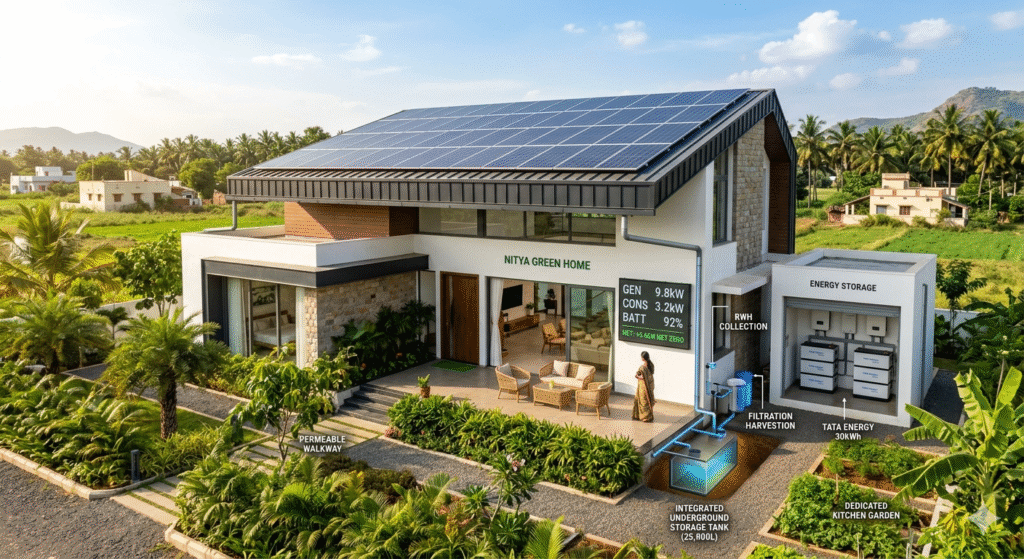
Rising electricity tariffs, water shortages, and increasing living costs are changing how homeowners think about energy consumption in India.
In Andhra Pradesh especially, many homeowners are no longer asking:
“How can I reduce my electricity bill?”
They’re asking something bigger:
“Can I eliminate utility bills almost entirely?”
That’s where the idea of a net zero home comes in.
A net zero home is designed to produce as much energy as it consumes over the course of a year through a combination of:
- Rooftop solar power
- Energy-efficient design
- Smart electricity management
- Water conservation systems
But here’s the reality most marketing campaigns ignore:
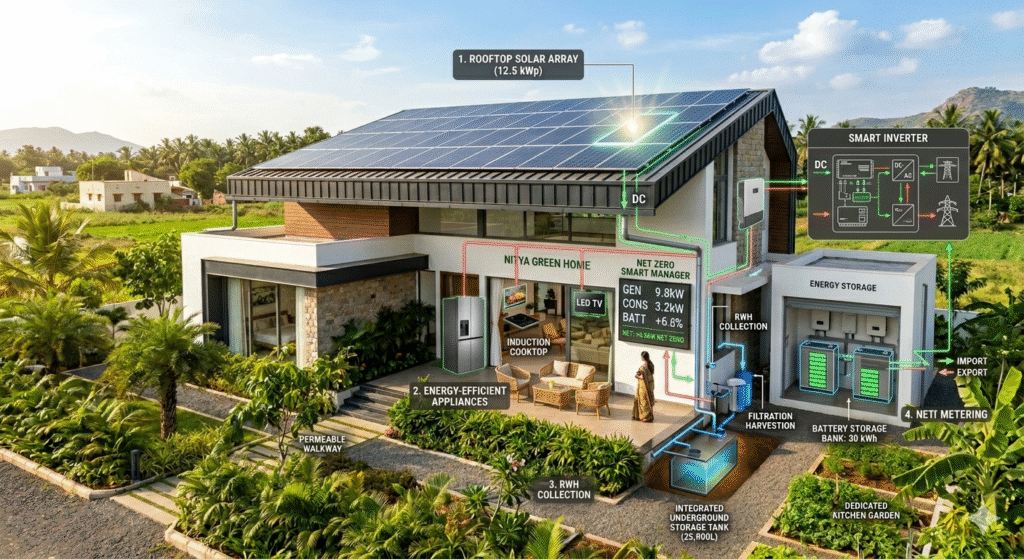
Net zero is possible for some homes—but not automatically, cheaply, or without lifestyle and infrastructure adjustments.
For homeowners working with providers like VMJ Solar Solutions, the smarter goal is not chasing unrealistic promises. It’s building a practical, highly efficient home that dramatically reduces long-term utility dependency.
What Is a Net Zero Home?
A net zero home is a residential property designed so that:
Annual energy generation ≈ annual energy consumption
In simple terms:
- The home produces enough renewable energy to offset most or all electricity usage over time.
This is usually achieved through:
- Solar panel systems
- Energy-efficient appliances
- Smart power management
- Efficient building design
Some advanced homes also integrate:
- Rainwater harvesting
- Battery storage
- EV charging optimization
- Smart inverters
Does “Net Zero” Mean No Utility Bills at All?
Not always.
This is where realistic expectations matter.
Many people assume net zero means:
- Permanent Rs 0 electricity bills
- Total independence from utilities
- Zero maintenance costs
That’s rarely how it works in practice.
Realistically:
A well-designed net zero home can dramatically reduce utility costs and sometimes eliminate electricity bills during certain periods.
But homeowners may still face:
- Minimum grid connection charges
- Maintenance costs
- Seasonal fluctuations
- Backup electricity needs
The goal is major long-term reduction—not magical free energy forever.
Why Net Zero Homes Are Becoming More Relevant in Andhra Pradesh
Several trends are driving interest in net zero homes:
✔ Rising Electricity Prices
Power tariffs continue increasing gradually over time.
✔ Hotter Summers
Higher AC usage means higher residential energy consumption.
✔ Solar Adoption Growth
Rooftop solar systems are becoming more common and affordable.
✔ Smart Home Technology
AI-based energy monitoring and automation improve efficiency.
✔ Water Scarcity Concerns
Many homeowners now combine:
- Solar systems
- Rainwater harvesting
- Efficient water usage
into broader sustainability planning.
Step 1: Install the Right Rooftop Solar System
Solar is the foundation of most net zero homes.
But many homeowners make the mistake of:
- Undersizing systems
- Ignoring future demand
- Prioritizing lowest cost over performance
Proper solar planning should consider:
- Current electricity consumption
- Future appliance additions
- EV charging plans
- Roof suitability
- Battery integration possibilities
In Andhra Pradesh, rooftop solar systems perform particularly well because of strong annual sunlight availability.
Step 2: Reduce Energy Consumption First
This is the part many people skip.
You cannot realistically create a net zero home while wasting electricity inefficiently.
Energy efficiency improvements often include:
- LED lighting
- Energy-efficient ACs
- Inverter appliances
- Smart thermostats
- Efficient water pumps
- Better insulation and ventilation
Reducing consumption lowers the solar capacity required.
That improves overall ROI significantly.
Step 3: Use Smart Energy Management Systems
Modern net zero homes increasingly depend on:
- Smart solar inverters
- AI-powered monitoring systems
- Automated load management
These systems help:
- Optimize daytime solar usage
- Reduce unnecessary grid consumption
- Improve battery efficiency
- Track energy behavior in real time
Without monitoring, many homeowners unknowingly waste generated solar energy.
Step 4: Add Battery Storage Carefully
Battery storage can improve:
- Backup during outages
- Nighttime solar usage
- Grid independence
But batteries are also one of the most expensive parts of advanced solar systems.
Realistic consideration:
Many homes can reduce bills substantially without large battery systems.
Full energy independence requires much larger investment.
Step 5: Improve Water Efficiency Too
A true net zero approach often extends beyond electricity.
Many smart homes now combine:
- Rooftop solar
- Rainwater harvesting
- Efficient plumbing systems
- Solar water heating
This reduces both:
- Utility bills
- Resource dependency
especially important in water-stressed regions of Andhra Pradesh.
Common Features of Modern Net Zero Homes
✔ Rooftop Solar Panels
✔ Smart Solar Inverters
✔ Energy-Efficient Appliances
✔ Rainwater Harvesting Systems
✔ Natural Ventilation Design
✔ LED Lighting
✔ Smart Energy Monitoring
✔ Battery Backup Integration
The Biggest Misconception About Net Zero Homes
Many people think net zero is mainly about installing more solar panels.
It’s not.
The real equation is:
Energy Generation + Energy Efficiency + Consumption Discipline
Without efficiency and smart usage:
- Even large solar systems become inefficient
- ROI weakens
- Utility dependency continues
Challenges Homeowners Should Understand
❌ Higher Initial Investment
Net zero infrastructure costs more upfront.
❌ Roof Space Limitations
Not all homes have sufficient solar installation area.
❌ Lifestyle Impact
Heavy energy usage patterns can make net zero difficult.
❌ Maintenance Requirements
Solar systems, batteries, and monitoring systems require long-term upkeep.
❌ Seasonal Variability
Solar generation fluctuates with weather conditions.
Why Smart Planning Matters More Than Maximum Capacity
Some homeowners believe:
“More solar panels = better system.”
Not necessarily.
Oversized systems may:
- Increase unnecessary investment
- Create export limitations
- Extend ROI timelines
The smarter approach is:
- Accurate load analysis
- Proper system sizing
- Long-term planning
The Bigger Shift: Homes Becoming Energy Ecosystems
The future of residential energy is changing.
Homes are evolving from:
- Passive electricity consumers
into:
- Energy-producing
- Energy-managing
- Resource-efficient systems
This transition is accelerating in India because of:
- Rising utility costs
- Better technology
- Government solar support
- Greater sustainability awareness
Conclusion
Net zero homes represent one of the most advanced forms of residential energy efficiency currently possible in India.
By combining:
- Rooftop solar
- Smart energy management
- Efficient appliances
- Sustainable infrastructure
homeowners can dramatically reduce long-term utility dependency and operational costs.
But realistic expectations matter.
True net zero performance requires:
- Careful planning
- Quality installation
- Smart consumption habits
- Long-term maintenance discipline
For homeowners in Andhra Pradesh working with providers like VMJ Solar Solutions, the real opportunity lies not in chasing unrealistic “free electricity forever” promises.
It lies in building smarter homes that remain efficient, resilient, and financially sustainable for decades.
Because the future advantage will belong not to homes that consume the most energy—but to homes that manage it best.
Frequently Asked Questions (FAQs)
1. What is a net zero home?
A net zero home generates roughly as much energy annually as it consumes.
2. Can a net zero home completely eliminate electricity bills?
Sometimes significantly, but homeowners may still have minimum charges or seasonal utility usage.
3. Is rooftop solar enough for a net zero home?
Usually solar must be combined with energy-efficient appliances and smart energy management.
4. Are batteries necessary for net zero homes?
Not always, but they improve backup power and energy independence.
5. Do net zero homes cost more to build?
Yes, upfront investment is generally higher, but long-term operating costs may be lower.
6. Are net zero homes practical in Andhra Pradesh?
Yes, especially because of strong solar potential and growing rooftop solar adoption.