
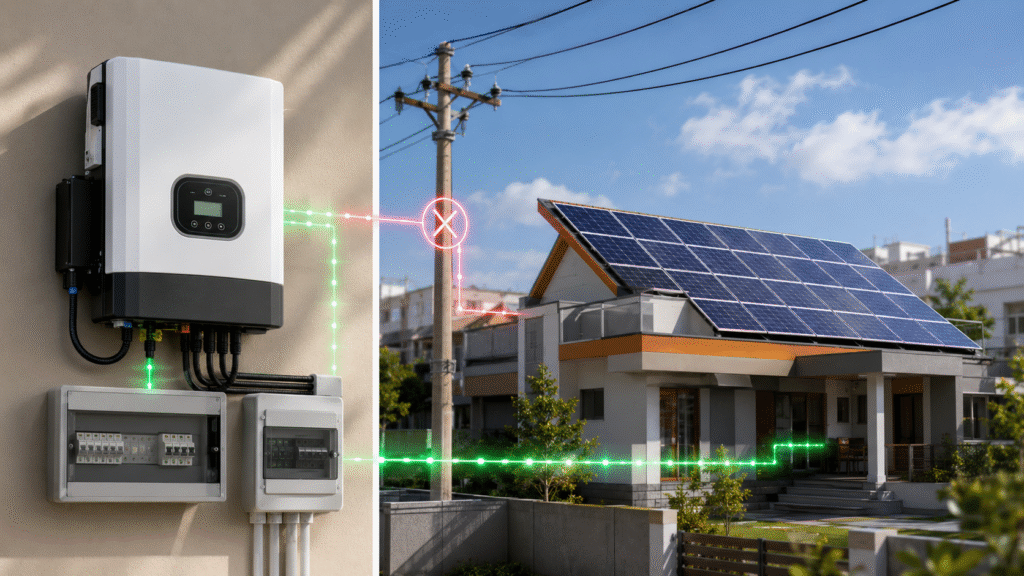
As rooftop solar adoption continues to grow across Andhra Pradesh, more homeowners, businesses, factories, educational institutions, and agricultural facilities are installing grid-connected solar power systems to reduce electricity costs and improve energy efficiency.
While most solar buyers focus on solar panels, energy savings, and net metering benefits, one critical component often goes unnoticed: anti-islanding protection.
This built-in safety feature plays a vital role in protecting utility workers, electrical equipment, and solar system owners during power outages and grid disturbances.
Without anti-islanding protection, a grid-connected solar system could continue supplying electricity when the utility grid is offline, creating serious safety risks.
At VMJ Solar Solutions, we help customers understand the safety technologies that make modern solar systems reliable, compliant, and suitable for long-term operation.
What Is Anti-Islanding Protection?
Anti-islanding protection is a safety mechanism built into modern grid-tied solar inverters.
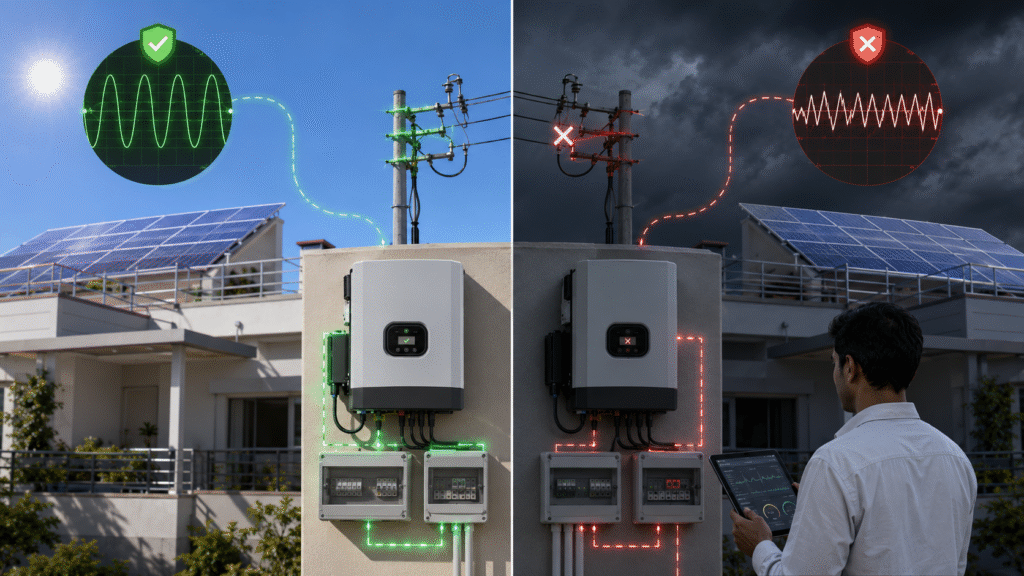
Its primary purpose is to automatically stop the solar system from exporting electricity when the utility grid experiences a power outage or becomes disconnected.
In simple terms:
When the grid goes down, the inverter shuts down.
This prevents the solar system from unintentionally energizing power lines that utility workers may believe are de-energized.
What Is “Islanding” in a Solar Power System?
o understand anti-islanding, it’s important to first understand islanding.
Islanding Occurs When:
- The utility grid loses power.
- A section of the electrical network becomes disconnected.
- The solar system continues generating electricity.
- Local electrical loads continue receiving power from the solar system.
This creates an isolated electrical “island” separate from the main utility grid.
While this might sound beneficial, uncontrolled islanding can create serious safety and equipment risks.
Why Is Islanding Dangerous?
Safety Risk for Utility Workers
When utility crews repair damaged power lines, they expect disconnected lines to be de-energized.
If a solar system continues supplying power, workers may be exposed to unexpected electrical hazards.
This is one of the primary reasons anti-islanding protection is mandatory in modern grid-tied solar installations.
Equipment Damage
When utility power is restored, voltage and frequency mismatches between the isolated solar system and the grid can damage:
- Solar inverters
- Electrical panels
- Transformers
- Connected appliances
- Industrial equipment
Grid Stability Issues
Uncontrolled electricity generation can interfere with utility operations and power quality management.
Grid operators rely on predictable power flow to maintain stable electricity networks.
How Anti-Islanding Protection Works
Modern solar inverters continuously monitor grid conditions.
The inverter checks:
- Voltage levels
- Frequency levels
- Grid stability
- Power quality parameters
If abnormal conditions are detected, the inverter automatically disconnects from the grid within a very short period.
The Process
Step 1: Normal Operation
The solar inverter synchronizes with the utility grid and exports electricity when excess power is available.
Step 2: Grid Failure Occurs
A power outage, transformer fault, or grid disturbance interrupts utility supply.
Step 3: Inverter Detects Abnormal Conditions
The inverter recognizes changes in voltage and frequency.
Step 4: Automatic Shutdown
The inverter immediately stops supplying electricity to the grid.
Step 5: Grid Restoration
Once normal utility conditions return, the inverter performs safety checks before reconnecting.
Why Grid-Tied Solar Systems Shut Down During Power Outages
One of the most common questions homeowners ask is:
“Why don’t my solar panels work during a power cut?”
Many people assume solar panels automatically provide backup power.
However, standard grid-tied systems are designed to shut down during outages because of anti-islanding protection requirements.
Important Distinction
Standard Grid-Tied Solar System
- Produces power when the grid is available.
- Shuts down during outages.
Hybrid Solar System
- Includes battery storage.
- Can provide backup power during outages.
- Uses advanced controls to isolate the property safely.
Off-Grid Solar System
- Operates independently of the utility grid.
- Uses batteries for energy storage.
Components Involved in Anti-Islanding Protection
Solar Inverter
The inverter acts as the primary monitoring and protection device.
Protection Relays
Larger commercial and industrial systems may use additional protection relays.
Circuit Breakers
Automatic disconnection devices help isolate the system when necessary.
Monitoring Systems
Advanced solar monitoring platforms track grid conditions and system status in real time.
Why Anti-Islanding Is Important in Andhra Pradesh
Andhra Pradesh has seen significant growth in:
- Residential rooftop solar
- Industrial solar projects
- Commercial solar installations
- Agricultural solar systems
At the same time, some regions may experience:
- Scheduled maintenance shutdowns
- Storm-related outages
- Cyclone-related disruptions
- Distribution network faults
Anti-islanding protection ensures solar systems operate safely during these events.
This is especially important in coastal regions such as:
- Visakhapatnam
- Kakinada
- Nellore
- Machilipatnam
where weather-related grid disturbances may occur periodically.
Regulatory Compliance Requirements
Most modern solar installations must comply with applicable:
- Utility interconnection standards
- Electrical safety regulations
- Grid synchronization requirements
- Inverter certification standards
Anti-islanding functionality is a standard requirement for approved grid-connected solar inverters.
This ensures safe operation and compatibility with utility infrastructure.
Active vs Passive Anti-Islanding Methods
Modern inverters use multiple techniques to detect grid failures.
Passive Detection
The inverter monitors:
- Voltage changes
- Frequency variations
- Phase shifts
If values move outside acceptable limits, the system disconnects.
Active Detection
The inverter introduces small disturbances and monitors how the electrical system responds.
Abnormal responses indicate potential islanding conditions.
Hybrid Detection
Many modern inverters combine active and passive methods for improved reliability.
Benefits of Anti-Islanding Protection
Enhanced Worker Safety
Protects utility personnel performing maintenance and repairs.
Equipment Protection
Reduces the risk of damage to solar equipment and connected electrical systems
Regulatory Compliance
Helps ensure the solar system meets grid connection requirements.
Improved Grid Stability
Supports reliable operation of the electricity distribution network.
Long-Term System Reliability
Protective mechanisms help safeguard solar assets over their operating lifespan.
Common Misconceptions About Anti-Islanding
“My Solar Panels Should Work During a Power Cut”
Not necessarily.
Most standard grid-tied systems shut down automatically when grid power is unavailable.
Anti-Islanding Reduces Solar Efficiency”
No.
The feature only activates during abnormal grid conditions and does not affect normal solar production.
“Only Large Solar Plants Need Anti-Islanding”
All grid-connected solar systems, including residential rooftop installations, generally require anti-islanding functionality.
How to Ensure Your Solar System Has Proper Protection
When selecting a solar installer, verify that:
✔ Certified grid-tied inverters are used
✔ Utility approval requirements are followed
✔ Electrical safety standards are met
✔ Proper commissioning is completed
✔ Monitoring systems are configured correctly
Choosing experienced professionals helps ensure long-term safety and compliance.
Why Choose VMJ Solar Solutions?
VMJ Solar Solutions designs and installs solar systems that prioritize both performance and safety.
Our services include:
✔ Residential rooftop solar
✔ Commercial solar installations
✔ Industrial solar projects
✔ Grid-tied solar systems
✔ Hybrid solar solutions
✔ Net metering support
✔ Solar system maintenance
✔ Performance monitoring and optimization
Every installation is designed to meet applicable safety standards while maximizing energy generation.
Frequently Asked Questions (FAQs)
1.What is anti-islanding protection in a solar inverter?
Anti-islanding protection is a safety feature that automatically disconnects a grid-connected solar system when the utility grid loses power.
2.Why is anti-islanding important?
It helps protect utility workers, electrical equipment, and grid infrastructure from unintended energization during power outages.
3.Will my solar panels work during a power outage?
Most standard grid-tied solar systems automatically shut down during outages due to anti-islanding protection requirements.
4.Can I have solar power during blackouts?
Yes, but typically only if you install a hybrid solar system with battery backup or an off-grid solar solution.
5.Is anti-islanding mandatory?
Modern grid-connected solar systems generally require anti-islanding functionality to comply with utility interconnection standards.
6.Does anti-islanding affect solar performance?
No. It only activates during abnormal grid conditions and does not impact normal energy generation.
7.Do residential solar systems need anti-islanding protection?
Yes. Both residential and commercial grid-connected solar systems typically require this safety feature.
8.How do I know if my inverter has anti-islanding protection?
Most certified grid-tied solar inverters include anti-islanding functionality as a standard feature. Your solar installer can confirm compliance details.
Final Thoughts
Anti-islanding protection is one of the most important safety features in any grid-tied solar power system. While it often operates unnoticed in the background, it plays a critical role in protecting utility workers, maintaining grid stability, and safeguarding solar investments.
For homeowners, businesses, and industries across Andhra Pradesh, understanding anti-islanding protection helps ensure realistic expectations about how solar systems behave during power outages and why certified inverter technology matters.
By working with experienced solar professionals and using quality components, solar owners can enjoy both energy savings and peace of mind for decades to come.