

One of the biggest advantages of installing a solar power system is that you don’t have to waste the electricity your panels generate when your home, business, or factory isn’t using it.
In Andhra Pradesh, eligible solar consumers can export excess electricity to the grid through a system known as net metering. This allows solar system owners to offset their electricity consumption and maximize the value of their renewable energy investment.
Whether you own a residential rooftop solar system, a commercial solar installation, or an industrial solar power plant, understanding how net metering works can help you make more informed decisions about system sizing, electricity savings, and return on investment.
At VMJ Solar Solutions, we regularly help homeowners, businesses, industries, and agricultural consumers navigate the solar net metering process and optimize their solar energy systems.
What Is Net Metering?
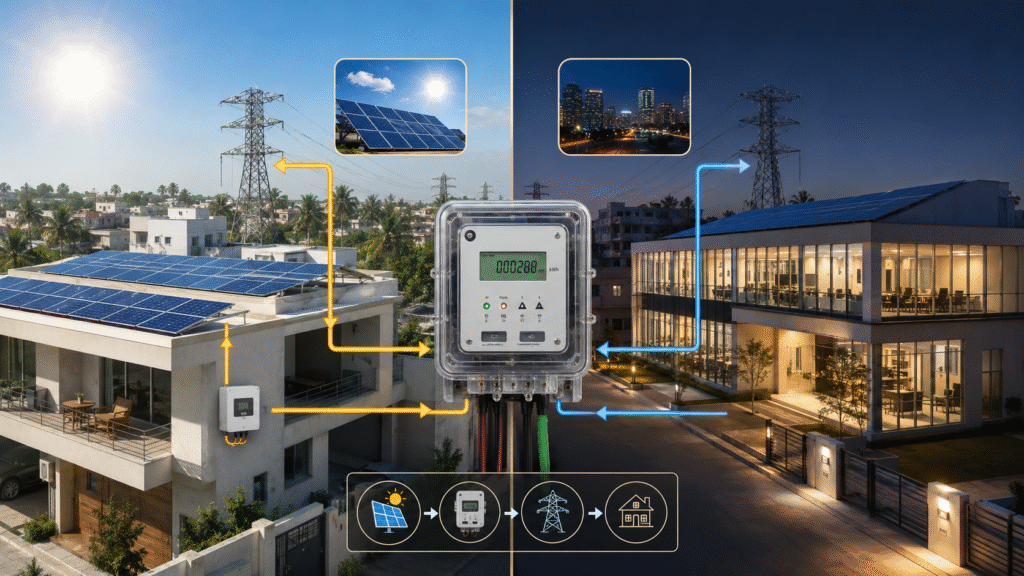
Net metering is a billing mechanism that allows solar power users to send excess electricity generated by their solar panels to the electricity grid.
When your solar system produces more electricity than your property consumes:
- Excess energy is exported to the grid.
- The exported units are recorded by a bi-directional meter.
- These exported units are adjusted against the electricity you draw from the grid.
In simple terms, the grid acts like a temporary energy bank for your surplus solar power.
How Does Net Metering Work in Andhra Pradesh?
During daylight hours, solar panels often generate more electricity than a home or business requires.
For example:
Morning and Afternoon
Your solar system may generate:
- 40 kWh
Your property may consume:
- 25 kWh
The remaining:
- 15 kWh
is exported to the utility grid.
Later, during nighttime or cloudy weather, when solar generation decreases, you may import electricity from the grid.
The net meter tracks:
✔ Electricity exported
✔ Electricity imported
✔ Net consumption
Your electricity bill is then calculated according to the applicable net metering regulations.
Why Net Metering Is Important for Solar Owners
Without net metering, excess electricity generated during peak sunlight hours could go unused.
Net metering helps improve the overall value of a solar system by ensuring excess generation contributes toward reducing future electricity costs.
Key Benefits
- Better utilization of solar energy
- Reduced electricity bills
- Improved solar ROI
- Faster payback periods
- Greater energy independence
- Enhanced sustainability
Who Can Apply for Net Metering in Andhra Pradesh?
Net metering is commonly available for eligible:
Residential Consumers
Homeowners installing rooftop solar systems.
Commercial Establishments
- Office buildings
- Retail stores
- Hotels
- Hospitals
- Educational institutions
Industrial Consumers
- Manufacturing units
- Warehouses
- Processing facilities
- Industrial parks
Agricultural Consumers
Depending on applicable regulations and connection categories.
Because regulations can evolve over time, applicants should verify the latest eligibility criteria with the local electricity distribution company before installation.
What Is a Bi-Directional Net Meter?
A standard electricity meter only records electricity consumed from the grid.
A bi-directional meter records:
Import Energy
Electricity drawn from the grid.
Export Energy
Electricity supplied back to the grid.
This two-way measurement enables accurate billing under net metering arrangements.
Step-by-Step Process to Sell Excess Solar Power to the Grid
1. Install a Grid-Connected Solar System
The first requirement is a properly designed grid-tied solar power system.
These systems are connected directly to the utility network and are capable of exporting surplus electricity.
2. Submit a Net Metering Application
Consumers typically need to apply through their local electricity distribution company.
The application may require:
- Consumer number
- Property details
- Solar system specifications
- Single-line diagram
- Installation documents
- Technical approvals
Requirements can vary depending on consumer category and system size.
3. Technical Verification and Inspection
The utility provider may conduct inspections to verify:
- Safety compliance
- System design
- Inverter compatibility
- Electrical protection systems
Approval is granted after successful verification.
4. Installation of a Net Meter
A bi-directional meter is installed or configured to track energy import and export.
This meter forms the basis for net metering calculations.
5. Start Exporting Excess Solar Energy
Once approval is completed, surplus electricity generated by your solar system can be exported to the grid automatically.
No manual intervention is required.
How Are Net Metering Payouts Calculated?
One of the most common questions from solar buyers is:
“Will I Get Paid for Excess Electricity?”
The answer depends on the prevailing regulations, tariff structures, and settlement mechanisms in effect.
Generally, excess energy exported to the grid may be:
Adjusted Against Future Consumption
In many cases, exported units offset imported units.
Carried Forward
Surplus credits may be carried forward to subsequent billing periods, subject to applicable regulations.
Settled Periodically
Certain policies may provide settlement mechanisms for excess accumulated units.
Because policies can change over time, consumers should always review the latest utility guidelines before making financial projections.
Example of Net Metering Savings
Consider a commercial rooftop solar installation:
Monthly Solar Generation
5,000 Units
Monthly Consumption
4,200 Units
Excess Export
800 Units
Depending on applicable regulations, these exported units may reduce future electricity charges or be settled according to the prevailing net metering framework.
The actual financial impact depends on tariff categories, billing cycles, and utility policies.
Factors That Affect Net Metering Benefits
Solar System Size
Oversized systems may generate more surplus energy than can be effectively utilized.
Proper system sizing is essential.
Electricity Consumption Pattern
Properties that consume most energy during daytime often achieve higher self-consumption rates.
Local Tariff Structure
Commercial, industrial, and residential consumers may have different tariff structures.
Seasonal Solar Production
Solar generation can vary throughout the year due to weather conditions and sunlight availability.
Regulatory Changes
Net metering policies can evolve as electricity regulations are updated.
Regular consultation with qualified solar professionals is recommended.
Common Mistakes to Avoid
Installing an Oversized System
Larger systems do not always deliver proportionally greater financial benefits.
System design should match actual energy consumption.
Ignoring Future Energy Needs
Businesses planning expansion should account for anticipated electricity demand.
Choosing Low-Quality Components
Reliable solar panels, inverters, and mounting systems support long-term performance.
Not Understanding Billing Rules
Consumers should understand how exported units are calculated and settled.
Benefits of Grid-Connected Solar Systems
Reduced Electricity Bills
Solar power can significantly reduce dependence on utility-supplied electricity.
Better Return on Investment
Net metering helps maximize the value of generated solar energy.
Sustainable Energy Usage
Solar energy reduces reliance on fossil-fuel-based electricity generation.
Increased Property Appeal
Energy-efficient properties are becoming increasingly attractive to businesses and homeowners.
Long-Term Cost Stability
Generating your own electricity can help reduce exposure to rising energy costs.
Net Metering Trends in Andhra Pradesh
Andhra Pradesh continues to witness growing adoption of:
- Residential rooftop solar
- Commercial solar systems
- Industrial solar projects
- Educational institution solar installations
- Agricultural solar solutions
As electricity prices continue to rise, more consumers are exploring net metering as a way to improve solar economics and maximize renewable energy utilization.
Why Choose VMJ Solar Solutions?
VMJ Solar Solutions provides complete support for:
✔ Rooftop solar installation
✔ Commercial solar projects
✔ Industrial solar systems
✔ Net metering assistance
✔ Solar design and engineering
✔ Solar subsidy guidance
✔ Performance optimization
✔ Long-term maintenance services
Our team helps customers design systems that balance electricity savings, energy generation, and long-term operational efficiency.
Frequently Asked Questions (FAQs)
1.Can I sell excess solar power back to the grid in Andhra Pradesh?
Yes, eligible grid-connected solar consumers can generally export excess electricity through approved net metering arrangements, subject to current regulations.
2.What is a net meter?
A net meter is a bi-directional electricity meter that records both imported and exported electricity.
3.Do I receive cash for exported solar power?
Settlement mechanisms depend on prevailing utility regulations and applicable tariff structures. Consumers should verify current rules before installation.
4.Is net metering available for commercial solar systems?
Yes, many commercial and industrial consumers utilize net metering arrangements where eligible.
5.Is net metering available for commercial solar systems?
Yes, many commercial and industrial consumers utilize net metering arrangements where eligible.
Final Thoughts
Net metering is one of the most valuable features of a grid-connected solar power system. It allows homeowners, businesses, and industries in Andhra Pradesh to make better use of the electricity generated by their solar panels while reducing dependence on conventional grid power.
However, maximizing the benefits of net metering requires proper system sizing, compliance with utility requirements, quality installation, and a clear understanding of current regulations.
For consumers considering solar energy, working with experienced professionals can help ensure a smooth net metering process and long-term system performance.