As electricity costs continue to rise across India, more businesses, factories, warehouses, poultry farms, cold storage facilities, and agricultural operations are turning to solar energy as a practical way to reduce power expenses and improve energy independence.
In Andhra Pradesh, many commercial and industrial buildings were constructed decades ago using tin sheet roofing, GI sheet roofs, metal sheds, and asbestos cement sheets. Property owners often wonder whether these roofs can support a solar power system safely and efficiently.
The good news is that solar panels can often be installed on both tin and asbestos shed roofs. However, proper structural assessment, safety precautions, and professional installation are critical to ensure long-term performance and avoid costly damage.
At VMJ Solar Solutions, we help businesses and property owners install solar power systems safely on various roof types while maximizing energy generation and protecting existing structures.
Can Solar Panels Be Installed on Tin or Asbestos Roofs?
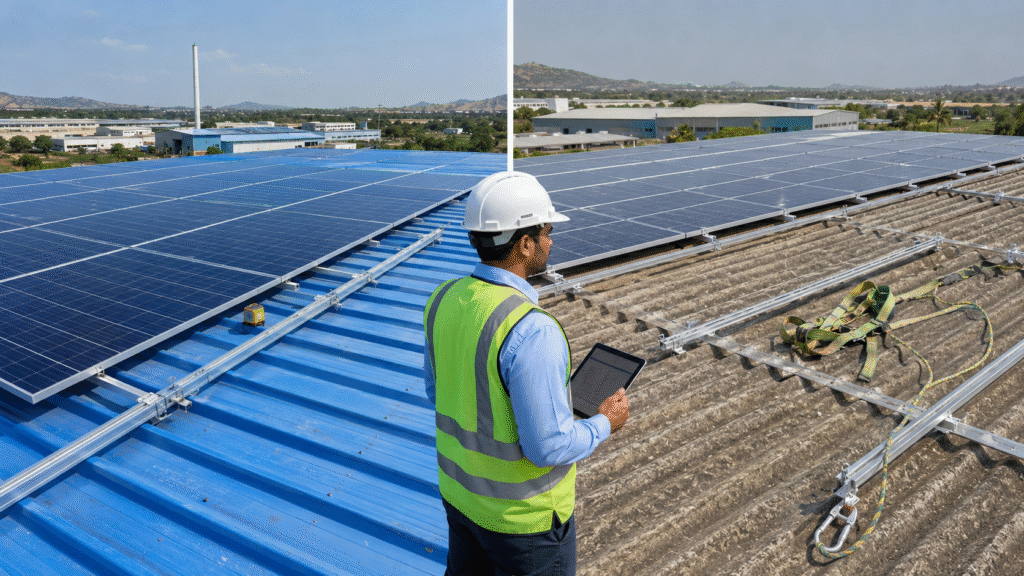
The simple answer is yes—but not every roof is immediately suitable.
Before installation, a detailed site assessment must determine:
- Roof condition
- Structural strength
- Roof age
- Load-bearing capacity
- Corrosion levels
- Water leakage risks
- Available shadow-free space
A professional solar feasibility study helps identify whether the existing roof can safely accommodate a solar system or requires reinforcement.
Understanding Tin Shed Roof Solar Installation
Tin roofs remain common across:
- Factories
- Warehouses
- Rice mills
- Poultry farms
- Dairy farms
- Commercial buildings
- Industrial parks
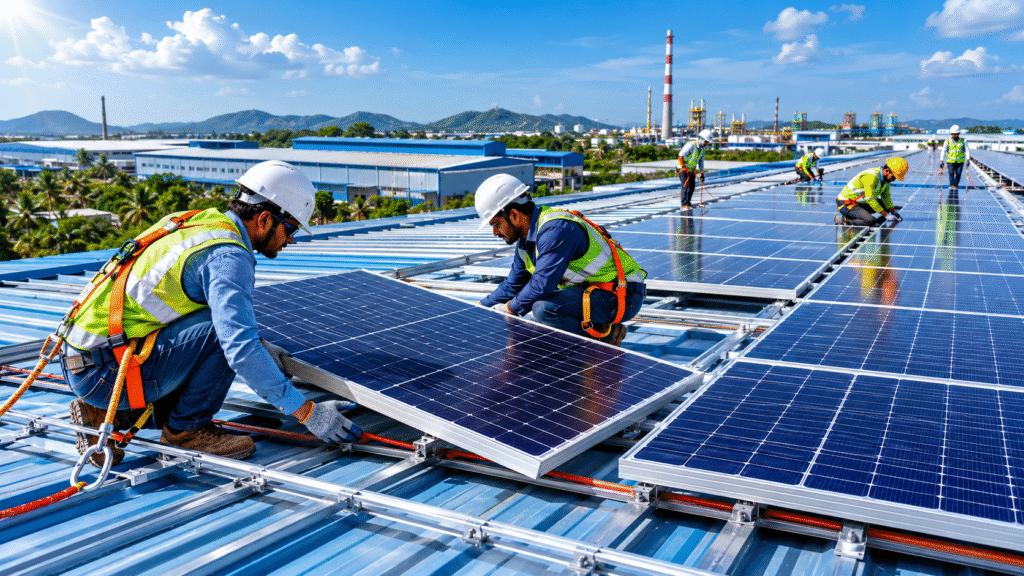
Modern metal roofs can be excellent candidates for rooftop solar installations because they are lightweight and typically provide large uninterrupted surfaces.
Advantages of Installing Solar Panels on Tin Roofs
Large Roof Area
Industrial sheds usually offer significant roof space for larger solar systems.
Faster Installation
Metal roofs often allow quicker mounting compared to concrete structures.
Cost-Effective Structure
Existing roof infrastructure can be utilized without constructing separate mounting structures.
Commercial Energy Savings
Large roof-mounted systems can offset a substantial portion of electricity consumption.
Understanding Asbestos Roof Solar Installation
Many older industrial and agricultural buildings in Andhra Pradesh still use asbestos cement sheets.
While solar installation is possible on some asbestos roofs, extra precautions are necessary.
Important Considerations
Age of the Roof
Older asbestos sheets may become brittle over time.
Structural Integrity
The roof must be inspected for cracks, deterioration, and load-bearing capacity.
Worker Safety
Asbestos materials require careful handling to avoid disturbing fibers.
Mounting Method Selection
Specialized mounting techniques are often needed to minimize stress on the roof.
Why Safety Is Critical During Solar Installation
A solar system is expected to remain operational for 25 years or more.
Improper installation can lead to:
- Roof damage
- Water leakage
- Structural failures
- Reduced solar performance
- Increased maintenance costs
- Workplace safety hazards
Professional engineering assessment helps avoid these risks from the beginning.
Step-by-Step Process for Safe Solar Installation on Tin and Asbestos Roofs
1. Conduct a Detailed Structural Assessment
The first step is evaluating whether the roof can safely support the solar system.
Engineers inspect:
- Roof thickness
- Support structures
- Purlins and trusses
- Corrosion levels
- Existing damage
- Wind load resistance
This assessment determines whether reinforcement is required before installation.
Why It Matters
Installing solar panels without evaluating structural capacity can compromise both the roof and solar system.
2. Evaluate Roof Condition and Remaining Life
Solar panels typically last 25–30 years.
If a roof is already nearing the end of its service life, replacement may be more economical before installation.
Warning Signs
- Rusted sheets
- Cracks
- Water seepage
- Loose fasteners
- Sagging sections
Addressing these issues beforehand can prevent future disruptions.
3. Use Appropriate Mounting Structures
Different roofs require different mounting systems.
For Tin Roofs
Common solutions include:
- Standing seam clamps
- Rail-mounted systems
- Elevated mounting structures
These options minimize roof penetration while maintaining structural stability.
For Asbestos Roofs
Installers typically avoid placing excessive load directly on fragile sheets.
Special mounting techniques distribute weight safely to supporting members beneath the roof.
4. Minimize Roof Penetrations
Every roof penetration increases the possibility of water leakage.
Professional installers use:
- Weatherproof fasteners
- Waterproof sealing systems
- Corrosion-resistant materials
- Proper flashing techniques
This helps maintain roof integrity over the long term.
5. Consider Wind Load Requirements
Andhra Pradesh experiences seasonal storms, cyclones, and high wind conditions in certain regions.
Solar mounting structures must be engineered to withstand local wind loads.
Areas Requiring Extra Attention
- Coastal Andhra Pradesh
- Nellore
- Visakhapatnam
- Kakinada
- Machilipatnam
Proper engineering helps ensure system durability during adverse weather conditions.
6. Maintain Adequate Airflow Beneath Panels
Solar panels perform more efficiently when temperatures remain lower.
Adequate spacing between the roof and solar modules improves:
- Ventilation
- Cooling
- Energy generation
- System lifespan
This is particularly important during Andhra Pradesh’s hot summer months.
7. Follow Electrical Safety Standards
Solar installations involve high-voltage electrical systems.
Proper electrical design includes:
- DC isolators
- Surge protection devices
- Earthing systems
- Lightning protection
- Quality cabling
Compliance with applicable safety standards helps protect both equipment and personnel.
Benefits of Installing Solar Panels on Tin Shed Roofs
Lower Electricity Bills
Businesses can significantly reduce dependence on grid electricity.
Better Utilization of Existing Space
Unused rooftop areas become productive energy-generating assets.
Reduced Carbon Footprint
Solar energy supports sustainability goals and renewable energy adoption.
Improved Business Efficiency
Lower operating costs can contribute to stronger long-term business performance.
Energy Security
Solar power helps reduce exposure to rising electricity tariffs.
Challenges to Consider
A balanced solar investment decision requires understanding potential limitations.
Roof Condition Issues
Older roofs may require repairs or replacement before installation.
Structural Reinforcement Costs
Some buildings need additional strengthening to safely support the system.
Maintenance Access
Proper design should allow easy access for cleaning and inspections.
Future Roof Repairs
Removing and reinstalling solar panels can add costs if major roof work becomes necessary later.
Why Professional Installation Matters
DIY or poorly executed installations can create serious problems.
Experienced solar professionals evaluate:
- Roof engineering
- Electrical safety
- Mounting system design
- Weather resistance
- Long-term maintenance requirements
This reduces operational risks and improves system reliability.
Solar Installation Trends in Andhra Pradesh
Demand for rooftop solar is growing rapidly across:
- Manufacturing facilities
- Warehouses
- Educational institutions
- Commercial buildings
- Cold storage facilities
- Agricultural processing units
Many businesses are utilizing large shed roofs to offset rising electricity costs and improve sustainability performance.
As solar technology continues to become more accessible, properly engineered rooftop installations are becoming a preferred energy solution throughout the state.
Why Choose VMJ Solar Solutions?
VMJ Solar Solutions provides customized rooftop solar solutions designed specifically for Indian industrial and commercial environments.
Our services include:
✔ Rooftop solar feasibility studies
✔ Tin shed solar installation
✔ Industrial solar projects
✔ Commercial rooftop solar systems
✔ Structural assessment support
✔ Solar design and engineering
✔ Solar panel installation and maintenance
✔ Long-term performance monitoring
We focus on safe, reliable, and efficient solar installations that maximize energy generation while protecting your building infrastructure.
Frequently Asked Questions (FAQs)
1.Can solar panels be installed on asbestos roofs?
Yes, in many cases. However, the roof must undergo a structural and safety assessment before installation to determine suitability
2.Is it safe to install solar panels on a tin shed roof?
Yes. Tin roofs are commonly used for commercial rooftop solar projects when properly engineered and installed.
3.How much weight do solar panels add to a roof?
The exact weight varies depending on system design, panel type, and mounting structures. A structural assessment helps determine roof suitability.
4.Do solar panels damage metal roofs?
When installed correctly using appropriate mounting systems, solar panels should not damage metal roofs.
5.What if my roof is old?
An inspection can determine whether repairs, reinforcement, or roof replacement should be considered before solar installation.
Final Thoughts
Installing solar panels on tin shed and asbestos roofs can be a highly effective way to reduce electricity costs and improve energy efficiency. However, the success of the project depends on careful planning, structural evaluation, proper mounting design, and professional installation practices.
For businesses, warehouses, factories, and agricultural facilities across Andhra Pradesh, a well-designed rooftop solar system can transform unused roof space into a valuable renewable energy asset while supporting long-term sustainability goals.