The Hidden Threat Affecting Solar Plant Performance in Andhra Pradesh
Commercial solar power plants are becoming a vital part of India’s renewable energy transition. Across Andhra Pradesh, large-scale solar installations are helping industries, commercial establishments, agricultural enterprises, and real estate developments reduce electricity costs while supporting sustainable growth.
However, installing a solar plant is only the beginning. Maintaining peak performance throughout the system’s lifespan is equally important. Even a small defect within a solar panel can reduce energy generation, impact financial returns, and increase long-term maintenance costs.
This is where drone thermal inspections have transformed solar plant maintenance.
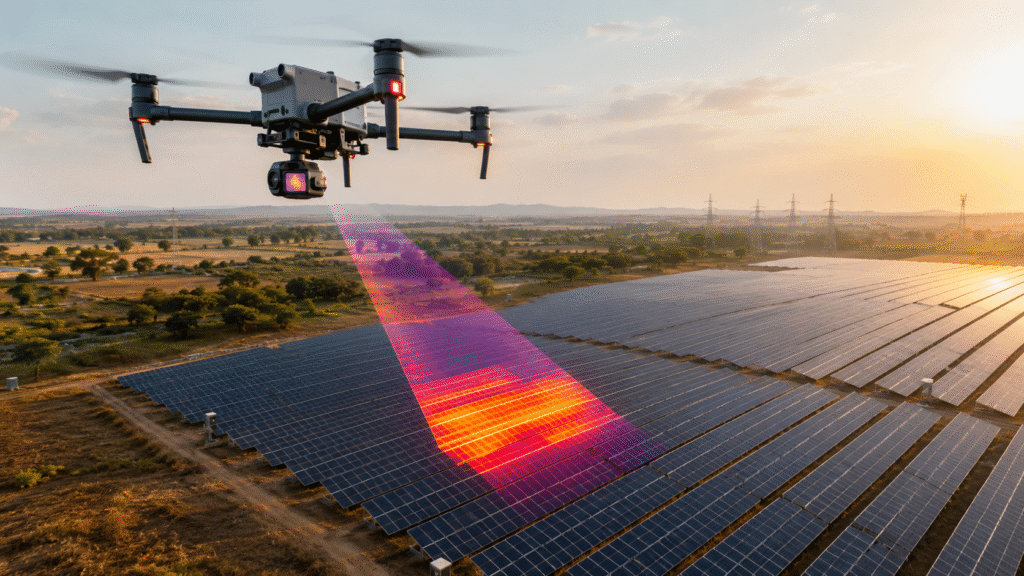
Using advanced thermal imaging technology mounted on drones, operators can quickly identify hotspots, faulty modules, loose connections, damaged cells, and overheating components without disrupting plant operations.
At VMJ Solar Solutions, drone-based thermal inspections help commercial solar plant owners in Andhra Pradesh maximize energy production, improve operational efficiency, and protect their renewable energy investments.
What Are Drone Thermal Inspections?
A drone thermal inspection uses an unmanned aerial vehicle (UAV) equipped with a specialized infrared camera.
Unlike traditional cameras that capture visible light, thermal cameras detect heat signatures emitted by solar panels and electrical components.
The drone flies over the solar installation and records thermal data, creating a detailed heat map of the entire plant.
Areas generating unusual heat patterns appear immediately, allowing maintenance teams to identify potential problems before they lead to significant energy losses.
In simple terms: Drone thermal inspections allow operators to “see” invisible temperature variations across thousands of solar panels within minutes.
What Is a Hotspot in a Solar Panel?
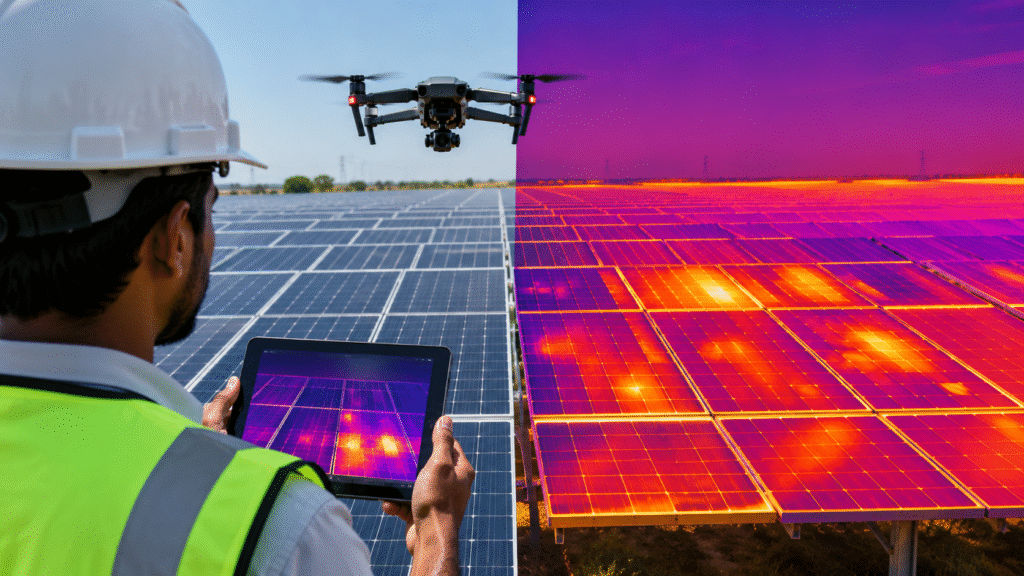
A hotspot occurs when a specific section of a solar panel becomes significantly hotter than surrounding cells.
This temperature difference usually indicates an underlying issue affecting performance.
Common causes include:
- Damaged solar cells
- Manufacturing defects
- Microcracks
- Dust accumulation
- Bird droppings
- Shading from nearby structures
- Faulty bypass diodes
- Loose electrical connections
- Module degradation
- Moisture ingress
When left untreated, hotspots can:
- Reduce energy generation
- Accelerate panel degradation
- Increase fire risks
- Shorten equipment lifespan
- Lower return on investment (ROI)
Why Hotspot Detection Matters in Commercial Solar Plants
Large-scale solar projects often contain thousands of panels spread across multiple acres.
Manually inspecting every module is time-consuming, expensive, and often impractical.
A single defective panel can affect string performance and reduce overall plant output.
Key Risks of Undetected Hotspots
Reduced Power Generation
Even minor thermal abnormalities can reduce electricity production, affecting project profitability.
Equipment Damage
Persistent overheating can permanently damage solar modules and associated electrical components.
Increased Maintenance Costs
Small defects become expensive repairs when not identified early.
Safety Concerns
Electrical hotspots can create fire hazards, especially during Andhra Pradesh’s intense summer months.
Lower Financial Returns
Reduced energy generation directly impacts payback periods and long-term solar investment performance.
How Drone Thermal Inspections Detect Solar Hotspots
1. High-Speed Aerial Data Collection
A drone flies over the solar plant following a pre-programmed route.
Thousands of panels can be scanned in a single flight, covering large commercial installations much faster than manual inspections.
Benefits
- Rapid coverage
- Minimal downtime
- Consistent inspection quality
- Accurate asset mapping
2. Infrared Thermal Imaging
The thermal camera records temperature variations across each solar module.
Healthy panels display relatively uniform temperatures.
Defective areas appear as bright spots on thermal images, indicating abnormal heat generation.
Common Issues Identified
- Hot cells
- Failed modules
- Cracked panels
- Junction box failures
- Diode failures
- Connector overheating
3. AI-Assisted Analysis
Modern inspection platforms increasingly use AI-powered analytics to process thermal imagery.
Software can automatically identify:
- Hotspots
- String failures
- Mismatch losses
- Performance anomalies
- Potential future failures
This enables faster maintenance decisions and more accurate reporting.
4. Detailed Inspection Reports
Following the inspection, plant operators receive comprehensive reports containing:
- Thermal images
- GPS coordinates
- Severity classification
- Defect locations
- Maintenance recommendations
These reports help prioritize repairs and optimize operational budgets.
Benefits of Drone Thermal Inspections for Solar Plants in Andhra Pradesh
Improved Energy Efficiency
Detecting and repairing hotspots quickly helps maintain optimal solar panel performance and energy generation.
This is particularly important for industrial consumers facing rising electricity tariffs.
Reduced Operations and Maintenance Costs
Preventive maintenance is significantly less expensive than replacing damaged equipment after failure.
Early detection minimizes downtime and repair expenses.
Enhanced Asset Lifespan
Solar projects are long-term investments expected to operate for 25 years or more.
Routine thermal inspections help protect system health and extend equipment life.
Increased Safety
Overheating electrical components can pose serious risks.
Drone inspections allow operators to identify hazardous conditions without exposing personnel to unnecessary danger.
Faster Inspections
A drone can inspect hundreds of megawatts of solar capacity in a fraction of the time required for manual inspections.
This efficiency is particularly valuable for utility-scale solar farms.
Better ROI from Solar Investments
Commercial solar plants represent substantial capital investments.
Maintaining peak performance supports stronger long-term financial outcomes and improves project economics.
Why Andhra Pradesh Solar Projects Benefit from Thermal Drone Inspections
Andhra Pradesh is one of India’s leading renewable energy states, with extensive solar development across:
- Vijayawada
- Visakhapatnam
- Tirupati
- Kurnool
- Anantapur
- Kadapa
- Nellore
- Guntur
Several regional factors make thermal inspections especially valuable:
High Temperatures
Extreme summer conditions can accelerate thermal stress and equipment degradation.
Dust Accumulation
Agricultural and industrial regions often experience significant dust buildup that affects panel efficiency.
Coastal Humidity
Areas near the coast may face increased moisture-related issues impacting electrical connections.
Large Utility-Scale Installations
Many solar parks cover extensive land areas where manual inspection is impractical.
Traditional Inspections vs Drone Thermal Inspections
| Factor | Traditional Inspection | Drone Thermal Inspection |
|---|---|---|
| Inspection Speed | Slow | Very Fast |
| Coverage Area | Limited | Large Scale |
| Safety | Manual Exposure | Remote Operation |
| Defect Detection | Visual Only | Thermal + Visual |
| Accuracy | Moderate | High |
| Cost Efficiency | Lower | Higher Long-Term Value |
| Data Reporting | Limited | Comprehensive |
Best Practices for Commercial Solar Plant Owners
To maximize solar plant performance:
Schedule Regular Thermal Inspections
Annual inspections are recommended, while high-capacity installations may benefit from more frequent assessments.
Combine Thermal and Electrical Testing
A comprehensive maintenance strategy delivers better results than relying on a single inspection method.
Act Quickly on Identified Hotspots
Prompt corrective action prevents minor issues from escalating.
Work with Experienced Solar O&M Providers
Professional analysis ensures accurate interpretation of thermal data and effective maintenance planning.
The Future of Solar Plant Maintenance
As India’s solar industry continues expanding, technologies such as:
- AI-powered diagnostics
- Predictive maintenance
- Drone inspections
- Digital asset monitoring
- Smart solar analytics
are becoming essential tools for maximizing plant performance.
Commercial solar operators who adopt proactive maintenance strategies are better positioned to achieve consistent energy generation and long-term asset reliability.
Why Choose VMJ Solar Solutions?
VMJ Solar Solutions supports businesses and solar asset owners with professional solar inspection and maintenance services designed for Indian operating conditions.
Our approach focuses on:
✔ Advanced thermal drone inspections
✔ Preventive solar plant maintenance
✔ Performance optimization
✔ Defect detection and reporting
✔ Enhanced solar asset management
✔ Long-term operational efficiency
Whether managing an industrial rooftop system or a utility-scale solar farm, proactive inspection helps protect your investment and improve energy production.
Frequently Asked Questions (FAQs)
1.How often should commercial solar plants undergo thermal inspections?
Most commercial solar installations benefit from annual thermal inspections. High-capacity or mission-critical facilities may require inspections every six months.
2.Can drone inspections detect problems not visible to the eye?
Yes. Thermal cameras identify temperature abnormalities that may not be visible during standard visual inspections.
3.Are drone thermal inspections safe?
Yes. Drones allow remote inspections, reducing the need for personnel to access potentially hazardous areas.
4.Do thermal inspections improve solar panel efficiency?
Thermal inspections themselves do not increase efficiency. However, identifying and correcting defects discovered during inspections can help restore lost performance.
5.Are drone inspections suitable for rooftop solar systems?
Yes. Drone thermal imaging can be used for commercial rooftop solar installations as well as large utility-scale solar farms.
6.What causes hotspots in solar panels?
Common causes include microcracks, shading, dirt buildup, manufacturing defects, faulty bypass diodes, damaged connectors, and aging components.
7.How long does a drone thermal inspection take?
The duration depends on plant size, but large solar facilities can often be inspected within hours rather than days required by manual methods.
Final Thoughts
Drone thermal inspections have become one of the most effective tools for maintaining commercial solar plants. By identifying hotspots early, solar asset owners can reduce energy losses, improve safety, extend equipment life, and protect the long-term value of their renewable energy investments.
For businesses across Andhra Pradesh, regular thermal inspections are no longer just a maintenance option—they are an essential component of modern solar asset management. Investing in proactive monitoring today can help ensure reliable energy generation and stronger project performance for years to come.