
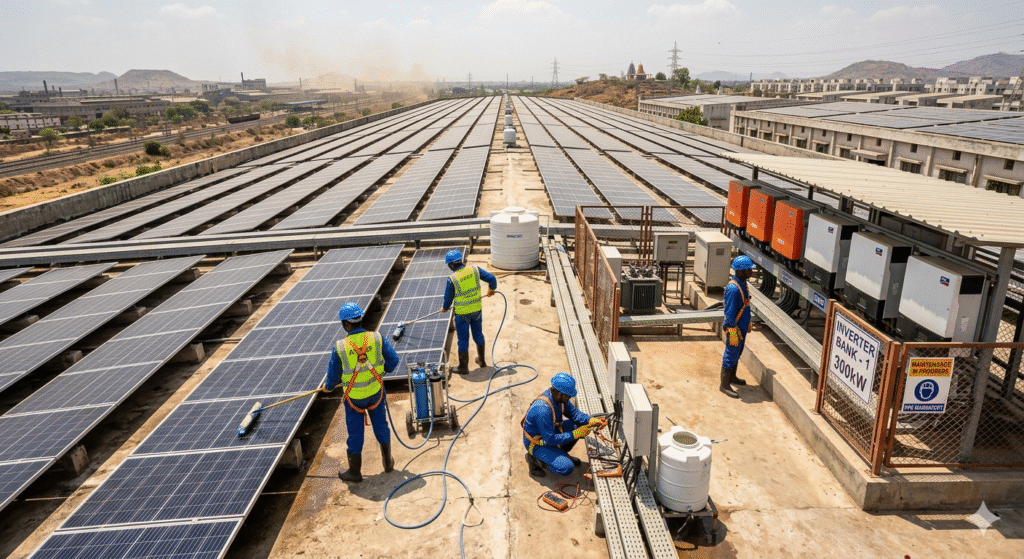
One of the biggest selling points of solar energy is this:
“Solar systems require very little maintenance.”
That statement is technically true—but often misunderstood.
Low maintenance does not mean zero maintenance. And over a 25-year lifespan, even small recurring costs can add up in ways many homeowners and businesses fail to calculate upfront.
In Andhra Pradesh, where dust, heat, humidity, and seasonal weather directly affect solar performance, understanding the real long-term maintenance picture matters.
Because the real question isn’t:
“Can solar save money?”
It’s:
“Will the system still perform efficiently 10, 15, or 25 years later?”
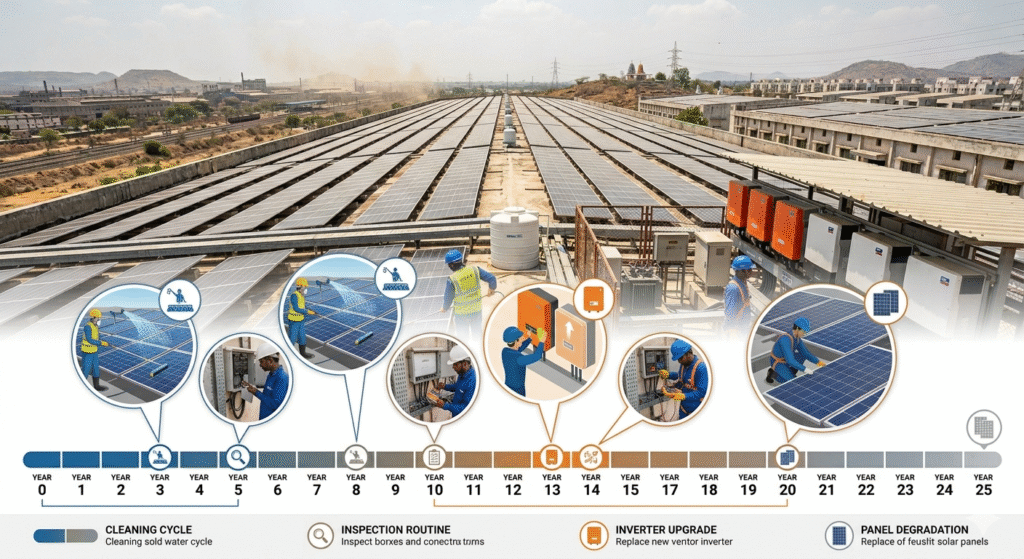
First, Let’s Be Realistic About Solar Lifespan
Most solar panels today are designed to last:
- Approximately 25 years or more
- With gradual performance degradation over time
That does not mean the system performs at 100% efficiency forever.
Most panels lose small amounts of efficiency annually.
A common performance trend looks like this:
- Year 1–5: Minimal degradation
- Year 10–15: Noticeable efficiency reduction
- Year 20–25: Lower output compared to original capacity
The system still works—but expectations must stay realistic.
What Maintenance Costs Actually Include
Many people assume maintenance means only cleaning panels.
In reality, long-term solar maintenance includes:
- Panel cleaning
- Inverter servicing or replacement
- Wiring inspections
- Structural maintenance
- Monitoring systems
- Occasional repairs
- Performance diagnostics
The exact cost depends heavily on:
- System size
- Installation quality
- Environmental conditions
- Usage patterns
1. Solar Panel Cleaning Costs
This is the most regular maintenance requirement.
In Andhra Pradesh, dust accumulation can significantly reduce efficiency if panels are not cleaned periodically.
Why cleaning matters:
Dust, bird droppings, and pollution reduce sunlight absorption.
Even modest dirt buildup can lower output noticeably.
Typical cleaning frequency:
- Residential systems: Every few weeks to few months
- Commercial plants: Often more frequent
Realistic cost reality:
Cleaning itself is not extremely expensive, but over 25 years:
- Repeated labor costs accumulate
- Large systems require professional servicing
This becomes a recurring operational expense—not a one-time task.
2. Inverter Replacement: The Biggest Hidden Cost
This is where many solar buyers underestimate long-term expenses.
Solar panels may last 25 years.
Most inverters do not.
Typical inverter lifespan:
- Around 8–15 years depending on quality and operating conditions
That means:
- A 25-year system may require at least one inverter replacement
- Sometimes two for lower-quality systems
And inverter replacement is not cheap.
In many cases, this becomes the single largest maintenance expense over the system’s lifetime.
3. Wiring & Electrical Inspections
Electrical systems age.
Over time, exposure to:
- Heat
- Rain
- Humidity
- Rodents
- Corrosion
can affect wiring and connectors.
Periodic inspections help prevent:
- Energy losses
- Safety risks
- Unexpected downtime
Neglecting this area often leads to expensive repairs later.
4. Structural Maintenance
Solar mounting structures are exposed to harsh outdoor conditions for decades.
In coastal or humid regions of Andhra Pradesh, factors like:
- Rust
- Corrosion
- Fastener loosening
can become long-term concerns.
Good installation quality reduces these risks significantly—but does not eliminate them entirely.
5. Monitoring & Performance Tracking
Modern solar systems increasingly rely on monitoring software.
These tools help identify:
- Underperforming panels
- System faults
- Output declines
Some systems include free monitoring. Others involve:
- Subscription fees
- Hardware upgrades
- Connectivity maintenance
Over decades, even small software-related costs add up.
The Cost Most People Ignore: Performance Loss
This is less visible—but financially important.
Solar systems gradually produce less electricity over time.
This means:
- Your savings may slowly reduce year after year
- Long-term ROI projections should account for degradation
Many marketing estimates assume ideal performance conditions that rarely remain constant for 25 years.
What Determines Whether Maintenance Costs Stay Low or High?
✔ Installation Quality
Cheap installation often creates expensive future problems.
Poor workmanship leads to:
- Water leakage
- Loose wiring
- Structural failures
- Reduced efficiency
Low upfront cost can become high long-term cost.
✔ Component Quality
Premium components usually:
- Last longer
- Require fewer repairs
- Handle harsh weather better
Lower-quality systems may appear cheaper initially but create higher maintenance burden later.
✔ Environmental Conditions
Andhra Pradesh presents real environmental challenges:
- High heat
- Dust accumulation
- Coastal humidity in some regions
- Heavy seasonal rainfall
All of these affect long-term maintenance needs.
Residential vs Commercial Solar Maintenance
Residential Systems
Typically lower maintenance complexity:
- Smaller systems
- Easier access
- Lower inspection costs
Commercial & Industrial Plants
More demanding due to:
- Larger scale
- Higher cleaning frequency
- More electrical infrastructure
- Greater monitoring needs
Maintenance planning becomes operationally critical.
The Realistic Financial Perspective
Let’s avoid unrealistic promises.
Solar is still financially beneficial in most cases—but only if expectations are grounded.
What solar usually delivers:
- Lower electricity bills
- Long-term energy savings
- Better energy stability
What solar does NOT deliver:
- A completely maintenance-free system
- Permanent maximum efficiency
- Zero replacement costs
The smartest buyers budget for maintenance from the beginning instead of treating it as an afterthought.
The Bigger Mistake: Choosing Based Only on Lowest Price
This is where many long-term problems begin.
Some buyers focus entirely on:
- Lowest installation quote
- Cheapest panels
- Cheapest inverter
But solar is a 25-year infrastructure decision.
Poor quality choices create:
- Higher maintenance frequency
- Lower efficiency
- Earlier replacements
- Reduced ROI
The cheaper system often becomes the more expensive system over time.
Conclusion
The true cost of maintaining a solar plant over 25 years is not overwhelming—but it is very real.
Maintenance involves:
- Regular cleaning
- Inverter replacement
- Electrical inspections
- Structural upkeep
- Gradual efficiency decline
For homeowners and businesses in Andhra Pradesh, the smartest approach is not simply installing solar—it’s planning for the full lifecycle of the system.
Providers like VMJ Solar Solutions add the most value when they focus not just on installation, but on building systems designed for long-term reliability and manageable maintenance.
Because in solar, the real financial outcome is determined not only by what you install today—but by how well the system performs 10–25 years from now.
Frequently Asked Questions (FAQs)
1. Do solar panels require regular maintenance?
Yes, mainly cleaning and periodic inspections to maintain efficiency.
2. What is the biggest maintenance cost in a solar system?
Inverter replacement is often the largest long-term expense.
3. How often should solar panels be cleaned?
It depends on dust and environmental conditions, but regular cleaning is important in Andhra Pradesh.
4. Do solar panels stop working after 25 years?
No. They continue working but usually at lower efficiency levels
5. Is solar still worth it despite maintenance costs?
In many cases, yes—but realistic expectations and quality installation are essential.
6. Can poor maintenance reduce solar savings?
Absolutely. Neglected systems often experience lower efficiency and higher repair costs.