
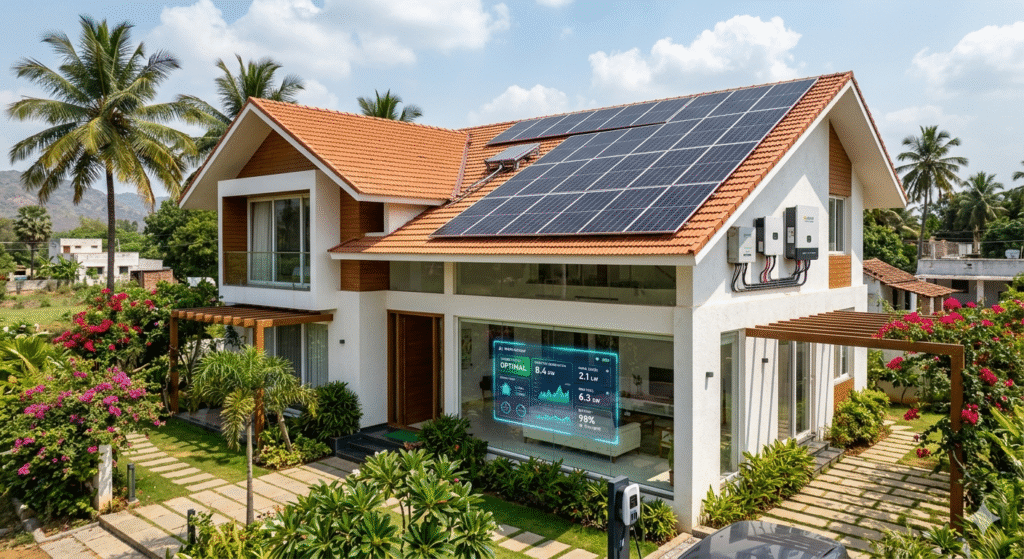
For years, solar systems were relatively simple:
- Panels generated electricity
- Inverters converted it for home use
- Excess power went to the grid
But in 2026, that model is evolving fast.
Today’s solar systems are becoming smarter—not because of the panels, but because of AI-powered smart inverters that can monitor, analyze, and optimize home electricity usage in real time.
For homeowners in Andhra Pradesh dealing with rising electricity bills, variable power supply, and growing appliance usage, this shift matters more than most people realize.
The future of solar is no longer just about generating power.
It’s about managing power intelligently.
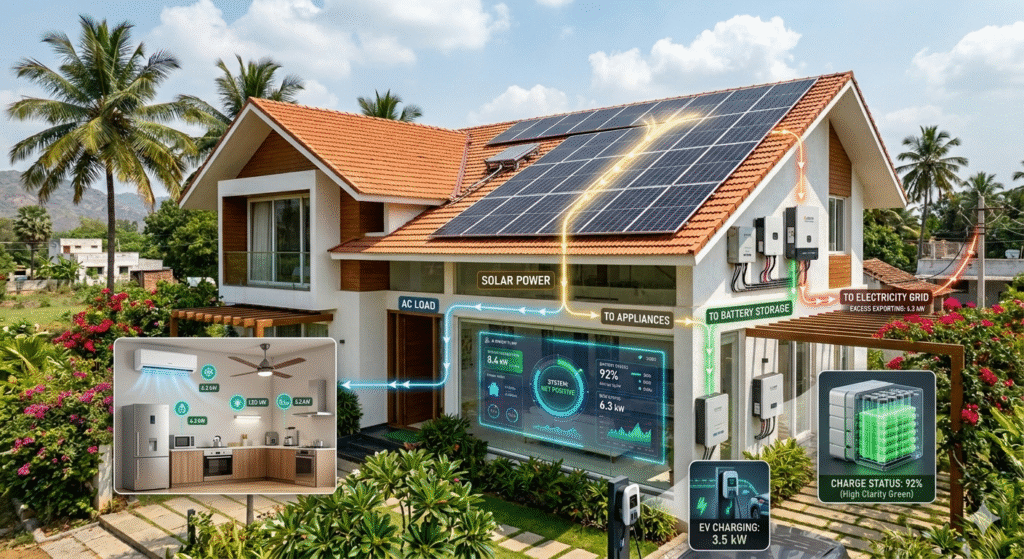
What Is a Smart Solar Inverter?
A solar inverter converts the DC electricity generated by solar panels into AC electricity used by homes.
A smart inverter goes much further.
It can:
- Monitor electricity generation and usage
- Analyze consumption patterns
- Optimize energy distribution
- Communicate with the grid
- Integrate with batteries and smart appliances
In 2026, many advanced systems also use AI-driven software to improve efficiency automatically.
How AI Is Changing Home Energy Management
Traditional systems react.
AI-driven systems predict and optimize.
That’s the major difference.
1. Smarter Energy Consumption Decisions
AI-enabled inverters can learn household usage patterns over time.
For example:
- When AC usage peaks
- When washing machines usually run
- When electricity demand is highest
The system can then prioritize solar usage during those periods to reduce grid dependency.
2. Real-Time Monitoring Through Mobile Apps
Modern homeowners expect visibility.
Smart inverter systems now provide:
- Real-time electricity generation data
- Daily consumption tracking
- Alerts for abnormal performance
- Battery status monitoring
This gives homeowners more control over their energy usage than ever before.
3. Better Battery Management
For homes with battery storage, AI plays a major role.
Instead of simply charging and discharging randomly, smart systems can:
- Predict evening consumption needs
- Reserve battery power during likely outages
- Optimize charging based on weather forecasts
This becomes especially useful in areas with inconsistent power supply.
4. Grid Interaction & Net Metering Optimization
Smart inverters help manage when to:
- Consume solar power directly
- Store energy
- Export excess electricity to the grid
This improves overall efficiency under net metering systems.
In Andhra Pradesh, where net metering remains important for residential savings, optimization can directly impact electricity bills.
5. Early Fault Detection
One underrated benefit of AI systems:
They identify issues before homeowners notice them.
Smart systems can detect:
- Panel underperformance
- Wiring issues
- Abnormal voltage fluctuations
- Inverter inefficiencies
Instead of waiting for a major failure, maintenance becomes more proactive.
Why This Matters More in 2026
A few years ago, solar adoption was mainly about reducing bills.
Now the challenge is different:
Homes are consuming more electricity than ever.
Growing Household Loads Include:
- Air conditioners
- EV charging
- Smart appliances
- Home offices
- Water pumps
Without intelligent energy management, even a solar-powered home can become inefficient.
That’s why inverter intelligence is becoming central—not optional.
The Financial Impact: Realistic Expectations
Let’s avoid exaggerated claims.
AI-driven smart inverters do not magically eliminate electricity bills.
What they can do is:
- Improve energy efficiency
- Reduce wastage
- Optimize battery usage
- Improve solar utilization
Over time, these improvements can strengthen overall ROI.
Where Smart Inverters Deliver the Most Value
✔ Homes with High Electricity Usage
Larger homes benefit more because optimization opportunities are greater.
✔ Homes with Battery Backup
AI adds significant value when batteries are involved.
✔ Areas with Grid Instability
Smart systems help manage outages and voltage fluctuations more effectively.
✔ Tech-Aware Homeowners
If homeowners actively monitor and manage energy usage, the benefits become more noticeable.
Challenges Homeowners Should Understand
❌ Higher Initial Cost
Smart inverter systems cost more than standard inverters.
❌ Dependence on Connectivity
Some advanced features require stable internet access.
❌ Learning Curve
Many homeowners buy advanced systems but never use the monitoring features properly.
Technology alone doesn’t create efficiency—usage behavior matters too.
The Bigger Shift: Homes Becoming Energy Systems
This is the real transition happening in 2026.
Homes are no longer passive electricity consumers.
They are becoming:
- Energy generators
- Energy storage units
- Intelligent consumption systems
Smart solar inverters sit at the center of this transformation.
Why Andhra Pradesh Is Well Positioned for This Trend
Andhra Pradesh has several advantages:
- Strong solar potential
- Rising residential solar adoption
- Increasing electricity demand
- Growing awareness of smart home technologies
As energy costs rise, homeowners are becoming more interested not just in generating electricity—but in controlling how it’s used.
Conclusion
Smart solar inverters are changing how homes manage electricity in 2026.
They bring together:
- Solar generation
- AI-driven optimization
- Battery management
- Real-time monitoring
But the real value is not in the technology itself—it’s in improving how efficiently homes consume and manage energy.
For homeowners working with providers like VMJ Solar Solutions, the smarter approach is not simply installing solar panels. It’s building an intelligent energy system designed for long-term efficiency and adaptability.
Because the next phase of solar isn’t just clean energy.
It’s smart energy.
FAQs
1. What is the difference between a normal inverter and a smart inverter?
A smart inverter can monitor, analyze, and optimize electricity usage, while a normal inverter mainly converts power.
2. Do smart inverters require internet connectivity?
Many advanced features work better with internet access, especially mobile monitoring and AI updates.
3. Can AI-powered inverters reduce electricity bills?
They can improve efficiency and optimize energy usage, which may help reduce overall electricity costs.
4. Are smart inverters suitable for small homes?
Yes, but the benefits are usually greater in homes with higher electricity consumption.
5. Do smart inverters work with battery storage?
Yes. In fact, AI optimization becomes more useful when batteries are integrated.
6. Are smart solar systems difficult to maintain?
Not necessarily. Many systems simplify maintenance through automated alerts and monitoring.