
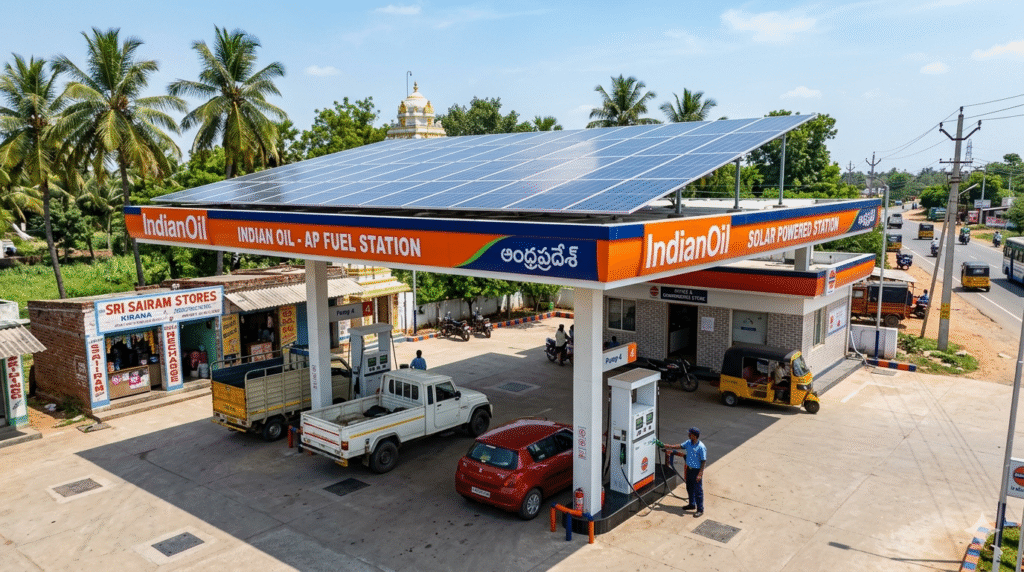
Petrol pump owners across Andhra Pradesh are facing a squeeze—rising electricity bills, unpredictable power supply, and increasing operational costs.
And here’s the uncomfortable truth:
If you’re still fully dependent on grid power, your margins are already under pressure—you just may not have calculated it properly yet.
That’s why a growing number of petrol pumps—from highways to urban centers—are switching to solar power.
This isn’t about trends. It’s about control over costs.
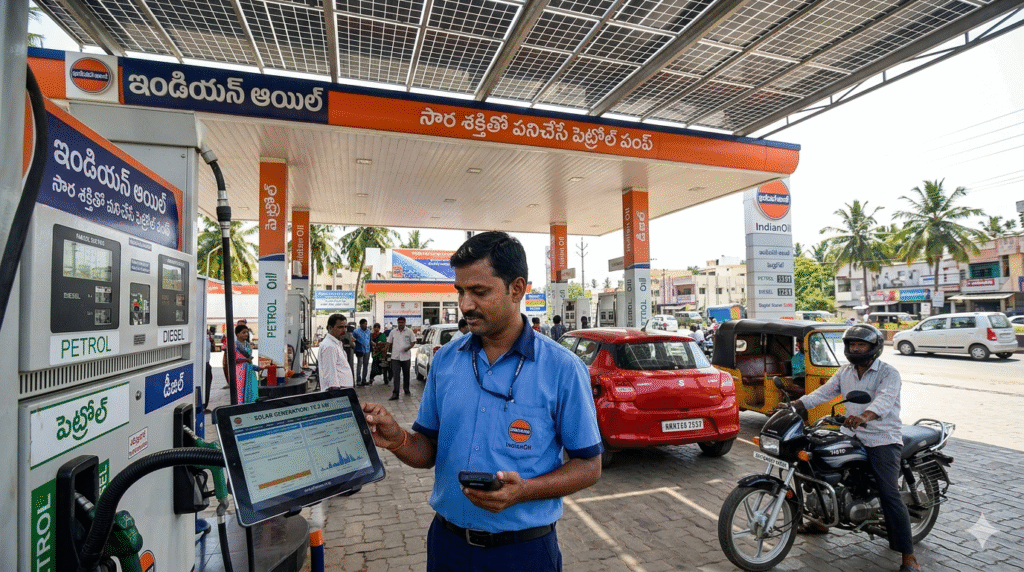
The Real Drivers Behind This Shift (Not What Most People Think)
Most articles will tell you “solar is eco-friendly.” That’s true—but it’s not the reason businesses switch.
They switch because:
💰 1. Electricity Is Eating Into Profits
- Monthly power bills for petrol pumps are significant
- Tariffs keep rising, margins don’t
- Solar locks in your energy cost for 20+ years
Translation: Predictable costs = better business planning
⚡ 2. Downtime = Lost Revenue
Power cuts don’t just inconvenience you—they stop sales.
- Fuel dispensing systems halt
- Lighting and safety systems go offline
- Customers move to competitors
Solar reduces dependency on unreliable supply.
3. Diesel Generators Are a Hidden Expense
If you’re using generators:
- Fuel cost is high
- Maintenance adds up
- Noise and emissions hurt your brand
Solar eliminates most of this burden.
Why Petrol Pumps Are Perfect for Solar (Most Businesses Aren’t This Ideal)
Let’s be blunt—many businesses can use solar.
Petrol pumps? They’re almost built for it.
- Large, open canopy roofs (perfect for panels)
- Peak usage during daylight hours
- High and consistent electricity demand
- Minimal shading issues
This combination means faster ROI than typical commercial setups.
What’s Happening Across Andhra Pradesh Right Now
This shift is already underway—and accelerating.
🚀 Oil Companies Are Quietly Pushing Solar
Companies like Indian Oil Corporation, Bharat Petroleum, and Hindustan Petroleum are:
- Encouraging solar adoption at dealer level
- Designing new outlets with solar integration
- Aligning with renewable energy targets
If you’re not adapting, you’re slowly falling behind industry direction.
Government Policies Are Tilting the Economics
- Net metering lets you export excess power
- Subsidies reduce upfront investment
- Faster approvals for commercial solar
This is one of those rare moments where policy + economics + technology are aligned.
Real Examples: What’s Actually Working on the Ground
🛣️ Highway Petrol Pumps (Vijayawada Belt)
- Installed: 20–30 kW systems
- Savings: Up to 70% on electricity
- Result: Lower operating costs + better uptime
These owners didn’t wait—they moved early and now benefit the most.
Rural Pumps (Anantapur Region)
- Problem: Frequent power cuts
- Solution: Solar + backup integration
- Outcome: Continuous operations without diesel dependency
This is where solar shifts from “saving money” to saving the business itself.
Urban Stations (Visakhapatnam)
- Challenge: High tariffs + competition
- Strategy: Solar + modern retail upgrades
- Benefit: Lower costs + stronger brand positioning
Customers notice. And yes—perception matters in retail fuel.
The Numbers Most Dealers Avoid Calculating
Let’s cut through assumptions.
If your petrol pump spends:
- Rs50,000–Rs1,50,000/month on electricity
- That’s Rs6–18 lakh per year
Over 10 years?
You’re looking at Rs60 lakh to Rs1.8 crore spent on power.
Now ask yourself:
👉 How much of that could have been saved—or turned into an asset—with solar?
What Smart Petrol Pump Owners Are Doing Differently
They’re not asking “Is solar worth it?”
They’re asking:
- What system size maximizes ROI?
- How fast can I recover my investment?
- Which installer actually understands petrol pump operations?
That last question is where most go wrong.
Why Execution Matters More Than the Idea
Solar is not just panels—it’s design, installation, and optimization.
A poorly designed system:
- Underperforms
- Takes longer to break even
- Creates maintenance headaches
A properly designed system:
- Maximizes generation
- Shortens payback period
- Runs reliably for decades
This is where working with the right partner becomes critical.
How VMJ Solar Helps Petrol Pumps Go Solar (Without Guesswork)
At VMJ Solar, the focus isn’t just installing panels—it’s delivering business outcomes.
What Makes the Approach Different:
- ✔ Site-specific system design (not generic templates)
- ✔ Load analysis based on actual petrol pump usage
- ✔ High-quality components for long-term reliability
- ✔ End-to-end execution—from approvals to installation
- ✔ Ongoing support and performance monitoring
The goal is simple:
You should see measurable savings—not just a system on your roof.
Common Objections (And Why They Don’t Hold Up)
Let’s address what you might be thinking:
“Initial investment is high”
Yes—but so is doing nothing.
Solar pays for itself. Grid bills don’t.
“I’ll wait and see”
That’s a losing strategy.
Every year you delay = money lost to electricity bills.
“I’m not sure how it works”
You don’t need to be.
You need the right partner—not technical expertise
The Bigger Shift: From Fuel Station to Energy Hub
Here’s what most people are missing:
Petrol pumps are evolving.
- EV charging is coming
- Energy demand is increasing
- Customers expect modern infrastructure
Solar positions you for that future.
Without it, you’re operating on an outdated model.
Conclusion: This Isn’t About Sustainability—It’s About Survival
Yes, solar helps the environment.
But for petrol pump owners in Andhra Pradesh, the real value is:
- Lower costs
- Higher control
- Better resilience
- Future readiness
The real risk today isn’t switching to solar.
It’s staying dependent on a system that keeps getting more expensive
Ready to Explore Solar for Your Petrol Pump?
If you’re serious about reducing costs and improving operational efficiency, the next step is simple:
- Evaluate your current electricity usage
- Understand your savings potential
- Get a customized solar plan
👉 VMJ Solar can help you do exactly that—without guesswork.