
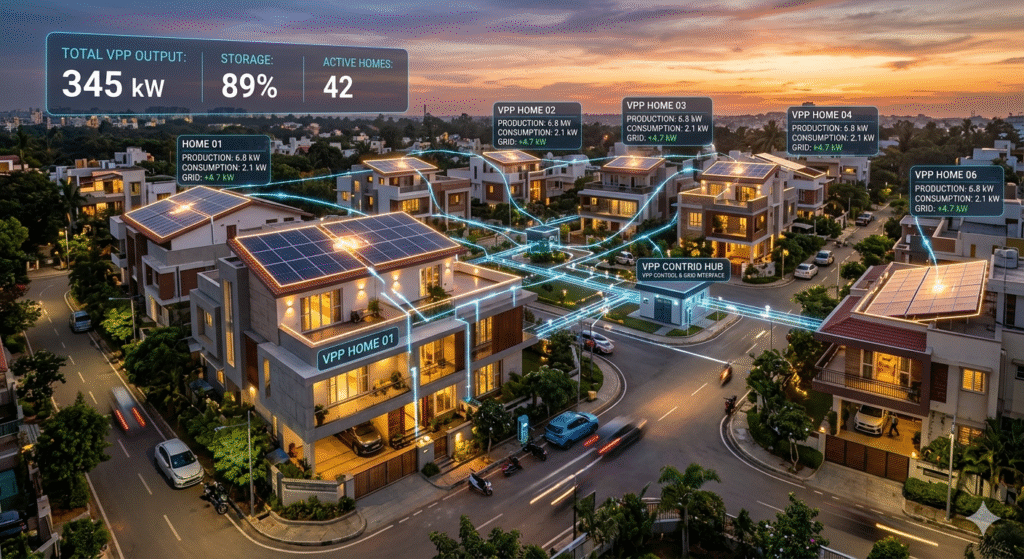
Solar energy is no longer just about installing panels on your rooftop and cutting down electricity bills. The industry is undergoing a major shift—one that’s turning everyday solar users into active participants in the energy market.
Enter the Virtual Power Plant (VPP).
If you’re a homeowner, business owner, or someone considering solar with VMJ Solar, this isn’t just another buzzword. It’s a glimpse into the future of energy—where your solar system doesn’t just save money… it earns money.
And if you ignore it now, you risk being stuck in yesterday’s solar model while others monetize theirs.
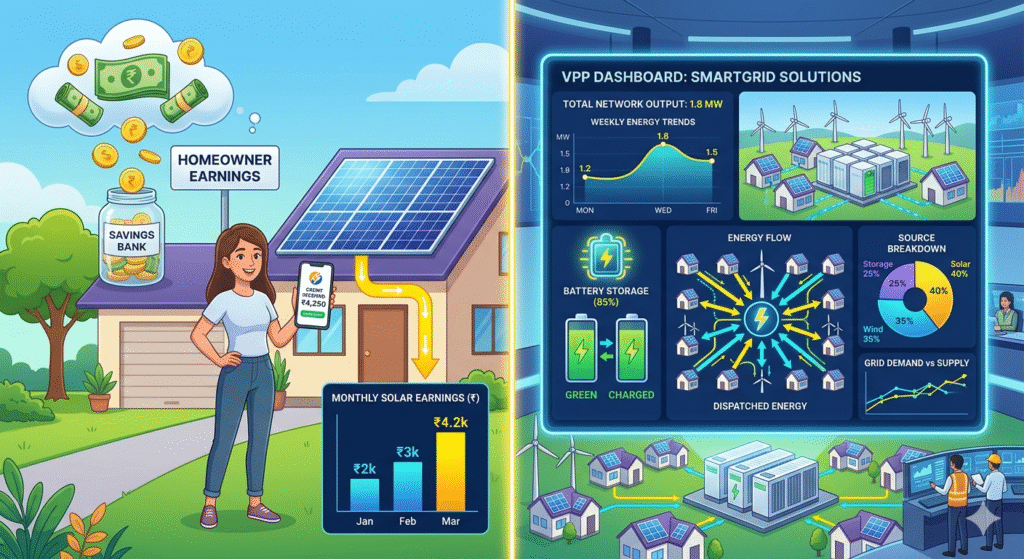
What is a Virtual Power Plant (VPP)?
A Virtual Power Plant (VPP) is a network of decentralized energy systems—like rooftop solar panels, battery storage units, and smart devices—that work together as a single power plant.
Instead of relying solely on massive coal or gas plants, energy is generated and managed across thousands of smaller systems.
In simple terms:
Your home solar system becomes part of a larger energy ecosystem, coordinated through smart software and AI.
When the grid needs extra power, your system can:
- Supply excess electricity
- Store energy for later use
- Automatically respond to demand signals
Why this matters:
Traditionally, you consume electricity.
With VPPs, you become both a consumer and a contributor—often called a “prosumer.”
Why Virtual Power Plants Are Gaining Momentum
This isn’t theoretical. It’s already happening globally—and accelerating fast.
Key Industry Trends:
- The global VPP market is expected to exceed $10 billion by 2030
- Countries like Australia, Germany, and the U.S. are already running large-scale VPP programs
- AI-driven energy management is improving efficiency by up to 30%
Real-World Example:
In South Australia, Tesla’s VPP connects thousands of homes with solar panels and batteries. These homes collectively act as a large power plant—reducing grid stress and generating income for participants.
Now ask yourself:
If homeowners elsewhere are earning from their energy, why shouldn’t you?
Benefits of Virtual Power Plants in the Solar Market
1. Better Use of Your Solar Power
Most solar users waste surplus energy by exporting it at low rates.
With a VPP:
- Your energy is strategically distributed
- You get better value for excess power
- Storage and usage are optimized
Translation: Less waste, more profit.
2. Increased Grid Stability
Power cuts and voltage fluctuations are common issues.
VPPs help:
- Balance supply and demand
- Reduce load on traditional power plants
- Improve reliability in local grids
For regions like Andhra Pradesh, this could be a game-changer in reducing outages.
3. AI-Powered Smart Energy Management
Modern VPPs use AI to:
- Predict energy demand
- Automate energy storage and release
- Optimize pricing opportunities
This isn’t manual—it’s intelligent automation working in your favor.
4. Environmental Impact
By participating in a VPP:
- You reduce dependence on fossil fuels
- Lower carbon emissions
- Support decentralized clean energy systems
And yes, that matters—not just ethically, but economically as carbon policies tighten.
How You Can Earn From Virtual Power Plants
This is where things get interesting—and where most people underestimate the opportunity.
1. Selling Excess Power at Higher Value
Instead of exporting energy at fixed low tariffs, VPPs allow dynamic pricing.
That means:
- Sell when demand (and price) is high
- Store energy when prices are low
Timing becomes profit.
2. Demand Response Incentives
Energy providers often pay users to reduce or supply power during peak demand.
With a VPP:
- Your system automatically responds
- You get paid for participation
No effort. Just smart systems working for you.
3. Battery Optimization Earnings
If your solar setup includes battery storage:
- You can store cheap energy
- Sell it during peak hours
This creates a mini energy trading system at home.
4. Government and Utility Incentives
Many regions are beginning to:
- Offer subsidies for VPP participation
- Provide incentives for battery integration
- Encourage decentralized energy systems
India is gradually moving in this direction—early adopters will benefit the most.
The Role of VMJ Solar in This Future
Here’s the uncomfortable truth:
Not all solar installations are future-ready.
If your system isn’t designed for integration with smart grids and VPPs, you’re limiting its potential.
What sets VMJ Solar apart?
VMJ Solar isn’t just installing panels—they’re aligning with where the industry is heading.
Key Advantages:
- Future-Ready Systems
Designed to integrate with smart grids and VPP frameworks - Battery Storage Solutions
Enabling energy trading and backup capabilities - Smart Monitoring Tools
Real-time tracking and optimization of energy usage - Customized Installations
Tailored systems based on your energy goals—not generic setups
Why “Virtual Power Plant” Matters Right Now
If you’re researching solar, you’ve probably noticed new terms popping up:
- Virtual Power Plant (VPP)
- Smart grid solar systems
- Solar energy trading
- AI energy management
These aren’t trends—they’re signals.
Search interest in “Virtual Power Plant” has surged globally, making it a high-value keyword in solar SEO strategy.
Businesses that position themselves early—like VMJ Solar—gain:
- Higher search visibility
- Better customer trust
- Industry authority
And as a consumer, aligning with forward-thinking providers gives you a long-term advantage.
Who Should Consider Joining a VPP?
Let’s be direct—not everyone will benefit equally.
You should seriously consider it if:
- You already have or plan to install solar panels
- You’re open to adding battery storage
- You want to maximize ROI, not just save on bills
- You’re comfortable with smart technology integration
You might hesitate if:
- You’re only focused on short-term savings
- You don’t want system upgrades
- You prefer passive energy usage
But understand this:
Energy is becoming interactive. Staying passive will cost you.
Challenges You Shouldn’t Ignore
Let’s not pretend this is all upside.
1. Initial Investment
Battery systems and smart tech add cost.
But the question isn’t cost—it’s return over time.
2. Policy and Regulation in India
India’s VPP ecosystem is still developing.
However, that’s exactly why early adopters gain leverage.
3. Technology Learning Curve
Smart systems require some understanding.
But modern platforms are becoming increasingly user-friendly.
The Bigger Picture: Energy Is Becoming Decentralized
The traditional model:
Power plant → Grid → Consumer
The emerging model:
Millions of small producers → Smart network → Shared energy ecosystem
This shift is as significant as the move from landlines to smartphones.
And just like that transition, the early movers benefit disproportionately.
Conclusion: Don’t Just Go Solar—Go Smarter with VMJ Solar
Installing solar panels is no longer enough.
If your system isn’t:
- Smart
- Connected
- Scalable
- VPP-ready
…then you’re only capturing part of the value.
Virtual Power Plants represent the next evolution of solar energy—one where your system becomes an income-generating asset, not just a cost-saving tool.
VMJ Solar is positioning itself at the intersection of:
- Solar technology
- Smart energy systems
- Future-ready infrastructure
So the real question isn’t:
“Should I go solar?”
It’s:
“Am I building a system that will still be relevant—and profitable—5 years from now?”
Ready to Take the Next Step?
If you’re serious about:
- Reducing electricity costs
- Earning from your solar investment
- Future-proofing your energy system
Then it’s time to explore what VMJ Solar can do for you.
Because the future of energy isn’t coming.
It’s already here—and it’s rewarding those who move first