
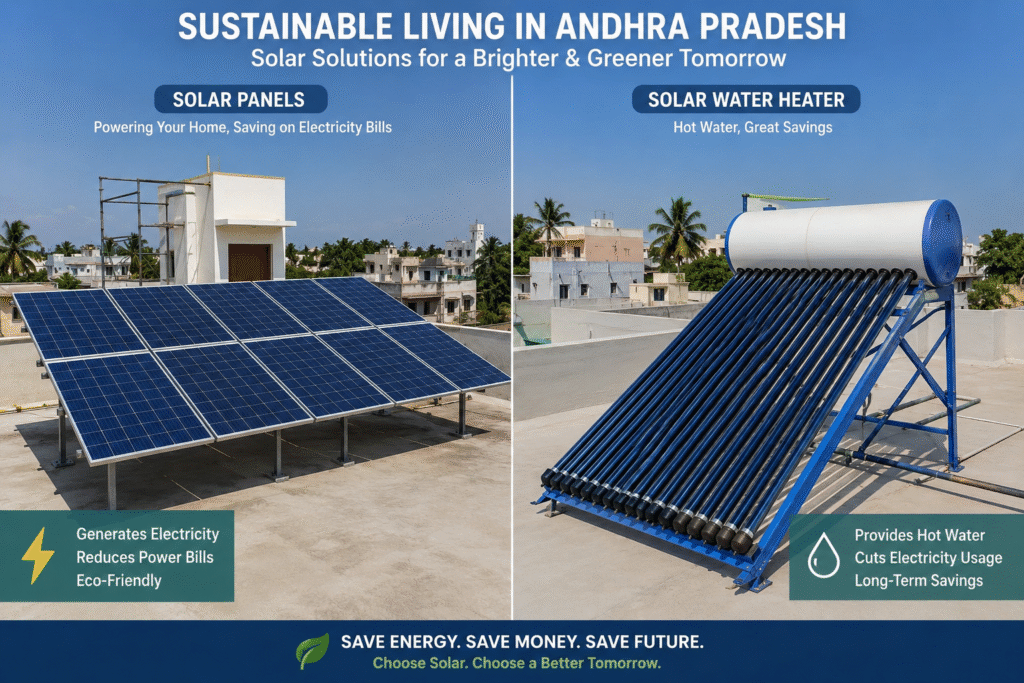
As energy costs continue rising across Andhra Pradesh, more homeowners are looking at solar-based solutions to reduce electricity bills and improve long-term savings.
But many homeowners face an important question before investing:
Should I install a solar water heater or a rooftop solar panel system?
At first glance, both technologies appear similar because they use sunlight. But they solve very different problems.
A solar water heater reduces the cost of heating water.
A rooftop solar panel system generates electricity for the entire home.
Choosing the right investment depends on:
- Your electricity usage
- Hot water demand
- Budget
- Roof space
- Long-term financial goals
For homeowners working with providers like VMJ Solar Solutions, understanding the real differences between these systems is critical before making a decision.
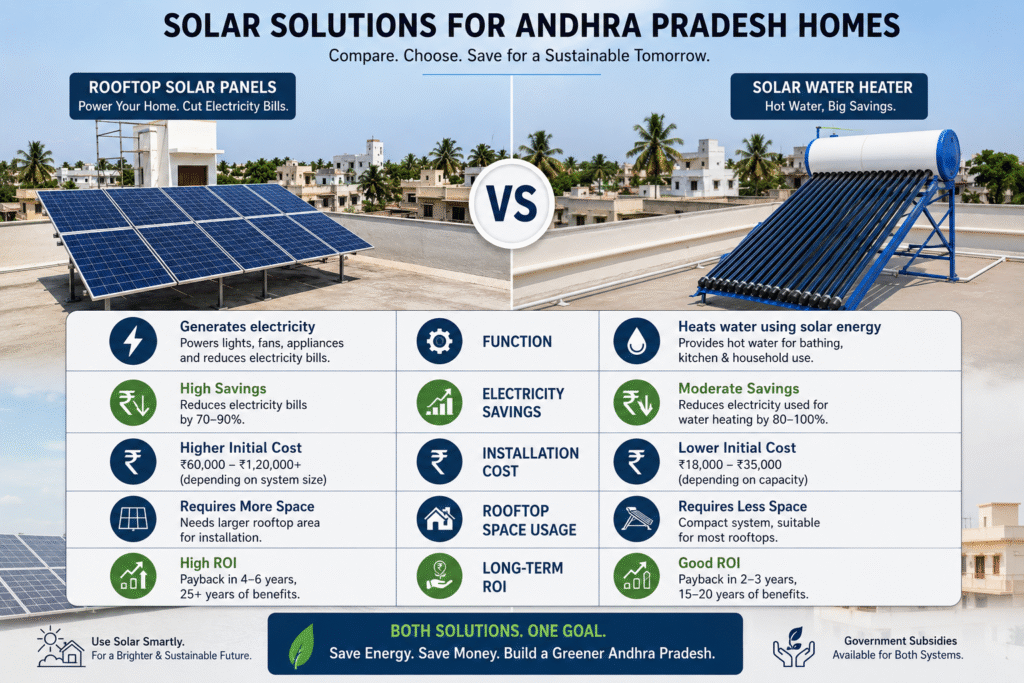
Understanding the Difference Between Solar Water Heaters and Solar Panels
Before comparing ROI, it’s important to understand what each system actually does.
Solar Water Heater
A solar water heater uses sunlight to heat water directly.
Typical components include:
- Solar collectors
- Insulated storage tank
- Piping system
These systems are commonly used for:
- Bathrooms
- Kitchens
- Hotels
- Hostels
- Apartments
Rooftop Solar Panels
Solar panels generate electricity using photovoltaic (PV) technology.
The electricity produced can power:
- Lights
- Fans
- Air conditioners
- Refrigerators
- Pumps
- Entire household loads
Modern rooftop solar systems may also include:
- Smart inverters
- Battery backup
- Net metering integration
Why This Comparison Matters More in Andhra Pradesh
Andhra Pradesh experiences:
- High solar radiation
- Long summers
- Rising electricity tariffs
- Increasing AC usage
This makes both technologies relevant.
However:
The better investment depends on how your home consumes energy.
Solar Water Heater: Advantages and Limitations
Advantages of Solar Water Heaters
Lower Initial Cost
Compared to rooftop solar systems, solar water heaters are generally more affordable upfront.
Efficient for Water Heating
If your household uses large amounts of hot water daily, solar water heaters can significantly reduce:
- Geyser electricity usage
- Water heating costs
Simpler Technology
Solar water heaters:
- Require less electrical infrastructure
- Have fewer electronic components
- Are relatively straightforward to maintain
Good for Apartments and Hotels
Properties with centralized hot water demand often benefit strongly from solar water heating systems.
Limitations of Solar Water Heaters
Limited Use Case
A solar water heater only addresses water heating.
It cannot:
- Power appliances
- Reduce overall household electricity usage significantly
- Support backup power systems
Seasonal Performance Variation
Cloudy weather and monsoon conditions can reduce heating efficiency.
Some systems require:
- Electrical backup heating support
during low sunlight periods.
Roof Space Consumption
Solar water heaters still occupy rooftop space that could otherwise support solar panels.
Rooftop Solar Panels: Advantages and Limitations
Advantages of Solar Panels
Broader Electricity Savings
Solar panels offset electricity consumption across the home.
This includes:
- Lighting
- Cooling
- Appliances
- Pumps
- Electronics
The savings potential is much broader than water heating alone.
Net Metering Benefits
In Andhra Pradesh, rooftop solar systems may qualify for:
- Net metering
- PM Surya Ghar subsidy
- Reduced electricity bills
Excess power can often be exported to the grid.
Long-Term Energy Independence
Solar panels reduce dependence on:
- Grid electricity
- Tariff increases
- Diesel generators
Flexible Expansion
Solar systems can often be expanded later as energy demand grows.
Limitations of Solar Panels
Higher Initial Investment
Rooftop solar systems cost significantly more upfront than solar water heaters.
More Complex Installation
Solar panel systems involve:
- Electrical integration
- Inverters
- Net metering approvals
- Structural assessment
Maintenance Requirements
Panels require:
- Cleaning
- Monitoring
- Occasional servicing
especially in dusty regions of Andhra Pradesh.
Which System Saves More Money?
This depends entirely on household energy patterns.
Solar Water Heaters Save More If:
Your electricity consumption is heavily driven by:
- Electric geysers
- Daily hot water usage
Examples include:
- Large families
- Hotels
- Hostels
- Rental apartments
Solar Panels Save More If:
Your home has:
- High overall electricity usage
- Air conditioners
- Pumps
- Appliances
- Long-term energy consumption growth
For many modern homes, rooftop solar usually delivers broader financial impact over time.
Which Has Better Long-Term ROI?
In many residential cases:
Rooftop solar panels generally provide larger total long-term savings.
because they offset:
- Multiple household loads
- Rising electricity tariffs
- Broader energy consumption
However:
Solar water heaters often achieve faster payback for homes with high hot water demand.
The better investment depends on:
- Your energy profile
- Budget
- Roof availability
- Future electricity needs
—not generic marketing claims.
Can You Use Both Together?
Yes—and in some homes, this is actually the smartest solution.
Combining:
- Rooftop solar panels
- Solar water heaters
can improve overall energy efficiency significantly.
However:
Roof space planning becomes important.
Poor rooftop layout can create:
- Shading issues
- Maintenance difficulty
- Reduced efficiency
Integrated planning matters.
Common Mistakes Homeowners Make
❌ Choosing Only Based on Lowest Cost
Cheaper systems may:
- Underperform
- Require higher maintenance
- Deliver lower long-term savings
❌ Ignoring Actual Energy Usage
Many homeowners install systems without analyzing:
- Monthly electricity bills
- Hot water consumption
- Future demand growth
❌ Oversizing or Undersizing Systems
Improper sizing weakens ROI.
❌ Ignoring Roof Suitability
Not all roofs can efficiently accommodate both systems together.
Which System Is Better for Different Home Types?
| Home Type | Better Option |
|---|---|
| Small family with low electricity usage | Solar water heater may suffice |
| Large independent house | Rooftop solar panels often provide greater value |
| Apartment complex | Combination may work best |
| Hotel or hostel | Solar water heaters highly effective |
| High AC usage home | Rooftop solar strongly beneficial |
Why Smart Homeowners Are Thinking Beyond One System
The future of residential energy efficiency is not:
- “solar panel OR solar heater”
It’s increasingly:
- Integrated energy management
Modern sustainable homes now combine:
- Rooftop solar
- Solar water heating
- Smart inverters
- Rainwater harvesting
- Efficient appliances
The real advantage comes from reducing total resource dependency.
Conclusion
Both solar water heaters and rooftop solar panels can reduce utility costs in Andhra Pradesh—but they serve different purposes.
Solar water heaters are effective for:
- Hot water savings
- Lower upfront investment
- Simpler residential applications
Rooftop solar panels are more powerful for:
- Whole-home electricity savings
- Long-term energy independence
- Broader financial impact
For many AP homes, rooftop solar panels often provide greater long-term value because they reduce total electricity consumption rather than just water heating costs.
But the smartest investment depends on:
- Your actual energy usage
- Roof space
- Budget
- Long-term goals
For providers like VMJ Solar Solutions, the real value lies in helping homeowners choose systems based on practical energy needs—not one-size-fits-all recommendations.
Because the best solar investment is not the most heavily marketed one.
It’s the one that aligns with how your home actually consumes energy.
Frequently Asked Questions (FAQs)
1. What is the main difference between solar water heaters and solar panels?
Solar water heaters heat water directly, while solar panels generate electricity for household use.
2. Which system has lower installation cost?
Solar water heaters generally cost less upfront than rooftop solar panel systems.
3. Which system provides higher long-term savings?
Rooftop solar panels usually offer broader long-term electricity savings.
4. Can I install both systems on the same roof?
Yes, but proper roof planning is important to avoid shading and space issues.
5. Do solar water heaters work during monsoon?
Yes, but heating efficiency may reduce during cloudy weather.
6. Which system is better for large homes in Andhra Pradesh?
For homes with high electricity consumption, rooftop solar panels are often more beneficial.