
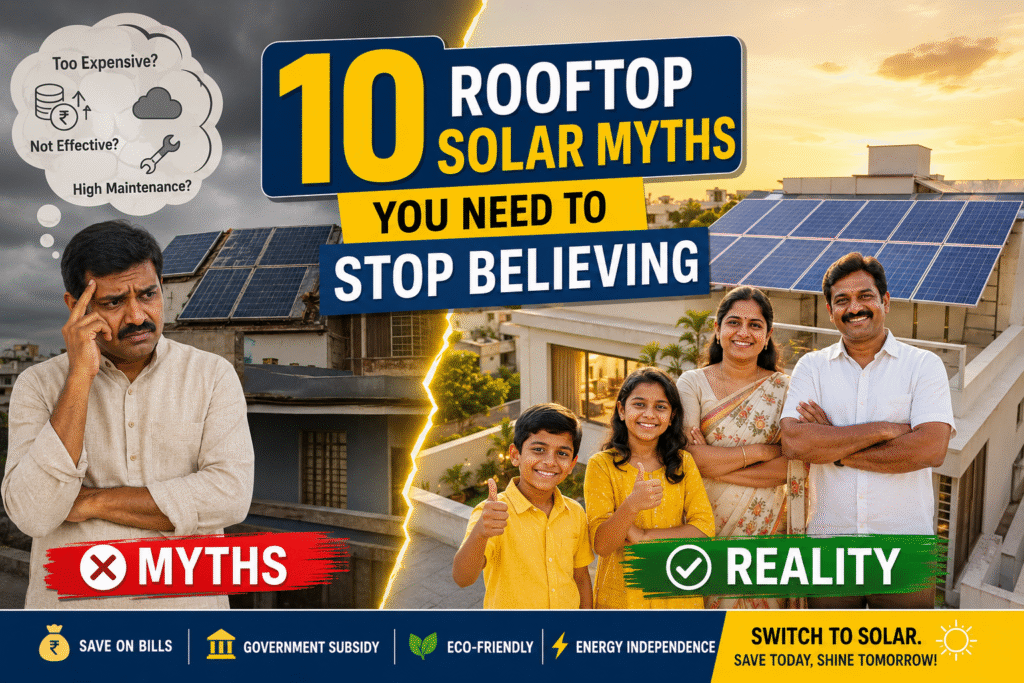
India’s rooftop solar market is growing rapidly, especially in states like Andhra Pradesh where rising electricity bills, frequent summer power demand, and increasing awareness about sustainable living are pushing homeowners toward solar energy. Yet, despite the growth, many people still hesitate to install solar panels because of outdated information, half-truths, and myths spread through word of mouth.
At VMJ Solar Solutions, one of the most common things we hear from homeowners is:
“Solar sounds good, but I heard it doesn’t work during monsoons,”
“It’s too expensive,”
“Maintenance is a headache,” or
“It only works for luxury homes.”
The reality is very different.
This guide breaks down the biggest myths about rooftop solar in India and explains what homeowners in Andhra Pradesh should realistically expect before investing in a solar panel system.
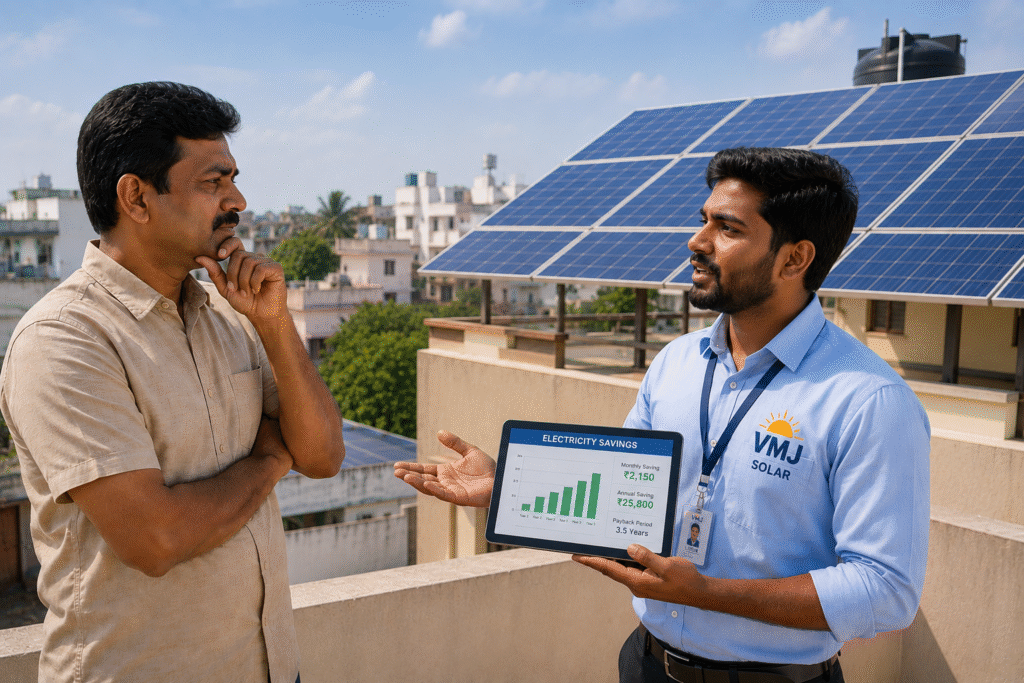
Why Rooftop Solar Is Becoming Popular in Andhra Pradesh
Cities like Vijayawada, Guntur, Visakhapatnam, and rapidly developing semi-urban areas are seeing increased demand for residential solar systems due to:
- Rising residential electricity tariffs
- Frequent use of air conditioners and water pumps
- Government solar subsidies
- Better awareness about renewable energy
- Long-term savings on electricity bills
- Increased focus on energy-efficient homes
However, misinformation still prevents many families from making informed decisions.
Let’s clear that up.
Myth 1: Rooftop Solar Is Too Expensive for Middle-Class Families
The Truth
This was partially true 10 years ago. Today, rooftop solar systems are significantly more affordable due to:
- Lower solar panel manufacturing costs
- Government subsidy schemes
- Better financing and EMI options
- Increased competition among solar companies
For many homes in Andhra Pradesh, a properly sized residential solar system can reduce electricity bills substantially over time. However, savings depend on:
- Household electricity usage
- Roof size and sunlight availability
- Type of solar system installed
- Local electricity tariffs
- Maintenance quality
Solar is not “free electricity forever,” but it can become a strong long-term home improvement investment.
Important Consideration
Homeowners should compare installation quality, warranties, and after-sales support — not just the cheapest quotation.
Myth 2: Solar Panels Don’t Work During Cloudy Weather or Monsoons
The Truth
Solar panels generate electricity from sunlight, not heat. Even during cloudy days or monsoon seasons, panels still produce power — just at reduced efficiency.
In Andhra Pradesh, the climate actually supports good solar generation for most of the year because the state receives strong sunlight across multiple seasons.
What Homeowners Should Expect
- Peak generation during summer and winter sunny days
- Lower output during heavy rain or dense cloud cover
- Annual performance matters more than daily fluctuations
Modern solar systems are designed while considering seasonal variations.
Myth 3: Rooftop Solar Requires Constant Maintenance
The Truth
One of the biggest advantages of rooftop solar is low maintenance.
Most residential systems only require:
- Occasional cleaning to remove dust and bird droppings
- Basic inspection of wiring and inverter performance
- Monitoring through mobile apps or display units
In many parts of Andhra Pradesh, dust accumulation during dry seasons can slightly reduce efficiency. Cleaning panels every few weeks usually helps maintain better performance.
Realistic Expectation
Solar panels are durable, but they are not completely maintenance-free. Choosing a reliable solar installer matters because poor installation can lead to future problems.
Myth 4: Solar Panels Damage Your Roof
The Truth
A professionally installed rooftop solar system should not damage your roof.
In fact, solar panels can sometimes help protect roof surfaces from direct heat exposure.
Problems usually happen when:
- Low-quality mounting structures are used
- Improper drilling techniques are followed
- Untrained installers handle the project
This is why working with experienced solar professionals is critical.
Myth 5: Solar Only Works for Large Independent Houses
The Truth
Solar systems can work for:
- Independent houses
- Duplex homes
- Apartments (common area electricity)
- Commercial buildings
- Small offices
- Schools and clinics
Even homes with limited roof space can install smaller systems that partially offset electricity usage.
Andhra Pradesh Market Trend
Many urban homeowners now begin with smaller systems and expand later based on electricity consumption growth.
Myth 6: Solar Panels Stop Working After a Few Years
The Truth
Modern solar panels are built for long-term durability.
Most quality panels come with performance warranties that extend for decades. However:
- Efficiency gradually decreases over time
- Inverters may require replacement earlier than panels
- Performance depends heavily on installation quality
Solar is a long-term asset, not a short-term gadget.
Myth 7: Government Subsidies Cover Everything
The Truth
Government solar subsidies help reduce installation costs, but they usually do not cover the full system price.
Subsidy eligibility may depend on:
- Residential category
- System size
- DISCOM approvals
- Current central or state policies
Policies can also change periodically.
Important Advice
Homeowners should verify the latest subsidy rules through authorized solar vendors instead of relying on social media claims.
Myth 8: Rooftop Solar Means Electricity Bills Become Zero
The Truth
This is one of the most misleading myths.
Solar can reduce electricity bills significantly, but “zero bill” outcomes depend on several factors:
- System size
- Net metering policies
- Seasonal electricity usage
- Appliance consumption
- Battery storage usage
Homes with high AC usage or electric vehicle charging may still receive monthly electricity bills.
A realistic goal is bill reduction and long-term energy efficiency — not magical elimination of all costs.
Myth 9: Battery Storage Is Mandatory for Solar
The Truth
Not every solar system requires batteries.
Many grid-connected rooftop solar systems operate without battery storage. These systems use solar power during the day and rely on the grid when needed.
Battery systems are usually preferred when:
- Power cuts are frequent
- Backup power is important
- Users want more energy independence
Important Consideration
Battery storage increases overall project cost, so homeowners should evaluate whether backup needs justify the investment.
Myth 10: Installing Solar Does Not Increase Property Value
The Truth
Globally, energy-efficient homes are increasingly viewed as attractive properties. In India, especially in developing urban areas, buyers are becoming more conscious about:
- Monthly electricity costs
- Sustainable living
- Modern infrastructure
- Green technology adoption
While rooftop solar may not dramatically increase resale value everywhere, it can improve property appeal and buyer perception.
For many homeowners, solar is both:
- A utility-saving upgrade
- A long-term home improvement decision
Key Benefits of Rooftop Solar for Andhra Pradesh Homeowners
Lower Dependence on Grid Electricity
Solar helps reduce reliance on rising electricity tariffs and grid fluctuations.
Better Energy Efficiency
Energy-efficient homes are becoming more attractive in India’s evolving real estate market.
Sustainable Living
Rooftop solar supports cleaner energy adoption and reduced carbon emissions.
Long-Term Financial Planning
Although the upfront investment exists, solar can provide predictable long-term savings when planned properly.
Reduced Heat Absorption
Panels can provide partial shade to rooftops, which may slightly reduce indoor heat exposure in some homes.
Things Homeowners Should Consider Before Installing Solar
Before investing in rooftop solar, evaluate:
Roof Condition
Old or damaged roofs may require repairs before installation.
Daily Electricity Usage
System size should match realistic consumption patterns.
Shadow-Free Area
Nearby buildings, water tanks, or trees can affect performance.
Installer Reputation
Installation quality often matters more than the lowest price.
Warranty & Service Support
Always check:
- Panel warranty
- Inverter warranty
- Installation workmanship support
- After-sales service availability
Why Choosing the Right Solar Partner Matters
The rooftop solar industry in India is growing fast, but not all installers follow the same standards.
A trusted solar company should provide:
- Proper site inspection
- Transparent pricing
- Realistic savings estimates
- Quality components
- Long-term service support
At VMJ Solar Solutions, the focus is on helping homeowners make informed decisions based on practical energy needs, local climate conditions, and long-term value rather than unrealistic promises.
Frequently Asked Questions (FAQs)
1. Is rooftop solar worth it in Andhra Pradesh?
For many homeowners with moderate to high electricity usage, rooftop solar can provide long-term savings and improved energy efficiency. However, returns vary based on system size, roof conditions, and electricity consumption.
2. How much roof space is needed for solar panels?
The required space depends on system capacity and panel efficiency. A professional site survey helps determine realistic installation possibilities.
3. Do solar panels work during power cuts?
Standard grid-connected systems usually shut down during power cuts for safety reasons unless battery backup or hybrid systems are installed.
4. How often should solar panels be cleaned?
In dust-prone regions of Andhra Pradesh, cleaning every few weeks may help maintain better efficiency.
5. What is net metering?
Net metering allows homeowners to export excess solar electricity to the grid and receive credits based on local electricity policies.
6. Can solar panels survive heavy rain and heat?
Quality solar panels are designed to handle varied weather conditions, including heat, rain, and wind when installed properly.
7. Is financing available for residential solar systems?
Many banks and financial institutions now offer solar financing and EMI options, depending on eligibility.
Final Thoughts
Rooftop solar is no longer a niche technology limited to large villas or commercial buildings. Across Andhra Pradesh, homeowners are increasingly exploring solar energy as a practical solution for reducing electricity costs, improving energy efficiency, and supporting sustainable living.
But making the right decision requires separating facts from myths.
Solar is not a miracle solution that removes every electricity expense overnight. It is a long-term investment that works best when homeowners understand realistic expectations, choose quality components, and work with experienced professionals.
If you are considering rooftop solar for your home, take time to evaluate your electricity needs, roof conditions, and long-term goals carefully.
The right solar setup can deliver meaningful value for years — both financially and environmentally.