
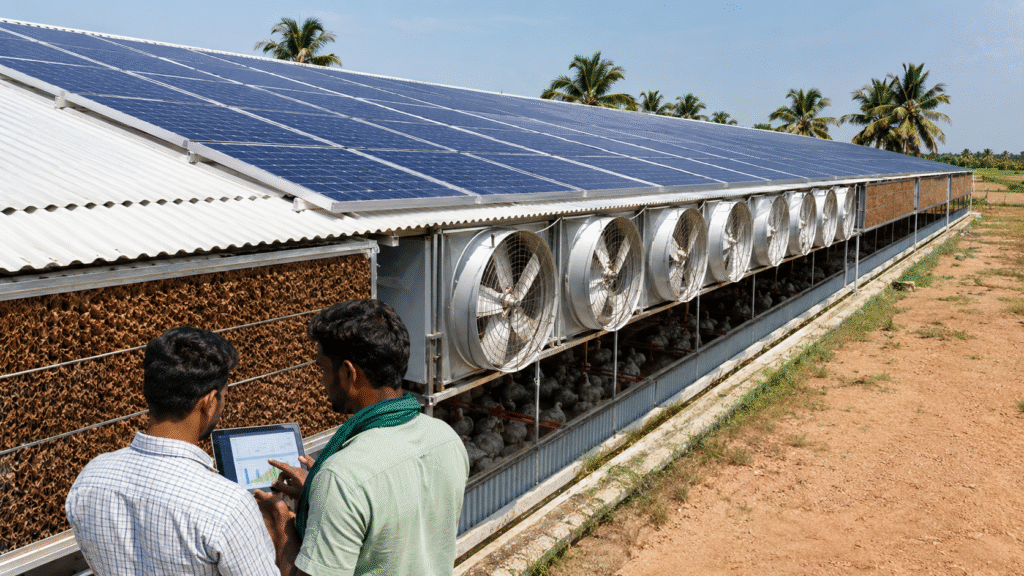
How Solar Energy Can Improve Efficiency and Reduce Electricity Expenses for Poultry Farms
Electricity is one of the largest operating expenses for modern poultry farms. From ventilation fans and cooling pads to lighting, automated feeding systems, and water pumps, poultry operations depend on continuous power to maintain healthy growing conditions for birds.
Across Andhra Pradesh, one of India’s leading poultry-producing states, farmers are increasingly exploring solar power solutions to reduce rising electricity costs while improving energy reliability.
Whether you operate a broiler farm, layer farm, hatchery, or integrated poultry unit, a well-designed solar power system can help offset a significant portion of daytime electricity consumption.
At VMJ Solar Solutions, we provide customized solar energy solutions for agricultural and commercial businesses, helping poultry farm owners improve operational efficiency while supporting sustainable farming practices.
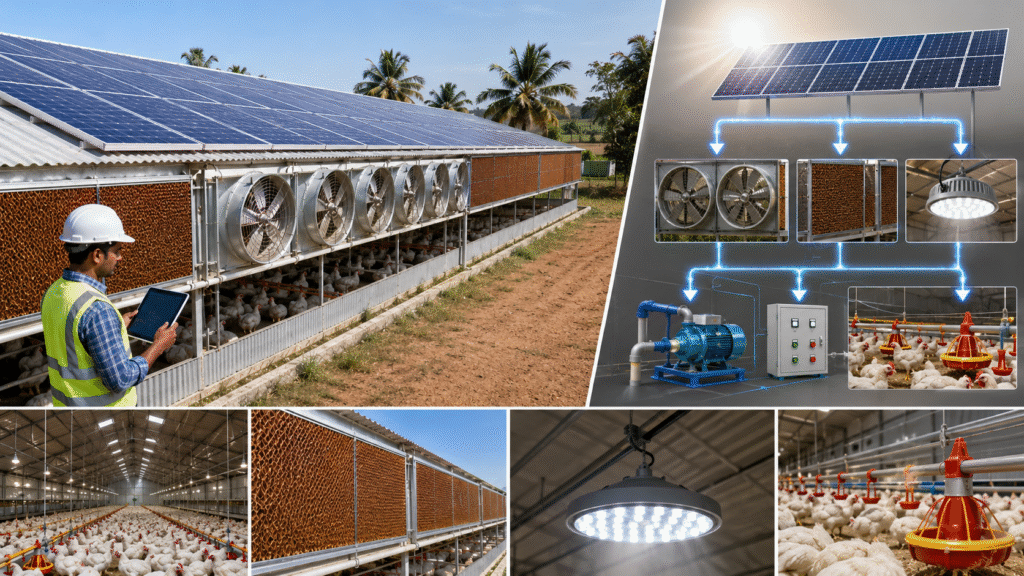
Why Electricity Is Critical for Poultry Farms
Maintaining the right environmental conditions is essential for bird health, growth, and productivity.
Electricity powers several important systems, including:
- Ventilation fans
- Cooling pad systems
- Exhaust fans
- Tunnel ventilation
- Brooders (in early stages)
- LED lighting
- Water pumps
- Automatic feeders
- Egg collection systems
- Control panels
- Monitoring equipment
Even short power interruptions can affect farm operations, making reliable energy supply a top priority.
Why Electricity Costs Are Rising
Poultry farms often consume electricity throughout the day, especially during hot weather.
Factors contributing to higher energy bills include:
- Long operating hours
- High-capacity exhaust fans
- Cooling equipment
- Summer temperatures
- Farm expansion
- Increasing electricity tariffs
These costs directly impact overall farm profitability.
Why Andhra Pradesh Is Ideal for Solar-Powered Poultry Farms
Andhra Pradesh offers favorable conditions for solar energy because of:
- High solar irradiation
- Long sunny seasons
- Large agricultural buildings
- Expansive poultry shed roofs
- Growing renewable energy adoption
Large shed rooftops provide excellent space for installing rooftop solar systems without reducing productive land area.
How Solar Power Works for Poultry Farms
During daylight hours:
- Solar panels generate electricity.
- The generated power is used to operate farm equipment.
- If the farm is connected to the grid, additional electricity can be imported when needed.
- Depending on the system design and applicable regulations, excess generation may be exported through net metering where available.
This reduces dependence on grid electricity during peak sunlight hours.
Major Energy Consumers on Poultry Farms
Ventilation Fans
Ventilation systems often operate for long periods to maintain airflow and temperature.
Solar power can help offset much of their daytime electricity consumption.
Cooling Pad Systems
Cooling pads help regulate shed temperatures during Andhra Pradesh’s hot summers.
Since cooling demand is highest during sunny hours, it aligns well with peak solar generation.
Water Pumps
Pumps supplying drinking water or supporting cooling systems can also operate using solar-generated electricity.
Lighting Systems
Modern LED lighting consumes less energy than older lighting technologies and can be integrated into an overall solar-powered electrical system.
Automated Feeding Equipment
Automatic feeding systems can benefit from reduced operating costs when powered by rooftop solar.
Benefits of Installing Solar on Poultry Farms
Lower Electricity Bills
Generating your own electricity reduces dependence on utility-supplied power.
For many farms, this is one of the biggest financial advantages of adopting solar.
Better Return on Existing Roof Space
Poultry sheds typically have large rooftops that can be used for solar installations without affecting farming operations.
Improved Energy Cost Stability
Producing electricity on-site helps reduce exposure to future tariff increases.
Supports Sustainable Farming
Solar energy reduces reliance on fossil-fuel-based electricity generation and supports environmentally responsible farming practices.
Can Solar Power Run the Entire Poultry Farm?
It depends on:
- Farm size
- Electricity consumption
- Available roof area
- Solar system capacity
- Operating hours
- Seasonal energy demand
Some farms may offset a large portion of their daytime electricity needs, while others use solar to supplement grid power.
A professional energy assessment helps determine the most appropriate system size.
Grid-Connected vs Hybrid Solar Systems
Grid-Connected Solar
Best suited for farms with reliable utility connections.
Benefits include:
- Lower installation cost
- Net metering eligibility (where applicable)
- Reduced electricity bills
Hybrid Solar Systems
Include battery storage for backup power.
These systems may be beneficial for farms where uninterrupted electricity is essential during outages.
Battery Storage for Poultry Farms
Battery Energy Storage Systems (BESS) can support:
- Emergency ventilation
- Lighting
- Control systems
- Communication equipment
- Essential farm operations
Battery sizing depends on the backup duration and critical loads required.
Factors to Consider Before Installing Solar
Roof Condition
The poultry shed roof should be structurally suitable for solar installation.
Energy Consumption
Review historical electricity bills to understand usage patterns.
Roof Orientation
Panel orientation and shading influence energy production.
Future Expansion
If additional poultry sheds are planned, the solar system can often be designed with future scalability in mind.
Equipment Quality
High-quality solar panels, inverters, and mounting structures contribute to reliable long-term performance.
Common Mistakes to Avoid
❌ Choosing the system based only on the lowest price.
❌ Ignoring future electricity requirements.
❌ Installing low-quality solar components.
❌ Failing to evaluate roof strength before installation.
❌ Not monitoring system performance after commissioning.
Solar Trends in Andhra Pradesh’s Poultry Industry
Many poultry businesses are adopting renewable energy to improve operational efficiency.
Solar installations are becoming increasingly common across:
- Broiler farms
- Layer farms
- Hatcheries
- Feed mills
- Poultry processing facilities
As electricity prices continue to rise, rooftop solar is becoming an important part of long-term farm planning.
Why Choose VMJ Solar Solutions?
VMJ Solar Solutions provides customized solar solutions for agricultural and commercial customers across Andhra Pradesh.
Our services include:
✔ Poultry farm solar systems
✔ Agricultural solar solutions
✔ Commercial rooftop solar
✔ Industrial solar installations
✔ Solar feasibility studies
✔ Net metering assistance
✔ Hybrid solar systems
✔ Solar maintenance and monitoring
We design systems based on your actual electricity consumption, roof layout, and long-term operational goals.
Frequently Asked Questions (FAQs)
1.Can solar panels power poultry farm ventilation fans?
Yes. During daylight hours, solar power can supply electricity to ventilation fans, depending on system size and operating conditions.
2.Is solar suitable for poultry farms in Andhra Pradesh?
Yes. Andhra Pradesh’s abundant sunlight and large poultry shed rooftops make solar an attractive option for many farms.
3.Can solar reduce cooling costs?
Solar can offset the electricity consumed by cooling equipment during daytime, helping reduce overall energy expenses.
4.Do poultry farms need battery storage?
Not always. Grid-connected systems operate without batteries, while hybrid systems include battery storage for backup during outages.
5.Can solar run water pumps and feeding systems?
Yes. These systems can operate using electricity generated by a properly designed solar installation.
6.How much roof space is needed?
The required roof area depends on the desired system capacity, panel efficiency, and farm energy consumption.
Final Thoughts
Solar energy is becoming an increasingly practical solution for poultry farms looking to manage rising electricity costs and improve energy efficiency. With large shed rooftops, high daytime electricity demand, and abundant sunshine, many poultry farms in Andhra Pradesh are well positioned to benefit from rooftop solar installations.
While the ideal system size varies from one farm to another, a professionally designed solar solution can help reduce operating expenses, support critical ventilation and cooling systems, and strengthen long-term business sustainability.
By combining quality solar equipment with careful energy planning, poultry farm owners can build more resilient and cost-effective operations while contributing to a cleaner energy future.