
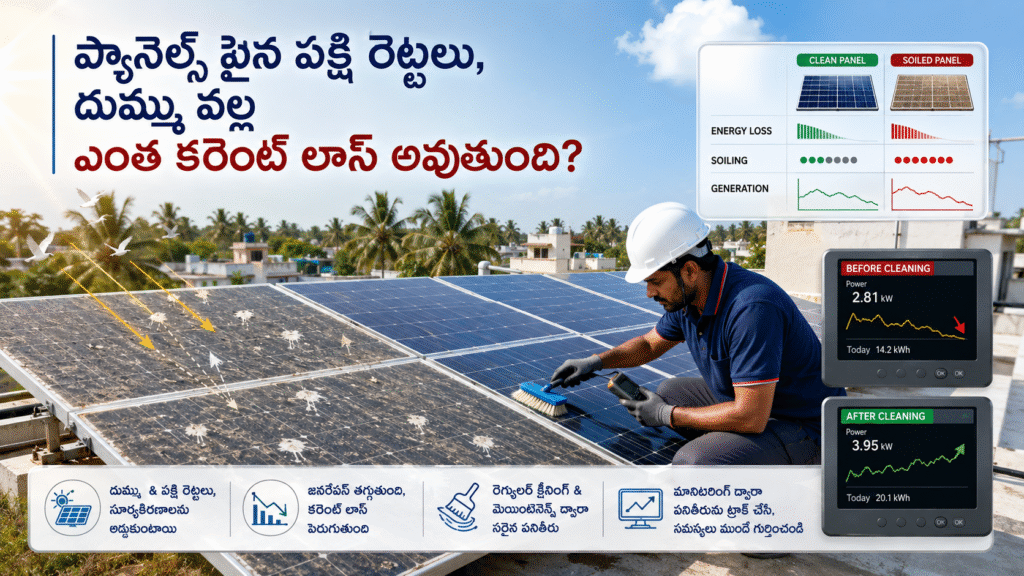
Solar Panel Cleaning ఎందుకు ముఖ్యం? Tadepalligudem & West Godavari Homeowners కోసం పూర్తి గైడ్
Solar panel పెట్టించుకున్న తర్వాత చాలామంది ఒక విషయం మర్చిపోతారు:
Panel మీద దుమ్ము, పక్షి రెట్టలు పేరుకుపోతే Solar generation ఎంత తగ్గుతుంది?
“వర్షం పడితే panels ఆటోమేటిక్గా clean అయిపోతాయి” అని కొందరు అనుకుంటారు.
మరికొందరు:
“కొంచెం దుమ్ము వల్ల ఏం అవుతుంది? Solar panel కదా!”
అనుకుంటారు.
నిజానికి PV soiling — అంటే దుమ్ము, మట్టి, pollution, biological debris వంటి పదార్థాలు panelపై పేరుకుపోవడం — Solar system performanceపై measurable ప్రభావం చూపుతుంది. IEA PVPS ప్రకారం ప్రపంచవ్యాప్తంగా soiling వల్ల సగటున 4–7% annual energy loss ఉండవచ్చని అంచనా ఉంది. అయితే ఇది ప్రతి ఇంటికి 4–7% loss తప్పనిసరి అని అర్థం కాదు; location, season, dust, rainfall, panel tilt మరియు cleaning frequency ఆధారంగా loss చాలా మారుతుంది.
ముఖ్యంగా పక్షి రెట్టలు సాధారణ దుమ్ముకంటే ఎక్కువ సమస్యగా మారవచ్చు, ఎందుకంటే అవి చిన్న ప్రాంతంలో గట్టిగా అంటుకుని sunlightను block చేయడంతో పాటు localized hot spotsకు కారణమయ్యే అవకాశం ఉంది.
Quick Answer
Solar panelsపై దుమ్ము పేరుకుపోవడం వల్ల సాధారణంగా కొన్ని శాతం electricity generation తగ్గవచ్చు; IEA PVPS ప్రపంచవ్యాప్తంగా soiling వల్ల సుమారు 4–7% annual energy lossను అంచనా వేస్తోంది. అయితే local conditionsను బట్టి loss చాలా తక్కువగా లేదా చాలా ఎక్కువగా ఉండవచ్చు. పక్షి రెట్టలు చిన్న ప్రాంతంలో ఎక్కువ ప్రభావం చూపవచ్చు; కొన్ని studiesలో severe localized soiling వల్ల 30% కంటే ఎక్కువ output loss నమోదైంది. కాబట్టి fixed percentage చెప్పడం కంటే panel condition, generation data మరియు cleaning history ఆధారంగా lossను అంచనా వేయడం సరైన పద్ధతి.
Solar Panelపై దుమ్ము ఎందుకు Electricity తగ్గిస్తుంది?
Solar panelకు సూర్యకాంతి అవసరం.
Panel glassపై:
- Dust
- Sand particles
- Pollution
- Mud
- Pollen
- Bird droppings
- Leaves
- Water stains
పేరుకుపోతే Solar cellsకు చేరే sunlight తగ్గుతుంది.
దీన్ని Soiling Loss అంటారు.
NREL ప్రకారం soiling వల్ల dust, particles మరియు dirt sunlightను absorb, reflect లేదా deflect చేయడంతో PV cellsకు చేరే irradiance తగ్గుతుంది.
అంటే:
More dirt → Less sunlight reaching cells → Lower output
దుమ్ము వల్ల ఎంత కరెంట్ లాస్ అవుతుంది?
ఇక్కడ ఒకే percentage చెప్పడం తప్పు.
IEA PVPS 2025 fact sheet ప్రకారం ప్రపంచవ్యాప్తంగా soiling వల్ల సగటున 4–7% energy loss ఉండవచ్చని అంచనా. కానీ actual loss site-specific.
NREL data కూడా soiling loss locationను బట్టి చాలా మారుతుందని చూపిస్తుంది. కొన్ని ప్రాంతాల్లో annual loss కొన్ని శాతాలకే పరిమితం కాగా, ఎక్కువ dust ఉన్న ప్రాంతాల్లో చాలా ఎక్కువగా ఉండవచ్చు.
ఉదాహరణ:
ఒక Solar System సాధారణంగా నెలకు:
500 units
generate చేస్తుందని అనుకుందాం.
సగటు 5% soiling loss ఉంటే:
500 × 5% = 25 units
అంటే సుమారు:
475 units
వరకు output తగ్గవచ్చు.
ఇది illustrative calculation మాత్రమే — మీ actual loss 5% అని అర్థం కాదు.
పక్షి రెట్టలు ఎందుకు ఎక్కువ ప్రమాదకరం?
ఇది సాధారణ దుమ్ముతో పోలిస్తే ముఖ్యమైన difference.
దుమ్ము సాధారణంగా panel మీద పెద్ద ప్రాంతంలో relatively uniform layerలా పేరుకుపోవచ్చు.
కానీ bird dropping:
చిన్న areaలో concentrated obstruction
గా ఉంటుంది.
ఇది కొన్ని cellsపై ఎక్కువ ప్రభావం చూపవచ్చు.
అదే కారణంగా bird droppings వల్ల localized power loss మరియు hot-spot risk పెరగవచ్చు. IEA PVPS technical materialలో severe non-uniform soiling, ముఖ్యంగా bird droppings వంటి contamination వల్ల losses 30% కంటే ఎక్కువ కూడా చేరవచ్చని పేర్కొంది.
ఒక్క పక్షి రెట్ట వల్ల మొత్తం Solar System 30% తగ్గుతుందా?
అవసరం లేదు.
ఇది చాలా ముఖ్యమైన clarification.
ఒక studyలో bird-dropping contaminationకు పెద్ద efficiency losses కనిపించాయి. కానీ అది controlled experimental conditionsలో, నిర్దిష్ట deposition amountsతో చేసిన పరీక్ష. దాన్ని ప్రతి rooftop Solar systemకు నేరుగా apply చేయకూడదు.
Actual loss ఆధారపడేది:
- Dropping size
- Location on panel
- Number of affected cells
- Module design
- Bypass diode configuration
- String configuration
- Cleaning interval
- Solar irradiance
వంటి అంశాలపై.
అందువల్ల “ఒక్క dropping = X% loss” అనే universal formula లేదు.
Bird Droppings వల్ల Hot Spot అంటే ఏమిటి?
Solar moduleలో అనేక cells కలిసి electricity తయారు చేస్తాయి.
ఒక cell లేదా cell groupపై తీవ్రమైన obstruction ఏర్పడితే current flowలో imbalance రావచ్చు.
అప్పుడు affected areaలో heat concentration ఏర్పడే అవకాశం ఉంది.
దీనినే Hot Spot అంటారు.
IEA PVPS failure-monitoring documentationలో bird droppingsను PV faults/contaminationతో సంబంధం ఉన్న conditionగా కూడా పరిగణిస్తోంది.
అందుకే bird droppingsను కేవలం “panel మీద మురికి”గా చూడకండి.
వర్షం పడితే Panels పూర్తిగా Clean అవుతాయా?
అన్ని సందర్భాల్లో కాదు.
వర్షం loose dustను తొలగించడంలో సహాయపడవచ్చు.
కానీ:
- Bird droppings
- Sticky dirt
- Mud
- Pollutant residues
- Hard water stains
వంటి contamination పూర్తిగా పోకపోవచ్చు.
2024 urban rooftop studyలో abundant rainfall ఉన్నప్పటికీ bird-dropping contamination stubbornగా ఉండి, heavy rain తర్వాత కూడా పూర్తిగా తొలగిపోలేదని గుర్తించారు.
అందువల్ల:
“వర్షాకాలంలో Solar cleaning అవసరం లేదు”
అనేది సరైన general rule కాదు.
Tadepalligudem & West Godavariలో Solar Panelsపై ఏ సమస్యలు రావచ్చు?
మన ప్రాంతంలో residential మరియు commercial rooftopsలో Solar panelsకు:
- Road dust
- Construction dust
- Bird droppings
- Pollen
- Leaves
- Moisture
- Rainwater residue
వంటి soiling sources ఉండవచ్చు.
ప్రత్యేకంగా:
Roadకు దగ్గరగా ఉన్న ఇళ్లు
Traffic dust ఎక్కువగా ఉండవచ్చు.
పెద్ద చెట్లు ఉన్న ఇళ్లు
Leaves, pollen మరియు birds వల్ల contamination పెరగవచ్చు.
Commercial/Rice Mill areas
Dust exposure ఎక్కువగా ఉండే అవకాశం ఉంది.
Open agricultural surroundings
మట్టి, dust మరియు biological debris exposure site-specificగా పెరగవచ్చు.
అందువల్ల Tadepalligudemలో ఒక ఇంటికి సరిపోయే cleaning schedule, మరో rooftopకు అదే విధంగా ఉండకపోవచ్చు.
Dust వల్ల Electricity Lossను ఎలా అంచనా వేయాలి?
ఒక ముఖ్యమైన విషయం:
Panel చూసి మాత్రమే exact loss percentage చెప్పడం కష్టం.
మంచి approach:
Step 1 — Expected Generation చూడండి
System designలో expected monthly generation ఎంత?
Step 2 — Actual Generation చూడండి
Inverter/appలో actual generation ఎంత?
Step 3 — Weather & Irradiance Compare చేయండి
Cloudy dayని dusty dayతో compare చేయకండి.
Step 4 — Cleaning తర్వాత Output చూడండి
Cleaning తర్వాత generation recover అయితే soiling impact ఉన్నట్లు ఒక indication లభిస్తుంది.
Step 5 — Long-Term Data విశ్లేషించండి
ఒక రోజు data కంటే కొన్ని వారాలు/నెలల trend useful.
NREL researchలో system yield data నుంచే soiling lossesను estimate చేసే methods అభివృద్ధి చేయబడ్డాయి.
ఒక Simple Real-Life Example
మీ 5kW Solar system:
Clean conditionలో → 22 units/day
generate చేస్తుందని అనుకుందాం.
Panelపై heavy dust accumulation తర్వాత:
20 units/day
కి పడిపోయింది.
Difference:
2 units/day
అంటే సుమారు:
9% reduction
అని observed output difference వస్తుంది.
కానీ దీనిని పూర్తిగా dust వల్లే వచ్చిందని వెంటనే నిర్ణయించకండి.
అదే సమయంలో:
- Temperature
- Clouds
- Shading
- Grid/inverter issues
- Panel degradation
కూడా outputను ప్రభావితం చేయవచ్చు.
Solar Panelను ఎంత తరచుగా Clean చేయాలి?
ప్రతి ఇంటికీ ఒకే schedule లేదు.
మీ rooftopలో:
Low Dust + Regular Rain
→ Cleaning frequency తక్కువగా ఉండవచ్చు.
High Dust + Birds
→ More frequent inspection అవసరం కావచ్చు.
Industrial Area
→ Soiling monitoring అవసరం ఎక్కువగా ఉండవచ్చు.
Trees / Bird Activity
→ Bird-dropping inspection ముఖ్యమైనది.
IEA PVPS కూడా cleaning scheduleను site-specific soiling conditions ఆధారంగా optimize చేయాలని సూచిస్తుంది.
Cleaning ఎక్కువ చేస్తేనే మంచిదా?
అవసరం లేదు.
ఇది కూడా ఒక blind spot.
Cleaning:
- Water
- Labour
- Equipment
- Safety
- Time
అన్నింటినీ ఖర్చు చేస్తుంది.
అందుకే “ఎక్కువసార్లు clean చేస్తే maximum benefit” అనేది కూడా సరైన economic rule కాదు.
సరైన లక్ష్యం:
Soiling loss వల్ల కోల్పోయే electricity value > Cleaning cost
అయ్యే స్థాయిలో cleaning schedule ఏర్పాటు చేయడం.
NREL కూడా unnecessary cleaning ఒక expense అని, soilingను monitor చేసి cost-effective cleaning schedule రూపొందించడం ముఖ్యమని చెబుతోంది.
Solar Panelsను ఎలా Clean చేయాలి?
సాధారణ rooftop Solar systemకు:
చేయాల్సింది
✔ Manufacturer cleaning instructions follow చేయండి
✔ Soft, non-abrasive cleaning method ఉపయోగించండి
✔ Clean water అవసరాన్ని బట్టి ఉపయోగించండి
✔ Early morning లేదా late evening వంటి తక్కువ irradiance సమయంలో cleaning చేయడం practical
✔ Bird droppingsను ఎక్కువకాలం అలాగే వదలకండి
చేయకూడనివి
❌ గట్టిగా scrub చేయడం
❌ Abrasive powder ఉపయోగించడం
❌ Rough brush ఉపయోగించడం
❌ Hot panelపై అకస్మాత్తుగా cold water వేయడం
❌ Glassపై నడవడం
❌ Unsafe rooftop cleaning చేయడం
❌ Manufacturer instructionsను ignore చేయడం
ప్రత్యేకంగా high-rise apartments మరియు commercial rooftopsలో safetyకి ప్రాధాన్యత ఇవ్వాలి.
Birds ఎక్కువగా Panelపై కూర్చుంటే?
Cleaning ఒక్కటే solution కాకపోవచ్చు.
ముందుగా:
“Birds ఎందుకు అక్కడ కూర్చుంటున్నాయి?”
అని చూడాలి.
సమీపంలో:
- Trees
- Wires
- Building ledges
- Water sources
- Nesting points
ఉంటే contamination మళ్లీ మళ్లీ రావచ్చు.
అందువల్ల bird deterrence + regular inspection + appropriate cleaning కలిపి చూడాలి.
Bird Droppingsను వెంటనే Clean చేయాలా?
Heavy contamination ఉంటే ఎక్కువకాలం అలాగే ఉంచడం మంచిది కాదు.
ఎందుకంటే dried droppings:
- గట్టిగా అంటుకోవచ్చు
- sunlightను block చేయవచ్చు
- localized heatingకు దారితీయవచ్చు
- cleaning కష్టతరం చేయవచ్చు
అందువల్ల bird activity ఎక్కువగా ఉన్న rooftopల్లో visual inspection frequency పెంచడం మంచిది.
Solar Panel Cleaning వల్ల ఎంత Generation తిరిగి వస్తుంది?
ఇది మీ actual soilingపై ఆధారపడి ఉంటుంది.
ఉదాహరణ:
Clean చేయడానికి ముందు:
450 units/month
Clean చేసిన తర్వాత:
480 units/month
అయితే:
30 units/month recovery
అంటే సుమారు:
6.7%
recovery.
ఇది actual monitoring data అయితే చాలా useful.
కానీ ఒకే రోజు cleaning ముందు/తర్వాత comparison చేయడం సరైనది కాదు; weather మరియు irradiance మారవచ్చు.
Monitoring Appతో Soiling గుర్తించగలమా?
కొంతవరకు indication పొందవచ్చు.
మీ inverter monitoring platformలో:
- Daily generation
- Monthly generation
- Performance trend
- String-level data (available అయితే)
- Fault alerts
వంటి informationను చూడవచ్చు.
అయితే appలో output తగ్గింది కాబట్టి “ఇది కచ్చితంగా dust వల్లే” అని చెప్పలేం.
String-Level Monitoring ఎందుకు ఉపయోగకరం?
ఒక Solar arrayలో ఒక string మిగతా strings కంటే significantly తక్కువగా perform చేస్తే:
- Soiling
- Shading
- Loose connection
- Module issue
- Mismatch
- Other electrical fault
వంటి కారణాలను investigate చేయవచ్చు.
అందుకే పెద్ద Commercial Solar Plantsలో performance monitoring మరియు fault diagnosis మరింత ముఖ్యమైనవి.
Solar Cleaningలో Hard Water ఎందుకు Problem?
Panelను hard-waterతో clean చేసిన తర్వాత నీరు ఆవిరైపోతే mineral deposits మిగిలిపోవచ్చు.
ఇవి:
Water stains / mineral residue
గా glassపై ఉండవచ్చు.
Researchలో lower-quality waterతో cleaning చేసినప్పుడు mineral deposition ఏర్పడి cleaning effectiveness తగ్గినట్లు గుర్తించారు.
అందువల్ల cleaning water qualityను కూడా consider చేయాలి.
Cleaning vs Electricity Loss — ఒక Practical Calculation
ఒక system:
₹8/unit
విలువైన electricity offset చేస్తుందని hypotheticalగా అనుకుందాం.
Soiling వల్ల నెలకు:
30 units
తగ్గుతున్నాయని data చెబుతోంది.
Loss value:
30 × Rs8 = Rs240/month
అంటే:
Rs240 × 12 = Rs2,880/year
అప్పుడు annual cleaning cost దీనికంటే చాలా ఎక్కువగా ఉంటే frequent cleaning economically worthwhile కాకపోవచ్చు.
ఇది illustrative calculation మాత్రమే.
మీ actual tariff, generation మరియు cleaning cost ఆధారంగా calculation చేయాలి.
Tadepalligudem Homeowners కోసం Simple Maintenance Rule
మీ ఇంటి Solar system కోసం ప్రతి నెల:
1. Panels visually inspect చేయండి
2. Bird droppings ఉన్నాయా చూడండి
3. Inverter/app generation trend చూడండి
4. గత నెలతో compare చేయండి
5. Heavy soiling కనిపిస్తే professional cleaning consider చేయండి
ఇది blindly “ప్రతి 15 రోజులకు clean చేయాలి” అనే rule కంటే practical.
West Godavari Commercial Solar Plantsలో మరింత జాగ్రత్త
Rice Mills, Cold Storages, Aqua Processing Units మరియు manufacturing facilitiesలో Solar rooftop:
- Dust exposure
- Bird activity
- Industrial emissions
- Larger panel count
వల్ల maintenance planning residential rooftop కంటే వేరుగా ఉండవచ్చు.
ఇలాంటి systemsలో:
Generation Monitoring + Periodic Inspection + Cleaning Records
ఉండటం మంచిది.
VMJ Solar Solutions సూచన
Solar panel cleaningను “కేవలం panels అందంగా కనిపించడానికి” చేసే పని అనుకోకండి.
ఇది:
Generation → Performance → Maintenance Cost → Long-Term Solar ROI
తో సంబంధం ఉన్న O&M activity.
VMJ Solar Solutions Tadepalligudem మరియు West Godavari ప్రాంతాల్లో Solar systems కోసం:
- Rooftop inspection
- Solar performance analysis
- Cleaning guidance
- Maintenance support
- Generation monitoring
- Fault identification
వంటి servicesను అవసరానికి అనుగుణంగా అందించగలదు.
తరచుగా అడిగే ప్రశ్నలు (FAQs)
1. Solar panelsపై దుమ్ము వల్ల ఎంత electricity loss అవుతుంది?
ఒక fixed percentage లేదు. IEA PVPS ప్రకారం global average soiling loss సుమారు 4–7% annual energy productionగా అంచనా వేయబడింది, కానీ actual site loss చాలా మారవచ్చు.
2. పక్షి రెట్టలు దుమ్ముకంటే ఎక్కువ నష్టం చేస్తాయా?
చిన్న concentrated areaలో bird droppings ఎక్కువ ప్రభావం చూపవచ్చు. Severe non-uniform soilingలో 30% కంటే ఎక్కువ losses కూడా నమోదయ్యాయి.
3. ఒక్క పక్షి రెట్ట వల్ల మొత్తం panel 30% తగ్గుతుందా?
అవసరం లేదు. Effect dropping location, size, affected cells మరియు module designపై ఆధారపడి ఉంటుంది. Experimental resultsను ప్రతి rooftopకు నేరుగా apply చేయకూడదు.
4. వర్షం పడితే Solar panels clean అవుతాయా?
Loose dustలో కొంత భాగం తొలగవచ్చు. కానీ bird droppings మరియు sticky contamination పూర్తిగా తొలగకపోవచ్చు.
5. Solar panels ఎంత తరచుగా clean చేయాలి?
Fixed schedule లేదు. Dust, birds, rainfall, roof location మరియు generation data ఆధారంగా cleaning frequency నిర్ణయించాలి.
6. Dirty panels వల్ల inverter damage అవుతుందా?
Soiling ప్రధానంగా energy generationను తగ్గిస్తుంది. అయితే severe localized contamination వల్ల hot-spot risk వంటి module-level issues రావచ్చు; inverter faultను కేవలం dustకు ఆపాదించకూడదు.
7. Solar panelను tap waterతో clean చేయవచ్చా?
Water qualityను పరిగణనలోకి తీసుకోవాలి. Hard/low-quality waterతో mineral residue ఏర్పడే అవకాశం ఉంది. Manufacturer cleaning instructionsను follow చేయడం మంచిది.
8. Panel cleaning చేసిన తర్వాత generation వెంటనే పెరుగుతుందా?
Soiling substantialగా ఉంటే output recover కావచ్చు. కానీ weather, irradiance మరియు temperature కూడా generationను ప్రభావితం చేస్తాయి.
9. Tadepalligudemలో Solar panelsకు cleaning అవసరమా?
అవసరం స్థానిక soiling conditionsపై ఆధారపడి ఉంటుంది. Dust లేదా bird activity ఎక్కువగా ఉన్న rooftopలో inspection మరియు cleaning అవసరం ఎక్కువగా ఉండవచ్చు.
10. Solar cleaningను నేను స్వయంగా చేయవచ్చా?
Ground-level safe installationsలో manufacturer instructionsను పాటిస్తూ చేయవచ్చు. కానీ high-rise లేదా unsafe rooftopలో professional cleaning చేయించడం మంచిది.
ముగింపు
Solar panelsపై దుమ్ము, పక్షి రెట్టలు చిన్న విషయం కాదు — కానీ వాటి వల్ల ఎంత loss వస్తుందో ఒకే percentageతో చెప్పడం కూడా సరైంది కాదు.
IEA PVPS ప్రపంచవ్యాప్తంగా 4–7% average annual soiling lossను అంచనా వేస్తోంది; అయితే climate, dust, rainfall, panel tilt మరియు cleaning frequency ఆధారంగా actual loss చాలా మారుతుంది.
పక్షి రెట్టలు మాత్రం localized contaminationగా ఉండటం వల్ల సాధారణ dust కంటే ఎక్కువ ప్రభావం చూపవచ్చు. కొన్ని severe casesలో non-uniform soiling వల్ల 30%కు పైగా losses కూడా నమోదయ్యాయి.
అందుకే Solar maintenanceలో సరైన విధానం:
Inspect → Monitor → Measure → Clean When Needed → Recheck Generation
అనే process.
ప్రత్యేకంగా Tadepalligudem మరియు West Godavariలో rooftop Solar owners తమ panel conditionతో పాటు inverter generation dataను కూడా గమనిస్తే, unnecessary cleaning ఖర్చును తగ్గిస్తూ Solar system performanceను మెరుగ్గా maintain చేయవచ్చు.