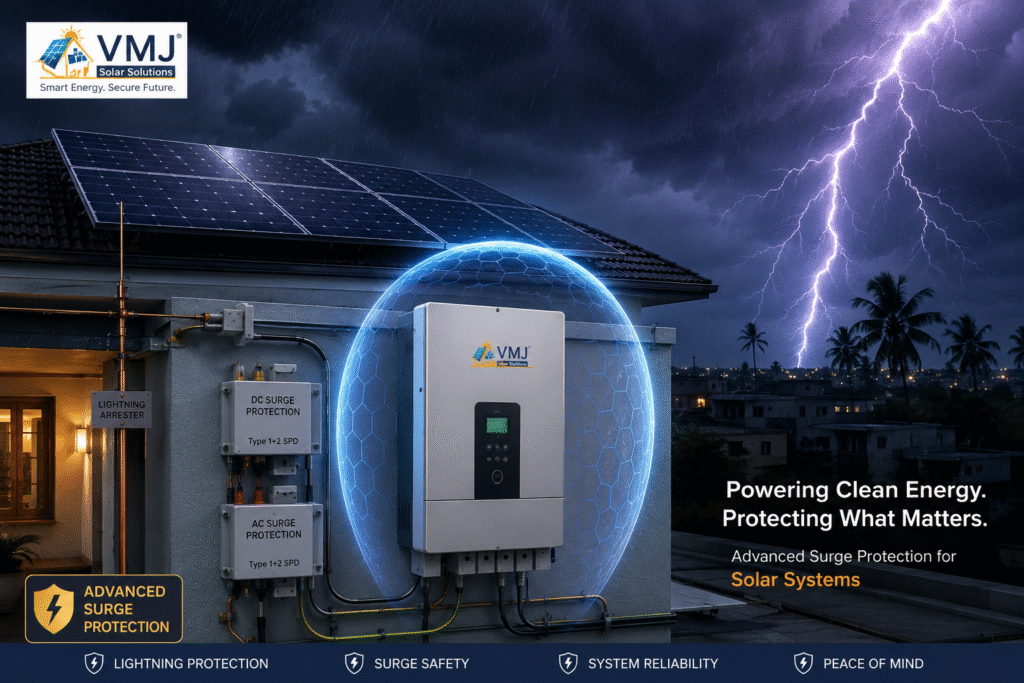
The best way to protect a solar inverter from voltage fluctuations and lightning is through proper system design, quality surge protection devices (SPDs), effective earthing, lightning protection systems, and regular maintenance.
Solar inverters are among the most important and valuable components of a solar power system.
Without adequate protection, issues such as:
- Voltage fluctuations
- Power surges
- Lightning strikes
- Poor grounding
- Electrical faults
can damage sensitive electronic components and lead to expensive repairs or downtime.
For homeowners and businesses across Andhra Pradesh, protecting the inverter is essential for maximizing solar system reliability and long-term return on investment (ROI).
Why the Solar Inverter Deserves Special Attention
Most people focus on solar panels when discussing solar systems.
However, the inverter is often called:
The Brain of the Solar System
Its job is to:
- Convert DC electricity from solar panels into usable AC electricity
- Monitor system performance
- Manage grid synchronization
- Provide safety protection functions
Without a functioning inverter, even the best solar panels cannot supply usable power to your home or business.
At VMJ Solar Solutions, inverter protection is considered a critical part of every solar installation because Andhra Pradesh experiences conditions that may expose electrical systems to:
- Voltage instability
- Seasonal thunderstorms
- Lightning activity
- Grid disturbances
Understanding how to protect your inverter can help prevent costly failures and extend system life.
Why Solar Inverters Are Vulnerable
Modern solar inverters contain sophisticated electronics including:
- Microprocessors
- Communication systems
- Power semiconductors
- Monitoring circuits
These components are highly efficient but can be sensitive to electrical disturbances.
Unlike traditional appliances, solar inverters continuously interact with:
- Solar panels
- Grid electricity
- Household loads
which increases their exposure to electrical events.
What Are Voltage Fluctuations?
Voltage fluctuations occur when electrical voltage rises above or falls below normal operating levels.
Common causes include:
- Grid instability
- Transformer issues
- Heavy industrial loads
- Sudden load changes
- Faults in nearby electrical networks
In some regions, fluctuations may occur more frequently during:
- Peak demand periods
- Monsoon season
- Rural power supply conditions
Why Voltage Fluctuations Matter
Repeated voltage variations can:
Trigger Inverter Shutdowns
Many modern inverters automatically disconnect to protect themselves.
Reduce Operational Efficiency
Frequent interruptions may affect system performance.
Stress Electronic Components
Long-term exposure to unstable voltage can accelerate component wear.
The Threat of Lightning Strikes
Lightning is one of the most powerful natural electrical phenomena.
A direct strike can cause severe damage.
Even indirect lightning events may generate:
- Voltage spikes
- Electromagnetic surges
- Electrical transients
that travel through:
- Power lines
- Communication cables
- Grounding systems
and potentially reach solar equipment.
Why Andhra Pradesh Solar Systems Need Protection
Certain regions of Andhra Pradesh experience:
- Seasonal thunderstorms
- Heavy monsoon activity
- Cyclonic weather patterns
- Rural grid fluctuations
Areas including:
- West Godavari
- East Godavari
- Visakhapatnam
- Kakinada
- Vijayawada
- Nellore
may encounter weather conditions that make electrical protection especially important.
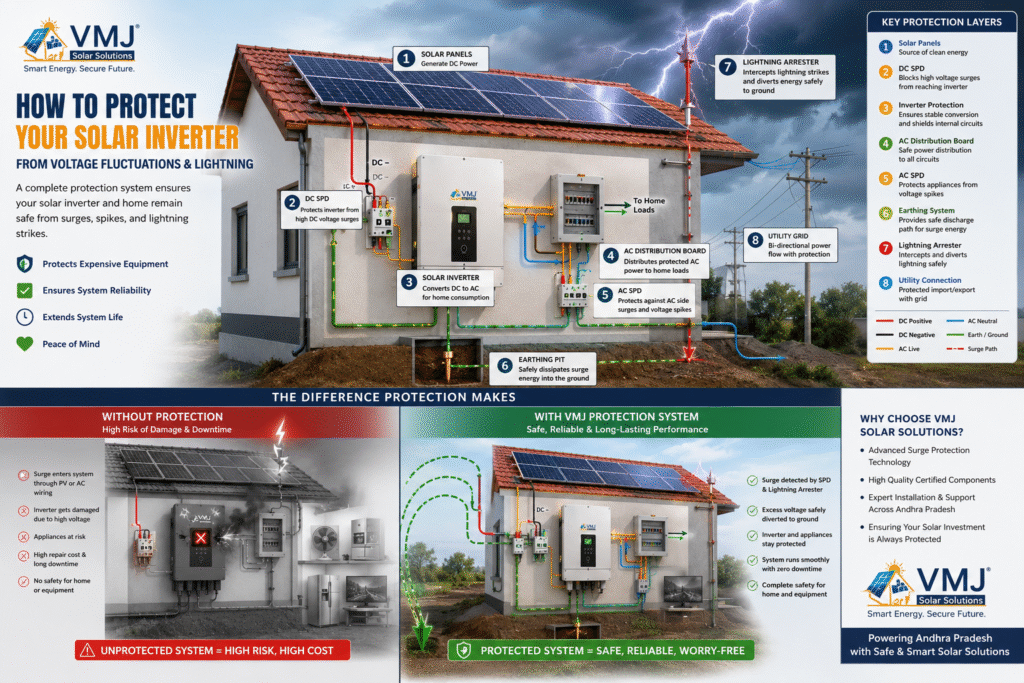
1. Install Proper Surge Protection Devices (SPDs)
One of the most effective defenses against electrical surges is:
Surge Protection Devices (SPDs)
SPDs help divert excessive voltage away from sensitive equipment.
They can protect against:
- Grid surges
- Switching surges
- Indirect lightning effects
Professional solar installations typically include surge protection on both:
DC Side
Between panels and inverter.
and
AC Side
Between inverter and electrical distribution system.
2. Ensure High-Quality Earthing
Proper earthing is one of the most important safety measures.
A well-designed grounding system helps:
✔ Dissipate fault currents
✔ Improve equipment safety
✔ Support surge protection performance
✔ Reduce electrical risks
Poor earthing can significantly reduce the effectiveness of protective devices.
3. Install Lightning Protection Systems
For properties in lightning-prone areas, additional protection may be beneficial.
A lightning protection system may include:
Air Terminals (Lightning Rods)
Designed to intercept lightning strikes.
Down Conductors
Carry electrical energy safely to the ground.
Grounding Network
Disperses lightning energy into the earth.
Proper design should follow applicable electrical standards and professional engineering practices.
4. Use Quality Solar Inverters
Not all inverters provide the same level of protection.
Many modern inverters include:
- Over-voltage protection
- Under-voltage protection
- Surge monitoring
- Fault detection
- Automatic shutdown features
Selecting reputable equipment can improve overall system resilience.
5. Protect Communication Lines
Modern solar systems often use:
- Wi-Fi
- Ethernet
- Monitoring networks
These connections can also become pathways for electrical surges.
Protection may be required for:
- Data cables
- Communication interfaces
- Monitoring equipment
depending on system design.
6. Regular Inspection and Maintenance
Protective devices themselves require periodic inspection.
Technicians should evaluate:
- Earthing connections
- Surge protection devices
- Electrical panels
- Cable integrity
- Inverter warning logs
Routine inspections can identify issues before failures occur.
Warning Signs Your Inverter May Need Inspection
Watch for:
Frequent Shutdowns
Unexpected disconnections may indicate electrical problems.
Error Messages
Modern inverters often display diagnostic warnings.
Communication Failures
Loss of monitoring connectivity may signal underlying issues.
Reduced Solar Production
Unexpected performance drops should be investigated.
Common Mistakes Solar Owners Make
Mistake 1: Ignoring Earthing Quality
Many people focus on panels and inverters while overlooking grounding systems.
Mistake 2: Skipping Surge Protection
Surge protection is often inexpensive compared to inverter replacement costs.
Mistake 3: Assuming Lightning Must Hit Directly
Indirect lightning effects can also cause damage.
Mistake 4: Delaying Maintenance
Small electrical issues can become major failures if left unresolved.
Residential vs Commercial Inverter Protection
Residential Systems
Typically focus on:
- Basic surge protection
- Proper grounding
- Safe installation
Commercial and Industrial Systems
May require:
- Advanced surge protection
- Multiple grounding zones
- Lightning risk assessments
- Enhanced monitoring
especially for:
- Factories
- Rice mills
- Warehouses
- Commercial buildings
How Protection Improves Solar ROI
A damaged inverter can lead to:
- System downtime
- Repair costs
- Lost energy production
Protective measures help:
✔ Reduce unexpected failures
✔ Improve system availability
✔ Protect equipment investment
✔ Support long-term solar savings
FAQ’S
1.Can lightning damage a solar inverter?
Yes. Direct or indirect lightning events can generate surges capable of damaging inverter electronics.
2.How do I protect my solar inverter from power surges?
Install surge protection devices, maintain proper earthing, and ensure professional system design.
3.Is earthing necessary for solar systems?
Yes. Proper grounding is essential for safety, surge protection effectiveness, and equipment protection.
4.Can voltage fluctuations damage solar inverters?
Repeated voltage instability can stress electronic components and potentially shorten equipment lifespan.
5. What is the most important protection for a solar inverter?
Proper earthing and surge protection are among the most critical protective measures.
6. Can a surge protector prevent lightning damage?
Surge protection can help reduce damage from certain surge events, but no system can guarantee complete protection against every lightning scenario.
7. How often should inverter protection systems be inspected?
Periodic inspections during routine solar maintenance are recommended.
8. Does insurance cover lightning damage?
Coverage depends on the policy and insurer. Homeowners should review policy terms carefully.
9. Are commercial solar systems more vulnerable?
Larger systems often require more comprehensive protection due to greater electrical complexity.
10. What should I do if my inverter displays fault warnings after a storm?
Contact a qualified solar technician for inspection before attempting to restart or troubleshoot the system.
Final Thoughts
Your solar inverter is one of the most valuable and critical components of your solar power system.
Protecting it from:
✔ Voltage fluctuations
✔ Lightning surges
✔ Electrical faults
✔ Grid disturbances
can significantly improve reliability and long-term performance.
The best protection strategy combines:
- Quality equipment
- Proper earthing
- Surge protection devices
- Lightning protection systems
- Routine maintenance
For homeowners and businesses in Andhra Pradesh seeking:
- Solar inverter protection
- Lightning protection for solar systems
- Surge protection devices
- Solar maintenance services
- Commercial solar safety solutions
VMJ Solar Solutions provides professionally engineered solar systems designed to withstand real-world operating conditions while protecting your investment for years to come.