
Quick Answer
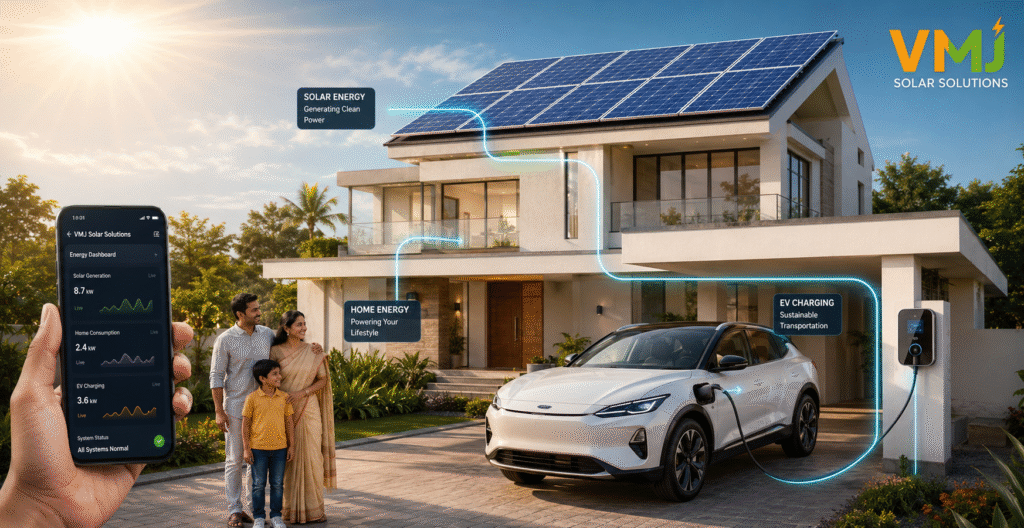
Yes, you can charge an electric vehicle (EV) using rooftop solar in Andhra Pradesh.
A properly designed solar system can generate electricity that helps power your EV, potentially reducing or even offsetting a significant portion of your vehicle’s charging costs over time.
However, “free charging” is not always guaranteed because actual results depend on:
- Solar system size
- EV battery capacity
- Daily driving distance
- Weather conditions
- Household electricity usage
- Net metering policies
For many EV owners, rooftop solar offers one of the most practical ways to lower transportation and energy costs simultaneously.
Introduction: The Perfect Match Between Solar and Electric Vehicles
India is witnessing two major energy transformations:
The Rise of Rooftop Solar
and
The Rise of Electric Vehicles
Across Andhra Pradesh, more homeowners are installing:
- Residential solar panels
- Home EV chargers
- Battery energy storage systems
- Smart energy management solutions
The reason is simple:
The same sunlight that powers your home can also power your car.
Instead of paying for:
- Petrol
- Diesel
- Rising electricity tariffs
homeowners can generate their own electricity and use it to charge their vehicles.
At VMJ Solar Solutions, one of the fastest-growing customer segments consists of homeowners who are planning both:
- Rooftop solar installation
- Electric vehicle ownership
This guide explains how solar-powered EV charging works, what system size you may need, and how homeowners in Andhra Pradesh can move closer to energy independence.
Why Solar and EVs Are a Natural Combination
An electric vehicle runs on electricity.
A rooftop solar system generates electricity.
The connection is straightforward:
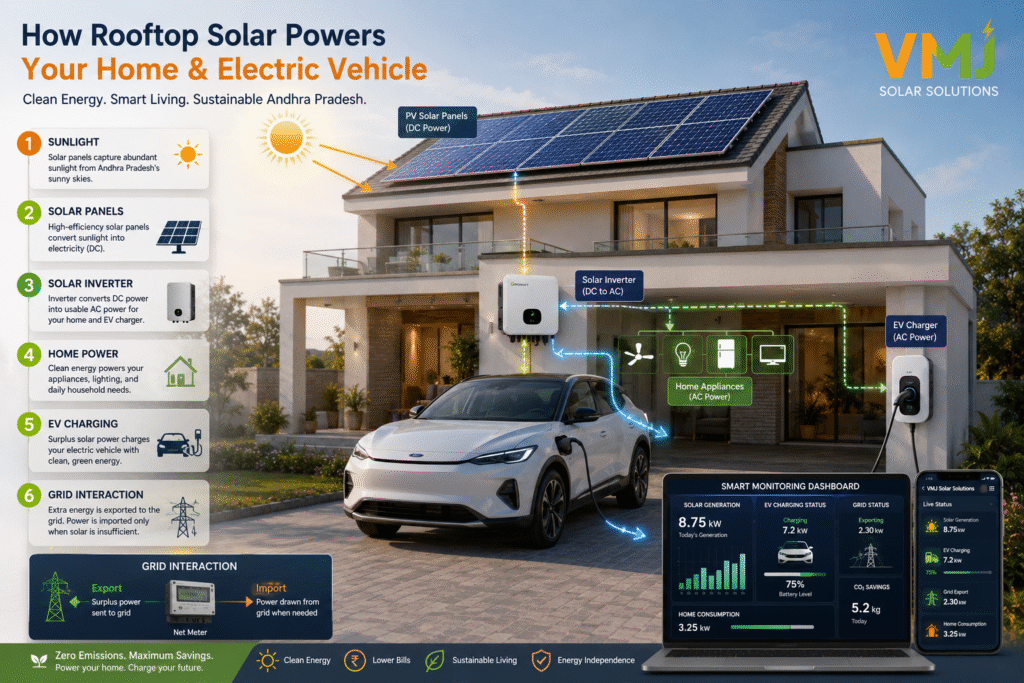
Sunlight → Solar Panels → Electricity → EV Charger → Vehicle
Instead of purchasing all charging power from the grid, homeowners can use solar-generated energy.
This creates a more sustainable and potentially lower-cost transportation model.
Understanding EV Charging Energy Requirements
Before sizing a solar system, it’s important to understand how much energy an EV consumes.
Most electric vehicles consume electricity based on:
- Vehicle efficiency
- Driving habits
- Traffic conditions
- Terrain
- Climate
Example
If a vehicle consumes approximately:
- 12–18 kWh per 100 km
and drives:
- 40 km per day
daily charging demand may be relatively modest compared to total household consumption.
Actual energy requirements vary by vehicle model and driving patterns.
How Rooftop Solar Powers an EV
Daytime Charging
The most efficient scenario occurs when:
- Solar panels generate electricity
- The vehicle charges simultaneously
During sunny hours:
Solar Energy → EV Charger → Vehicle
This maximizes direct solar utilization.
Solar + Battery + EV Charging
For homeowners seeking greater energy independence:
Battery Energy Storage Systems (BESS)
can store excess solar energy for later EV charging.
Benefits include:
- Nighttime charging capability
- Reduced grid dependence
- Backup energy availability
However, battery systems increase overall project cost and should be evaluated carefully.
Why Andhra Pradesh Is Ideal for Solar EV Charging
Strong Solar Resources
Andhra Pradesh receives excellent solar irradiation throughout much of the year.
Cities such as:
- Vijayawada
- Visakhapatnam
- Guntur
- Tirupati
- Rajahmundry
- Nellore
have favorable conditions for rooftop solar generation.
Growing EV Adoption
Electric scooters, electric cars, and commercial EV fleets are becoming increasingly common.
As EV ownership grows, homeowners are exploring ways to reduce charging expenses.
Independent Homes with Rooftop Space
Many residential properties have sufficient roof area to support solar installations designed for both home consumption and EV charging.
How Large Should Your Solar System Be?
There is no universal answer.
Solar sizing depends on:
Household Electricity Consumption
The more electricity your home uses, the larger the required system.
EV Charging Needs
Daily driving distance significantly affects energy demand.
Future Expansion Plans
Many homeowners later add:
- Additional EVs
- Air conditioners
- Home offices
- Battery systems
Future planning is important.
Can Solar Fully Charge an EV?
In Many Cases, Yes
A properly designed solar system can generate enough electricity to cover a significant portion—or in some cases, most—of an EV’s annual charging requirements.
However, actual results depend on:
- Solar generation
- Weather conditions
- Vehicle usage
- Charging schedule
This is why system design should be based on real-world energy data rather than assumptions.
Financial Benefits of Solar EV Charging
Reduced Charging Costs
Charging from solar-generated electricity may reduce reliance on purchased grid power.
Lower Fuel Expenses
EVs already offer lower operating costs than many conventional vehicles.
Solar can further reduce energy expenses.
Protection Against Energy Price Increases
Generating electricity at home helps reduce exposure to future electricity tariff changes.
Better Utilization of Rooftop Solar
An EV can become one of the largest and most consistent consumers of solar energy in a household.
This may improve overall solar utilization.
Smart Charging Makes a Difference
Many modern EV chargers include smart features such as:
- Scheduled charging
- Solar-priority charging
- Energy monitoring
- Mobile app control
These capabilities help optimize solar usage.
The Role of Home Energy Management Systems (EMS)
Advanced households increasingly integrate:
- Rooftop solar
- Battery storage
- EV charging
- Smart home automation
through a centralized:
Home Energy Management System (EMS)
EMS platforms help:
- Track solar generation
- Manage EV charging schedules
- Optimize battery usage
- Reduce unnecessary grid imports
Common Mistakes Homeowners Make
Mistake 1: Buying an EV Before Evaluating Solar Capacity
Existing solar systems may not be sized for vehicle charging.
Mistake 2: Assuming All Charging Is Free
Weather, seasonal variations, and household usage patterns influence available solar energy.
Mistake 3: Ignoring Future Energy Needs
Many families eventually purchase:
- Additional EVs
- Larger appliances
- Battery storage
Planning ahead helps avoid expensive upgrades later.
Mistake 4: Choosing Systems Based Only on Upfront Cost
The lowest-cost system may not deliver the best long-term performance.
Residential vs Commercial EV Charging
Residential Homes
Focus on:
- Daily commuting
- Overnight charging
- Household energy optimization
Commercial Facilities
Businesses may use solar for:
- Fleet charging
- Employee charging stations
- Energy cost reduction
Industrial and commercial applications often require larger system designs.
Why Solar-Powered Mobility Is the Future
India’s energy future increasingly points toward:
- Renewable electricity generation
- Electric transportation
- Smart energy management
- Decentralized power production
The combination of rooftop solar and EVs represents one of the most practical pathways toward cleaner and more efficient energy use.
FAQ’s
1.Can rooftop solar charge an electric car?
Yes. Rooftop solar panels generate electricity that can be used directly or indirectly to charge an electric vehicle.
2.How many solar panels do I need to charge an EV?
The number depends on:
- Daily driving distance
- Vehicle efficiency
- Household electricity usage
- Available roof space
A professional energy assessment is recommended.
3.Is solar EV charging worth it in Andhra Pradesh?
For many homeowners, Andhra Pradesh’s strong solar resource makes solar-powered EV charging an attractive long-term option.
4.Can I charge my EV at night using solar?
Yes, if:
- Battery storage is installed
or - Net metering credits offset electricity imported later.
5.Does solar reduce EV charging costs?
Solar can reduce the amount of electricity purchased from the grid, which may lower charging costs over time.
Final Thoughts
For homeowners looking to reduce both electricity and transportation costs, rooftop solar and electric vehicles are becoming one of the most powerful combinations available.
While “free EV charging” should be viewed realistically, a properly designed solar system can significantly reduce charging expenses and improve long-term energy independence.
The key is understanding:
✔ Your electricity usage
✔ Your driving habits
✔ Your roof’s solar potential
✔ Future energy needs
For homeowners in Andhra Pradesh exploring:
- Solar panels for EV charging
- Residential rooftop solar
- Electric vehicle charging solutions
- Home battery storage
- Energy-efficient home upgrades
VMJ Solar Solutions can help design a solar system tailored to your household consumption, vehicle charging requirements, and long-term sustainability goals.