
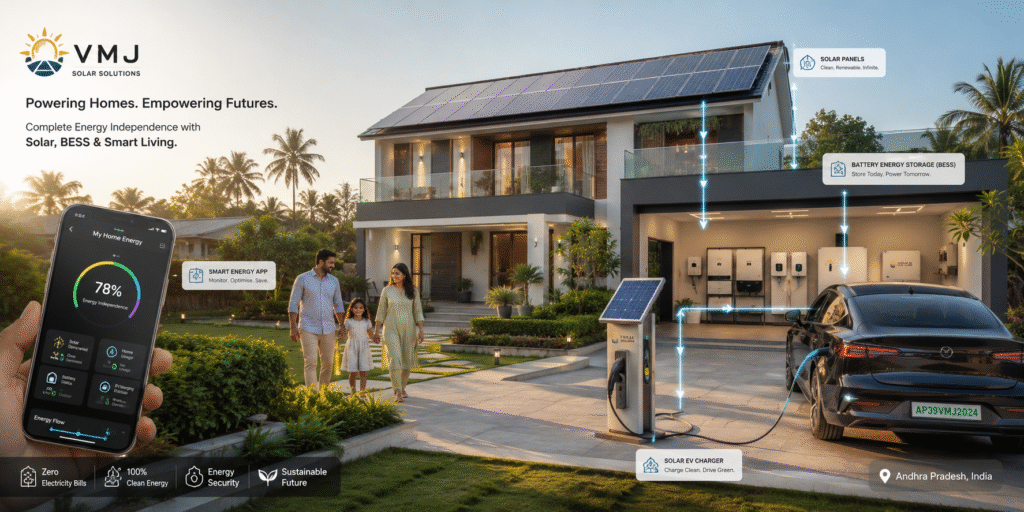
A “zero bill lifestyle” is possible for some households under specific conditions, but it is not guaranteed
By combining:
- Rooftop Solar Panels
- Battery Energy Storage Systems (BESS)
- Electric Vehicles (EVs)
homeowners can significantly reduce their dependence on grid electricity and fossil fuels.
However, actual results depend on:
- Energy consumption patterns
- Solar system size
- Battery capacity
- EV charging habits
- Net metering policies
- Seasonal weather conditions
For many households in Andhra Pradesh, the goal is not necessarily a literal zero bill every month, but rather achieving maximum energy independence and long-term cost reduction.
Introduction: The Rise of the Energy-Independent Home
A major shift is happening in India’s residential energy landscape.
Traditionally, homeowners depended on:
- Electricity from the grid
- Petrol or diesel for transportation
- Increasing utility expenses
Today, advancements in renewable energy and battery technology are creating a new possibility:
The Self-Powered Home
Imagine a house where:
✔ Rooftop solar generates electricity during the day
✔ Batteries store excess energy for nighttime use
✔ An electric vehicle charges using solar power
✔ Dependence on utility power is minimized
This vision is driving interest among homeowners across:
- Vijayawada
- Visakhapatnam
- Guntur
- Tirupati
- Rajahmundry
- Nellore
and other rapidly developing regions of Andhra Pradesh.
At VMJ Solar Solutions, more homeowners are asking:
“Can I power both my home and my EV using solar energy?”
The answer is increasingly becoming yes—with the right system design and realistic expectations.
What Is a Zero Bill Lifestyle?
A zero bill lifestyle refers to a home that generates enough energy to offset most or all of its electricity consumption over time.
This is usually achieved through:
Solar Energy Production
Generating electricity from rooftop solar panels.
Energy Storage
Storing excess solar energy using batteries.
Smart Energy Consumption
Using electricity strategically when solar generation is highest.
Electric Mobility
Replacing fuel-based transportation with EV charging powered partially or fully by solar.
The Three Pillars of an Energy-Independent Home
1. Rooftop Solar Panels
Solar panels are the foundation.
They convert sunlight into electricity that can power:
- Air conditioners
- Fans
- Refrigerators
- Water pumps
- Home offices
- Electric vehicle chargers
Andhra Pradesh’s abundant sunshine makes rooftop solar particularly attractive.
2. Battery Energy Storage Systems (BESS)
One challenge with solar energy is timing.
Solar panels generate electricity during the day.
Most households consume significant electricity:
- In the evening
- At night
- During early morning hours
This is where:
Battery Energy Storage Systems (BESS)
become valuable.
BESS stores excess solar energy for later use.
Benefits of BESS
Backup During Power Outages
Stored energy can provide backup power depending on system design.
Increased Solar Self-Consumption
Instead of exporting all excess solar energy, homeowners can use stored power later.
Reduced Grid Dependency
More energy remains within the household energy ecosystem.
3. Electric Vehicles (EVs)
The third component is transportation.
Instead of purchasing:
- Petrol
- Diesel
homeowners use electricity to power mobility.
When EVs are charged using solar energy, transportation costs can potentially decrease significantly.
How Solar and EVs Work Together
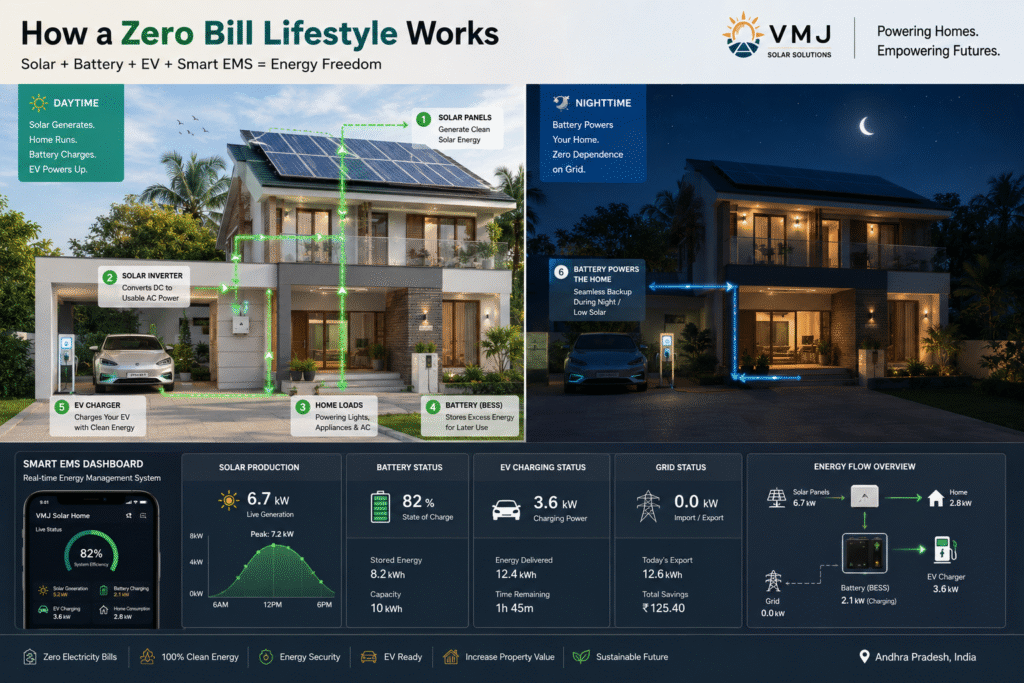
Consider a typical scenario.
During the Day
Solar panels generate electricity.
The home consumes part of that energy.
Excess Solar Energy
The surplus may:
- Charge batteries
- Charge an EV
- Be exported through net metering
depending on system configuration.
Evening Hours
The home may use:
- Stored battery energy
- Grid electricity
- A combination of both
Why Andhra Pradesh Is Ideal for This Model
Several factors support the adoption of solar-powered lifestyles.
Strong Solar Resources
Andhra Pradesh receives substantial sunlight throughout much of the year.
Rising Electricity Costs
Higher electricity tariffs make self-generation more attractive.
Growing EV Adoption
Electric vehicle ownership continues to increase across urban and semi-urban areas.
Larger Rooftop Availability
Many independent homes have sufficient roof space for meaningful solar installations.
Can You Really Achieve a Zero Electricity Bill?
Sometimes, But Not Always
This is where marketing often becomes misleading.
Many advertisements suggest:
“Install solar and never pay an electricity bill again.”
Reality is more complex.
Factors That Influence Results
Household Consumption
A high-consumption household may require:
- Larger solar systems
- Larger batteries
Weather Variations
Cloudy weather reduces solar generation.
EV Charging Frequency
Daily charging increases energy demand.
Battery Capacity
Insufficient storage may increase grid reliance.
Seasonal Changes
Energy production and consumption fluctuate throughout the year.
A More Realistic Goal: Maximum Energy Independence
Rather than chasing an exact zero bill, many homeowners should focus on:
Energy Independence
The ability to produce and manage most of their own energy.
Benefits include:
- Lower utility costs
- Reduced fuel expenses
- Greater resilience
- Long-term sustainability
The Financial Benefits
Lower Electricity Bills
Solar offsets grid energy consumption.
Reduced Fuel Costs
EV charging costs may be significantly lower than petrol or diesel expenses.
Protection Against Future Price Increases
Generating your own energy reduces exposure to utility and fuel price fluctuations.
Long-Term Asset Value
Energy-efficient homes may become increasingly attractive in future real estate markets.
Smart Home Energy Management Makes a Difference
Many advanced systems now integrate:
- Solar panels
- Batteries
- EV chargers
- Home Energy Management Systems (EMS)
These platforms help optimize:
- Solar usage
- Battery charging
- Appliance scheduling
- EV charging times
This can improve overall system efficiency.
Common Mistakes Homeowners Make
Mistake 1: Undersizing the Solar System
A system designed only for current consumption may struggle once an EV is added.
Mistake 2: Ignoring Battery Requirements
Solar alone cannot provide nighttime energy without storage or grid support.
Mistake 3: Expecting Immediate Zero Bills
Energy independence is a long-term strategy, not an overnight outcome.
Mistake 4: Focusing Only on Equipment Cost
The cheapest system may not provide the best long-term performance.
Is This Lifestyle Suitable for Every Home?
Not necessarily.
It is often most beneficial for homeowners who:
✔ Own independent houses
✔ Have adequate roof space
✔ Plan to own EVs long term
✔ Have moderate-to-high electricity consumption
✔ Value sustainability and energy security
The Future of Residential Energy in India
Industry trends increasingly point toward:
- Solar-powered homes
- Battery storage adoption
- Electric mobility
- Smart energy management
- Grid-interactive homes
The combination of rooftop solar, BESS, and EVs represents one of the most significant shifts in residential energy consumption since electrification itself.
Why Professional System Design Matters
An effective integrated system requires careful planning.
Factors include:
- Roof space
- Load calculations
- Battery sizing
- EV charging requirements
- Future energy needs
At VMJ Solar Solutions, system recommendations are based on real-world energy usage patterns rather than generic package offerings.
Because true energy independence starts with proper system design.
Frequently Asked Questions (FAQs)
1. What is a BESS in a solar system?
A Battery Energy Storage System (BESS) stores excess solar energy for later use.
2. Can I charge my EV directly from solar panels?
Yes, depending on system design, solar energy can contribute to EV charging during daylight hours.
3. Will solar and batteries eliminate my electricity bill?
Not necessarily. Results depend on system size, consumption patterns, weather, and utility policies.
4. Is battery storage necessary for solar?
Not always. However, batteries help increase solar self-consumption and provide backup capabilities.
5. How much rooftop space is needed?
The required space depends on household energy demand, EV charging needs, and solar system capacity.
6. Is Andhra Pradesh suitable for solar-powered EV charging?
Yes. Strong solar resources make Andhra Pradesh favorable for rooftop solar and EV integration.
Final Thoughts
The idea of a zero bill lifestyle is no longer futuristic.
With the right combination of:
Rooftop Solar Panels
Battery Energy Storage Systems (BESS)
Electric Vehicles (EVs)
homeowners can move closer to energy independence than ever before.
While a literal zero electricity bill is not guaranteed for every household, the combination can dramatically reduce:
- Utility costs
- Fuel expenses
- Dependence on external energy sources
For homeowners in Andhra Pradesh exploring:
- Rooftop solar installation
- Home battery storage
- EV charging solutions
- Smart home energy systems
- Sustainable living upgrades
VMJ Solar Solutions can help design an integrated energy ecosystem tailored to your home’s current needs and future goals.