
Quick Answer
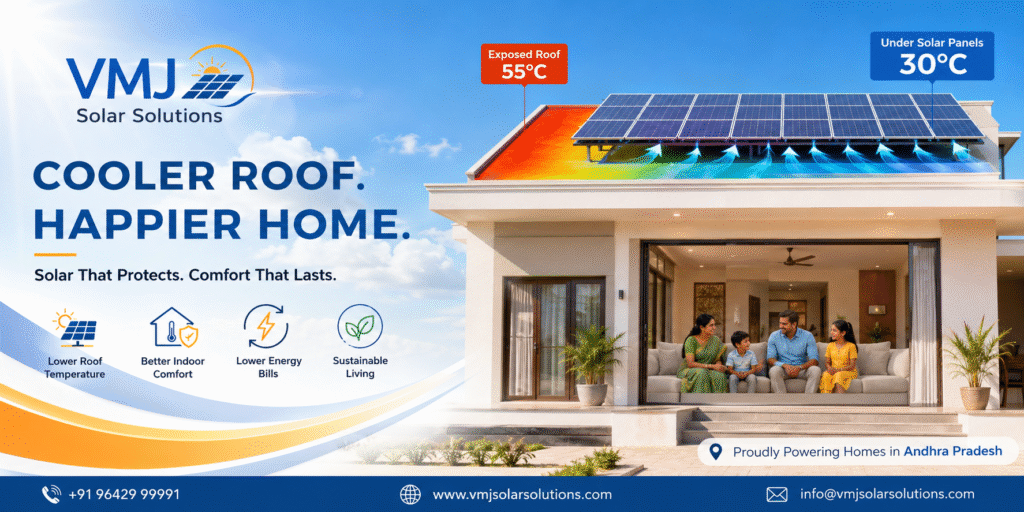
Yes, solar panels can help make your roof cooler by blocking a portion of the sun’s direct heat and creating an air gap between the roof surface and the panels.
However, homeowners should understand that solar panels are not a replacement for roof insulation, ventilation, or air conditioning. The cooling effect varies based on roof type, installation design, climate, and building construction.
For homeowners in Andhra Pradesh, where summer temperatures frequently exceed 40°C in some regions, this thermal benefit can be an additional advantage alongside electricity savings.
Introduction: Solar Panels Do More Than Generate Electricity
When most homeowners think about rooftop solar, they usually focus on:
- Lower electricity bills
- Net metering benefits
- Renewable energy
- Long-term ROI
- Sustainable living
But many are surprised to learn that solar panels may also influence the temperature of their roof.
At VMJ Solar Solutions, homeowners often ask:
“Will installing solar panels make my house cooler?”
The answer is more nuanced than a simple yes or no.
While solar panels primarily generate electricity, they can also reduce the amount of direct solar radiation reaching the roof surface. This may lower roof temperatures and, in some cases, reduce heat transfer into the building below.
This article explains:
- How solar panels affect roof temperatures
- The science behind rooftop heat gain
- Realistic expectations for Andhra Pradesh homes
- Factors that influence cooling benefits
- Whether solar can reduce AC usage
- Common myths homeowners should avoid
Why Roofs Become So Hot in Andhra Pradesh
To understand the thermal benefits of solar, we first need to understand how roofs heat up.
Throughout the day:
- Sunlight strikes the roof surface
- Roofing materials absorb solar radiation
- Heat accumulates within the roof structure
- Some heat transfers into indoor spaces
In Andhra Pradesh cities such as:
- Vijayawada
- Guntur
- Tirupati
- Kurnool
- Rajahmundry
- Nellore
roof temperatures can become significantly hotter than ambient air temperatures during peak summer afternoons.
This is especially noticeable in:
- Concrete slab roofs
- Dark-colored roofs
- Poorly insulated buildings
How Solar Panels Help Reduce Roof Heat
1. Solar Panels Act as a Physical Shade
The most important thermal benefit comes from shading.
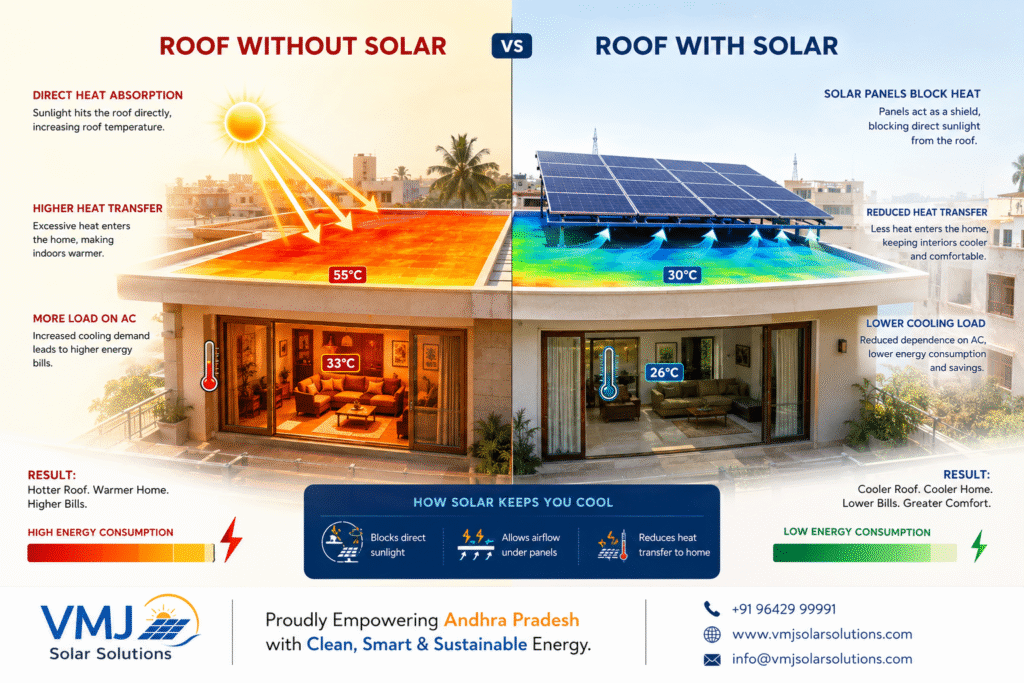
Solar panels sit above the roof surface and intercept sunlight before it reaches the roof.
Instead of direct sunlight hitting the roof:
Without Solar
Sun → Roof Surface
With Solar
Sun → Solar Panels → Reduced Exposure to Roof
Because less solar radiation reaches the roof directly, the roof surface underneath can remain cooler.
2. Air Gap Creates Natural Ventilation
A rooftop solar installation is not mounted directly against the roof.
Panels are typically elevated above the roof using mounting structures.
This creates an air gap that allows:
- Air circulation
- Heat dissipation
- Natural ventilation
Warm air can move beneath the panels rather than becoming trapped against the roof.
This airflow helps reduce heat buildup.
3. Reduced Solar Heat Absorption
A portion of sunlight is:
- Converted into electricity
- Reflected away
- Dissipated through the solar module
This means less heat energy is transferred directly into the roof structure.
Can Solar Panels Reduce Indoor Temperatures?
Sometimes — But Expectations Should Be Realistic
One of the biggest misconceptions is:
“Solar panels will make my entire home significantly cooler.”
Solar panels can reduce roof heat gain, but indoor temperature changes depend on many other factors.
These include:
- Roof insulation
- Ceiling design
- Ventilation
- Wall construction
- Window placement
- Occupancy patterns
Homes with poor insulation may notice a greater difference than homes already optimized for thermal efficiency.
The Biggest Benefit May Be Reduced Cooling Load
Rather than dramatically cooling a home, solar panels may help reduce:
Heat Entering the Building
This can potentially lower the cooling burden on:
- Air conditioners
- Ceiling fans
- Ventilation systems
The actual reduction varies from property to property.
Why This Matters in Andhra Pradesh
Andhra Pradesh experiences:
- Long summers
- Intense solar exposure
- High afternoon temperatures
For many homeowners:
Summer Electricity Bills Are Driven By
- Air conditioners
- Coolers
- Fans
- Refrigeration
Anything that reduces heat entering the home can support overall energy efficiency.
This is one reason solar installations are becoming increasingly attractive in the region.
Which Roof Types Benefit the Most?
Concrete Roofs
Most independent homes in Andhra Pradesh use reinforced concrete roofs.
These roofs absorb and store large amounts of heat.
Solar panels can help reduce direct solar exposure on these surfaces.
Metal Roofs
Commercial and industrial buildings often use metal roofing.
These structures can become extremely hot under direct sunlight.
Solar panels may help reduce roof surface temperatures by providing shade.
Industrial Buildings
Warehouses, rice mills, factories, and commercial facilities often experience substantial roof heat gain.
Large rooftop solar systems can provide both:
- Energy generation
- Partial shading benefits
Solar Panels vs Roof Insulation
Many homeowners ask:
“Should I install solar panels or insulation?”
The answer is often:
They Serve Different Purposes
Solar Panels
Primary purpose:
- Generate electricity
Secondary benefit:
- Reduce roof heat gain
Roof Insulation
Primary purpose:
- Prevent heat transfer into indoor spaces
For maximum efficiency, many buildings benefit from both.
Common Myths About Solar and Roof Temperature
Myth 1: Solar Panels Cool the Entire House
Not necessarily.
They may reduce roof heat gain, but overall indoor comfort depends on multiple building factors.
Myth 2: Solar Panels Eliminate AC Usage
No.
Solar can offset electricity consumption and may reduce heat transfer, but it does not replace cooling systems.
Myth 3: Solar Panels Damage Roofs Due to Heat
Properly installed solar systems are designed to withstand high temperatures and weather conditions.
In many cases, the roof beneath the panels receives less direct solar exposure.
Additional Benefits of Reduced Roof Exposure
Besides energy generation, solar panels may help:
Protect Roofing Materials
Continuous UV exposure can contribute to roof aging.
Solar panels shield portions of the roof from direct sunlight.
Improve Roof Longevity
Reduced exposure to:
- UV radiation
- Rain impact
- Temperature fluctuations
may help protect covered roof sections.
Actual results depend on roofing materials and environmental conditions.
Commercial and Industrial Advantages
For commercial properties such as:
- Rice mills
- Warehouses
- Manufacturing facilities
- Educational institutions
roof temperature reduction can be particularly valuable.
Large roof areas often absorb significant solar heat.
Industrial solar systems provide dual benefits:
✔ Electricity generation
✔ Partial roof shading
Smart Homeowners Look Beyond Electricity Savings
Many solar buyers focus exclusively on:
- Payback period
- ROI
- Monthly savings
However, modern solar systems can provide additional value through:
- Energy independence
- Environmental benefits
- Roof protection
- Reduced heat gain
- Property appeal
These secondary benefits are often overlooked during purchase decisions.
Why Professional Design Matters
The thermal impact of solar depends on:
- Panel spacing
- Mounting height
- Roof type
- System layout
- Building orientation
A properly designed system helps maximize both:
- Energy production
- Roof performance
At VMJ Solar Solutions, solar planning considers not only electricity generation but also site-specific factors that influence long-term performance and homeowner satisfaction.
Frequently Asked Questions (FAQs)
1. Do solar panels make roofs cooler?
Yes. Solar panels can reduce direct sunlight reaching the roof and create an air gap that helps dissipate heat.
2. Will solar panels reduce room temperature?
They may help reduce heat transfer through the roof, but indoor temperature depends on insulation, ventilation, and building design.
3. Can solar panels reduce AC electricity usage?
In some cases, reduced roof heat gain may lower cooling demand, but results vary between homes.
4. Are thermal benefits noticeable in Andhra Pradesh?
Because Andhra Pradesh experiences strong sunlight and high summer temperatures, homeowners may notice thermal benefits alongside energy savings.
5. Is insulation still necessary after installing solar?
Yes. Solar panels and insulation perform different functions and can complement each other.
6. Do solar panels protect the roof?
They can shield covered roof areas from direct sunlight, UV exposure, and certain weather effects.
Final Thoughts
Solar panels are primarily designed to generate clean, renewable electricity.
However, they can also provide an often-overlooked benefit:
Reduced Roof Heat Gain
By shading the roof and creating natural airflow beneath the panels, solar installations may help lower roof temperatures and improve overall building energy efficiency.
For homeowners and businesses in Andhra Pradesh, this can be particularly valuable during long, hot summer seasons.
The key is maintaining realistic expectations.
Solar panels are not a cooling system, but they can contribute to a more energy-efficient building while simultaneously reducing electricity costs.
If you’re considering:
- Rooftop solar installation in Andhra Pradesh
- Residential solar panels
- Commercial solar systems
- Energy-efficient home improvements
- Smart solar investments
VMJ Solar Solutions can help design a solar system optimized for your property’s energy needs, roof conditions, and long-term performance goals.