
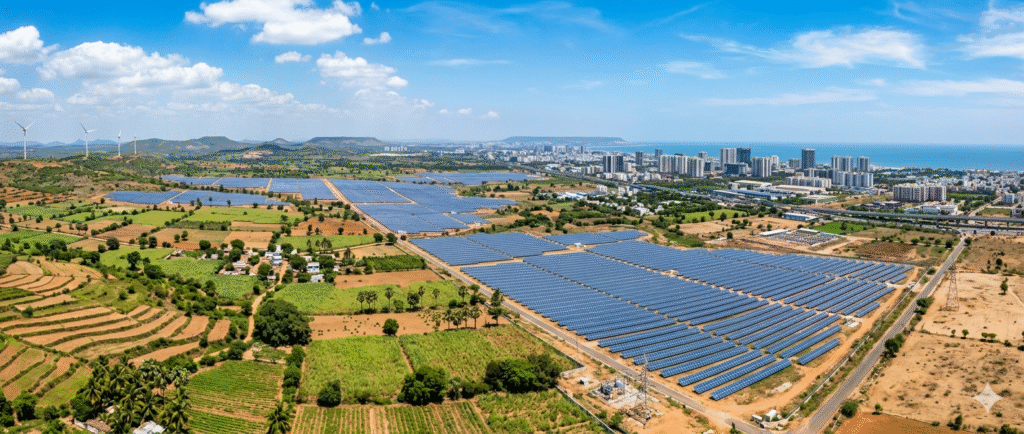
India’s energy demand is growing at an enormous pace.
As cities expand, industries scale, and households consume more electricity, the country faces a difficult challenge:
How do we support economic growth without dramatically increasing carbon emissions?
For decades, India has relied heavily on coal and fossil fuels to meet electricity demand. While this helped power development, it also contributed significantly to air pollution and greenhouse gas emissions.
That’s where solar energy is becoming increasingly important.
Solar power is no longer just an alternative energy source—it’s becoming a critical part of India’s long-term strategy to reduce its carbon footprint while continuing to grow economically.
For companies like VMJ Solar Solutions, the opportunity is not simply about installing solar panels. It’s about helping homes and businesses transition toward cleaner and more sustainable energy systems.
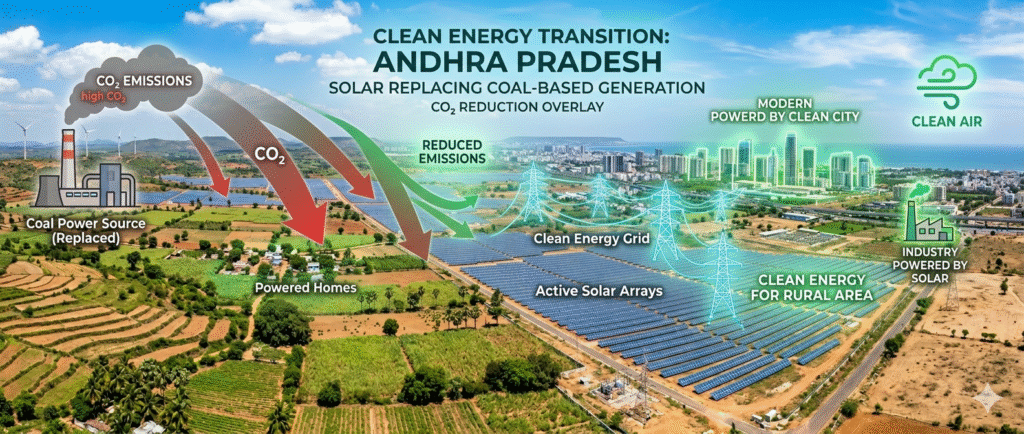
What Is a Carbon Footprint?
A carbon footprint refers to the total amount of greenhouse gas emissions generated by human activities.
This includes emissions from:
- Electricity generation
- Transportation
- Manufacturing
- Agriculture
- Residential energy use
In India, electricity generation remains one of the largest contributors because a significant portion of power still comes from fossil fuels.
Why Electricity Production Matters
Traditional electricity generation often depends on:
- Coal-fired power plants
- Diesel generators
- Natural gas systems
These sources release large amounts of:
- Carbon dioxide (CO₂)
- Air pollutants
- Particulate matter
As electricity demand increases, emissions increase too—unless cleaner alternatives are adopted.
How Solar Power Helps Reduce Carbon Emissions
1. Solar Generates Electricity Without Burning Fuel
This is the most direct advantage.
Solar panels generate electricity using sunlight, without combustion.
That means:
- No coal burning
- No diesel consumption
- No direct carbon emissions during power generation
Over time, this significantly lowers the carbon impact of electricity usage.
2. Reduces Dependence on Fossil Fuels
Every unit of solar electricity used reduces demand from conventional power sources.
This helps:
- Lower pressure on coal-based generation
- Reduce fossil fuel dependency
- Diversify India’s energy mix
The larger solar adoption becomes, the greater the cumulative environmental impact.
3. Supports Cleaner Urban Growth
India’s cities are expanding rapidly.
Without renewable energy adoption, urban electricity demand could dramatically increase emissions levels.
Rooftop solar systems in homes, apartments, offices, and commercial buildings help reduce that pressure.
4. Decreases Diesel Generator Usage
In many regions of Andhra Pradesh and across India, diesel generators are still used during power cuts.
Diesel generators contribute heavily to:
- Carbon emissions
- Air pollution
- Noise pollution
Solar systems with battery backup can reduce reliance on these generators.
Why Solar Is Especially Important for India
India has unique energy challenges:
✔ Massive Population Growth
More people means more electricity demand.
✔ Industrial Expansion
Manufacturing and infrastructure growth require enormous energy supply.
✔ Climate Vulnerability
India is highly exposed to:
- Heatwaves
- Water stress
- Extreme weather events
Reducing emissions is not just an environmental issue—it’s an economic and public health issue.
Andhra Pradesh and India’s Solar Growth
Andhra Pradesh has become one of the important states in India’s renewable energy transition because of:
- Strong solar radiation
- Large-scale solar installations
- Growing rooftop solar adoption
- Agricultural solar usage
Popular search trends now include:
- Solar panel installation Andhra Pradesh
- Rooftop solar subsidy India
- Renewable energy solutions AP
- Solar power for homes India
- Commercial solar systems India
This reflects increasing public awareness about clean energy.
The Environmental Impact of Large-Scale Solar Adoption
If solar adoption continues growing across:
- Residential homes
- Commercial buildings
- Industries
- Agriculture
India could significantly reduce:
- Coal dependency
- Greenhouse gas emissions
- Air pollution intensity
Even small rooftop systems contribute collectively when adopted at scale.
But Solar Alone Will Not Solve Everything
This is important to understand realistically.
Solar power is a major solution—but not a complete solution by itself.
Challenges still include:
❌ Energy Storage Limitations
Solar generation depends on sunlight.
❌ Manufacturing Emissions
Solar panel production itself has environmental impact.
❌ Land & Infrastructure Constraints
Large solar plants require space and grid integration.
❌ Growing Energy Demand
India’s electricity consumption continues to rise rapidly.
The goal is not “perfectly clean energy overnight.”
The goal is reducing long-term dependence on high-emission systems.
Residential Solar’s Growing Role
Earlier, carbon reduction discussions focused mainly on governments and industries.
Now homeowners play a bigger role too.
Residential rooftop solar helps:
- Reduce household grid dependency
- Lower long-term electricity consumption from fossil fuels
- Support decentralized energy generation
As more households adopt solar, the cumulative environmental impact becomes meaningful.
Commercial and Industrial Impact
Businesses consume massive amounts of electricity.
Commercial solar adoption helps companies:
- Reduce operational emissions
- Improve sustainability goals
- Lower long-term energy costs
Many businesses now include solar in their ESG and sustainability planning.
The Bigger Shift: Energy Independence and Sustainability
Solar adoption is no longer driven only by environmental concern.
It is increasingly tied to:
- Energy security
- Cost stability
- Infrastructure resilience
- Long-term sustainability planning
This makes solar strategically important for both India’s economy and environmental goals.
Common Misconception: “Solar Is Completely Zero Impact”
Not entirely.
Solar systems still involve:
- Manufacturing processes
- Transportation emissions
- Material extraction
- End-of-life disposal challenges
However, over their operational lifespan, solar systems generally produce far lower emissions compared to fossil fuel-based electricity generation.
That’s the key distinction.
Why Long-Term Thinking Matters
The transition to cleaner energy takes decades—not months.
India’s carbon reduction progress depends on:
- Policy consistency
- Infrastructure investment
- Public adoption
- Technological improvement
Solar power is one of the few solutions that is already scalable, commercially viable, and increasingly accessible.
Conclusion
Solar power plays a major role in reducing India’s carbon footprint because it helps replace high-emission electricity generation with cleaner renewable energy.
For homes, businesses, industries, and agriculture, solar offers:
- Lower emissions
- Reduced fossil fuel dependence
- Long-term sustainability benefits
- Greater energy resilience
But the smartest perspective is realistic:
Solar is not a perfect solution.
It is a critical part of a much larger energy transition.
For providers like VMJ Solar Solutions, the real opportunity lies in helping customers adopt reliable, efficient solar systems that contribute both to long-term savings and to a cleaner energy future for India.
Because reducing carbon emissions is no longer only about environmental responsibility—it’s becoming part of economic resilience and long-term national growth.
Frequently Asked Questions (FAQs)
1. How does solar power reduce carbon emissions?
Solar generates electricity without burning fossil fuels, reducing greenhouse gas emissions.
2. Is solar energy completely pollution-free?
No. Manufacturing and transportation create some emissions, but operational emissions are very low.
3. Why is solar important for India?
India’s growing energy demand requires cleaner alternatives to reduce long-term environmental impact.
4. Does rooftop solar really make a difference?
Yes. Large-scale residential adoption collectively reduces dependence on fossil fuel-generated electricity.
5. Can solar completely replace coal in India?
Not immediately. Solar is part of a broader energy transition alongside other renewable sources and infrastructure improvements.
6. Does solar help reduce air pollution too?
Yes. Reduced fossil fuel usage can lower air pollution and improve environmental quality over time.