Most homeowners think about sustainability in isolated ways.
Some install solar panels to reduce electricity bills. Others add rainwater harvesting systems to deal with water shortages. But very few realize the bigger opportunity:
Combining both systems creates a smarter, more resilient home.
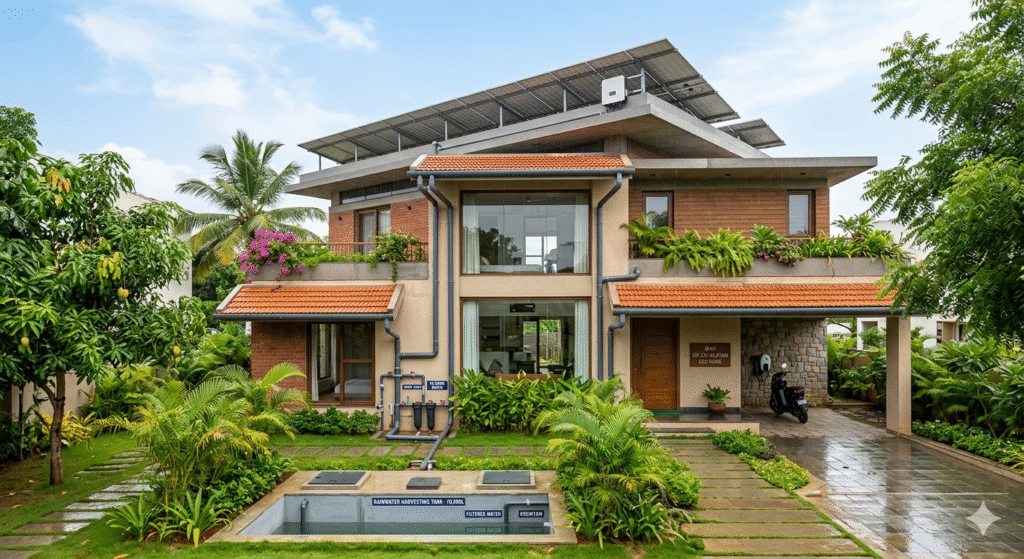
In Andhra Pradesh—where rising temperatures, seasonal water stress, and increasing utility costs are becoming more common—integrating rooftop solar with rainwater harvesting is no longer just an eco-friendly idea. It’s a practical long-term strategy.
For homeowners working with providers like VMJ Solar Solutions, the real value lies not in adopting one sustainable feature, but in building a home that is more self-reliant overall.
Why Solar and Rainwater Harvesting Work Well Together
At first glance, electricity and water may seem unrelated.
But both systems:
- Use existing rooftop space
- Reduce dependence on public infrastructure
- Lower monthly utility expenses
- Improve long-term home efficiency
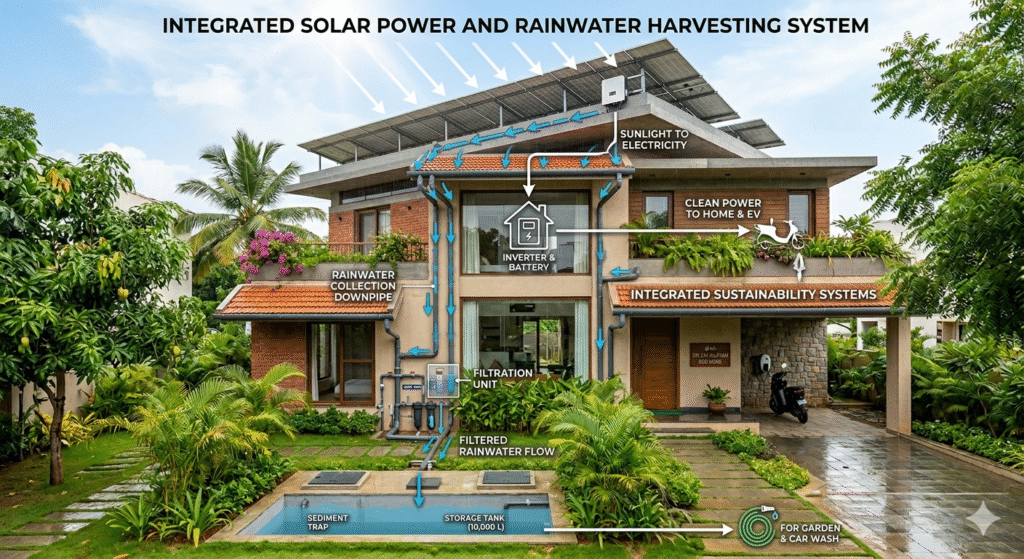
More importantly, they complement each other physically and financially when designed properly.
What Is Rooftop Solar?
Rooftop solar systems use solar panels installed on your roof to generate electricity from sunlight.
These systems help homeowners:
- Reduce electricity bills
- Minimize grid dependency
- Improve energy efficiency
In Andhra Pradesh, rooftop solar adoption is growing because of:
- High sunlight availability
- Rising electricity tariffs
- Government subsidy support
What Is Rainwater Harvesting?
Rainwater harvesting collects and stores rainwater from rooftops for reuse or groundwater recharge.
A typical system includes:
- Roof catchment area
- Gutters and filters
- Storage tanks or recharge pits
This helps homeowners:
- Reduce water wastage
- Improve groundwater levels
- Lower dependence on tanker water or borewells
The Smart Advantage of Combining Both Systems
1. Maximum Utilization of Rooftop Space
Your roof is valuable infrastructure.
Instead of using it for only one purpose, integrated planning allows you to:
- Install solar panels efficiently
- Channel rainwater through designed drainage systems
- Avoid structural conflicts later
This is especially important in urban and semi-urban homes where roof space is limited.
2. Dual Utility Savings
Most households focus only on electricity bills.
But water costs are rising too:
- Borewell maintenance
- Water tankers
- Pumping costs
By combining solar and rainwater harvesting, homeowners reduce pressure on both energy and water expenses.
3. Better Long-Term Sustainability
Here’s the bigger picture:
Solar solves energy dependency.
Rainwater harvesting addresses water security.
Together, they create homes that are:
- More resource-efficient
- More resilient during shortages
- Better prepared for future utility cost increases
4. Improved Property Appeal
As awareness around sustainable living grows, homes with integrated eco-friendly systems stand out.
Buyers increasingly value:
- Lower operating costs
- Efficient infrastructure
- Future-ready homes
While these systems may not dramatically increase selling price, they often improve buyer perception and marketability.
Design Considerations You Shouldn’t Ignore
This is where many homeowners make mistakes.
Installing solar first and adding rainwater harvesting later often creates:
- Drainage complications
- Poor panel spacing
- Maintenance difficulties
The smarter approach is integrated planning from the beginning.
Key Factors for Proper Integration
✔ Roof Strength & Layout
Your roof must support:
- Solar panel mounting structures
- Water flow pathways
- Maintenance access
✔ Water Drainage Planning
Rainwater should flow efficiently around solar installations without:
- Water stagnation
- Leakage risks
- Structural damage
✔ Panel Positioning
Improper solar placement can:
- Block water channels
- Reduce rainwater collection efficiency
- Create cleaning challenges
✔ Maintenance Accessibility
Both systems require occasional maintenance.
Good design ensures:
- Panels remain easy to clean
- Gutters and filters stay accessible
Realistic Challenges Homeowners Face
Let’s keep expectations realistic.
❌ Initial Investment
Combining both systems requires higher upfront spending than installing just one.
❌ Space Constraints
Smaller rooftops may require design compromises.
❌ Poor Installation Quality
Improper execution can lead to:
- Roof leakage
- Reduced solar efficiency
- Water contamination issues
This is why professional planning matters.
Why This Matters More in Andhra Pradesh
Andhra Pradesh faces two growing pressures:
Rising Heat & Electricity Demand
Hotter summers increase cooling costs and power usage.
Seasonal Water Stress
Many regions experience groundwater depletion and inconsistent rainfall patterns.
Homes that depend entirely on external infrastructure become more vulnerable over time.
Integrated sustainable systems reduce that vulnerability.
The Bigger Shift: Smarter Homes, Not Just Solar Homes
The market is evolving.
Earlier, sustainability meant adding a solar panel.
Now, smarter homeowners are thinking in systems:
- Energy efficiency
- Water conservation
- Long-term operational savings
The future advantage won’t belong to homes with isolated upgrades—it will belong to homes designed for resilience
Conclusion
Combining rooftop solar with rainwater harvesting is one of the most practical sustainability upgrades homeowners in Andhra Pradesh can make in 2026.
Together, these systems help:
- Reduce utility dependency
- Improve long-term savings
- Create more efficient and future-ready homes
But the real success lies in proper planning and integration—not simply installing components separately.
For homeowners working with providers like VMJ Solar Solutions, the smarter goal is not just to reduce bills. It’s to build homes that perform better over the long term, both financially and environmentally.
Frequently Asked Questions (FAQs)
1. Can solar panels affect rainwater harvesting?
Yes, if poorly designed. Proper installation ensures water flow is maintained efficiently.
2. Is it better to install both systems together?
Yes. Integrated planning avoids structural and drainage conflicts later.
3. Does rainwater damage solar panels?
No. Solar panels are designed for outdoor exposure, including rain.
4. How much roof space is needed
It depends on system size, but most medium-sized homes can accommodate both with proper design.
5. Does rainwater harvesting reduce water bills?
It can reduce dependence on external water sources and pumping costs over time.
6. Are these systems difficult to maintain?
No, but periodic cleaning and inspection are important for long-term efficiency.