
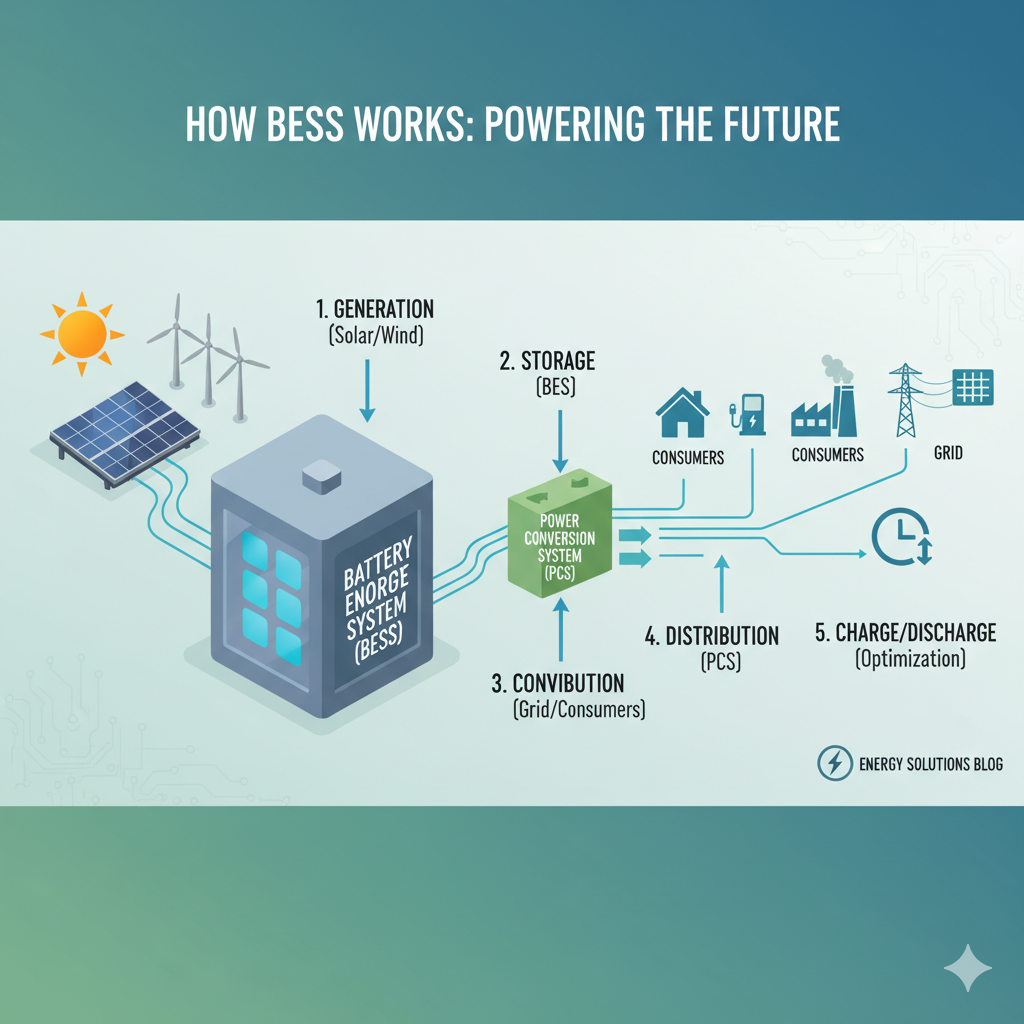
Electricity demand is rising faster than ever, and renewable energy sources like solar and wind are variable by nature. That’s where Battery Energy Storage Systems (BESS) come in — ensuring energy is available when it’s needed most.
At VMJ Solar, we believe BESS is more than just backup — it’s the heart of modern energy management. Let’s break down how BESS works and why it’s transforming homes, industries, and smart cities.
What is a Battery Energy Storage System (BESS)?
A BESS is a system that:
- Stores electricity in batteries.
- Releases it when demand is high or generation is low.
- Works with renewables, grids, or microgrids for stability and efficiency.
It acts like a bank account for energy — store when there’s surplus, withdraw when you need it.
Core Components of BESS
- Batteries
- Lithium-ion (most common), Lead-acid, Flow, Sodium-ion, etc.
- Store energy as chemical potential.
- Inverter
- Converts DC (battery output) into AC (usable electricity).
- Manages charging and discharging.
- Battery Management System (BMS)
- Protects against overcharging, overheating, and short circuits.
- Ensures battery health and longer lifespan.
- Control System (Software + IoT)
- Uses AI, IoT, and sensors for smart monitoring.
- Decides when to charge/discharge based on demand.
- Cooling & Safety Systems
- Maintain optimal temperature.
- Fire safety measures for risk prevention
How BESS Works Step by Step
- Charging Mode
- Excess electricity (from solar panels or grid) flows into the batteries.
- Stored as chemical energy.
- Storage Mode
- Energy is safely held until needed.
- Smart controls monitor battery health.
- Discharging Mode
- When demand rises or solar stops producing, batteries discharge.
- Inverter converts DC → AC for appliances or grid export.
Benefits of Understanding BESS Technology
| Feature | Why It Matters |
|---|---|
| Energy Independence | Reduces reliance on unstable grids |
| Cost Savings | Avoids high tariff hours |
| Renewable Integration | Smooths out solar/wind fluctuations |
| Backup Power | Keeps lights on during blackouts |
| Smart Management | AI/IoT ensures efficient usage |
Applications of BESS
- Homes → Store solar energy for nighttime use.
- Industries → Peak shaving & cost reduction.
- Microgrids → Stability in remote locations.
- EV Charging Stations → Fast, reliable charging.
- Smart Cities → Integrating renewables into urban systems.
VMJ Solar’s Expertise
At VMJ Solar, we don’t just install solar panels — we deliver end-to-end BESS solutions. From choosing the right batteries to smart monitoring and maintenance, we ensure your system is:
- Efficient – Maximum savings.
- Reliable – 24/7 power security.
- Future-Ready – Designed for tomorrow’s smart grids.
FAQs
1: What type of battery is best for BESS?
Lithium-ion is the most popular due to efficiency, but flow and sodium-ion are emerging.
2: Can BESS work without solar panels?
Yes, it can store grid electricity and release it during peak demand.
3: How long does BESS last?
Depending on chemistry and use, 10–15 years on average with proper management.
Conclusion
Understanding how BESS works helps you realize why it’s key to the future of energy. By storing clean energy, reducing costs, and ensuring reliability, BESS bridges the gap between renewable generation and real-world demand.
At VMJ Solar, we make this technology accessible — helping homes, industries, and cities unlock the full potential of energy storage.