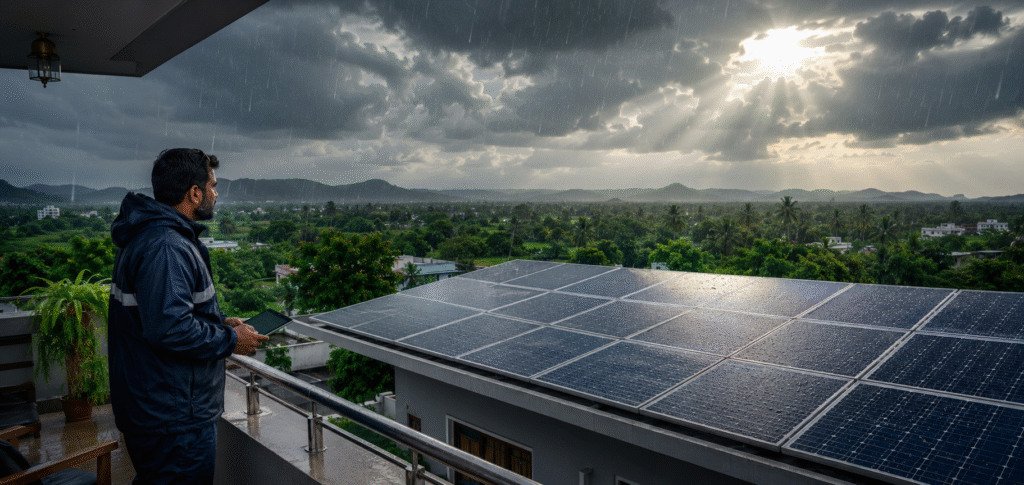
solar panels continue to generate electricity during the monsoon season, but proper maintenance becomes even more important during periods of heavy rain, humidity, strong winds, and cloud cover.
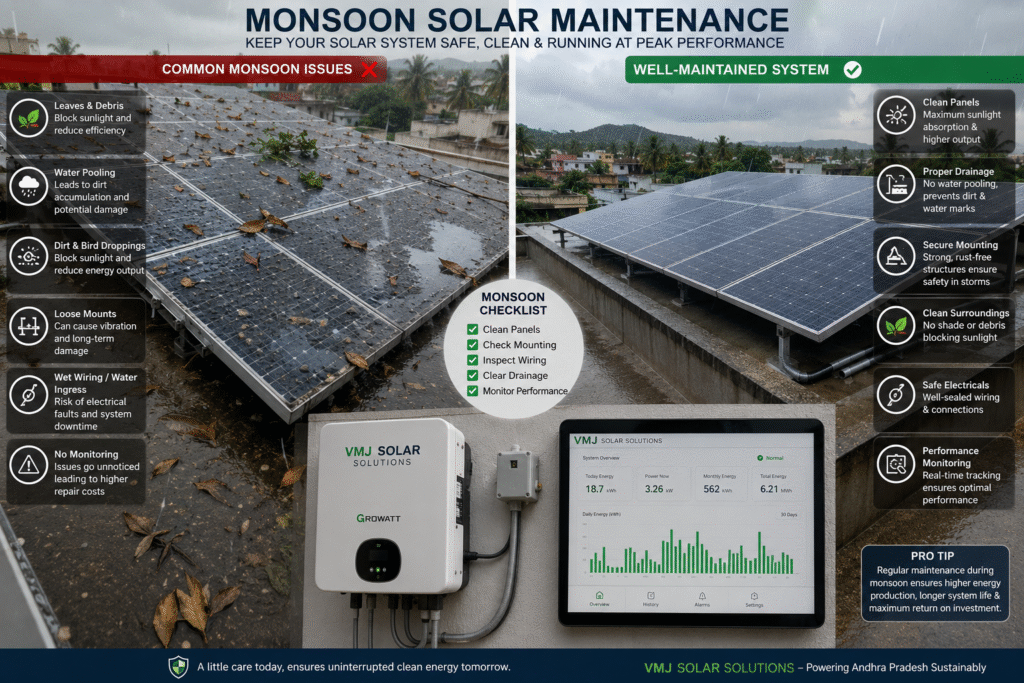
While rainfall can help wash away dust and dirt, monsoon weather may also introduce challenges such as:
- Reduced sunlight availability
- Water drainage issues
- Loose electrical connections
- Vegetation growth
- Debris accumulation
- Storm-related damage
Regular inspections and preventive maintenance can help ensure your solar system continues performing efficiently throughout the rainy season.
Introduction: Does Monsoon Affect Solar Panel Performance?
One of the most common questions homeowners ask after installing solar panels is:
“Will my solar system work during the rainy season?”
The answer is:
Yes, but generation levels may decrease temporarily due to reduced sunlight.
For homeowners in Andhra Pradesh, monsoon season typically brings:
- Cloudy skies
- Heavy rainfall
- Increased humidity
- Strong winds
- Occasional cyclonic weather in coastal regions
These conditions do not stop solar panels from working, but they can influence both performance and maintenance requirements.
At VMJ Solar Solutions, customers often assume that rain automatically keeps solar panels maintenance-free.
In reality, monsoon season is one of the most important times to inspect and protect your solar investment.
This guide explains:
- How monsoon weather affects solar systems
- Essential maintenance practices
- Safety precautions
- Common issues to watch for
- Tips for maximizing solar performance during rainy months
Do Solar Panels Work During Rainy Weather?
Yes
Solar panels generate electricity using sunlight, not heat.
Even during cloudy conditions:
- Diffused sunlight reaches the panels
- Electricity generation continues
However:
Output Is Usually Lower
Cloud cover reduces solar irradiance reaching the panels.
As a result:
- Daily energy generation may decrease
- Solar exports may reduce
- Electricity savings may temporarily decline
This is a normal seasonal variation and does not indicate a system problem.
Why Monsoon Maintenance Matters
Many solar owners focus on summer performance.
However, the rainy season introduces unique risks.
Proper maintenance helps:
✔ Protect system safety
✔ Maintain energy production
✔ Prevent long-term damage
✔ Extend equipment life
✔ Preserve solar ROI
Common Monsoon Challenges for Solar Systems
1. Water Pooling Around Panels
Improper drainage may cause:
- Water accumulation
- Debris buildup
- Structural stress
Professional installation typically includes proper drainage considerations.
However, periodic inspections remain important.
2. Debris Accumulation
Heavy winds may deposit:
- Leaves
- Branches
- Dirt
- Plastic waste
around solar panels.
Debris can block sunlight and reduce efficiency.
3. Increased Moisture Exposure
Monsoon conditions increase:
- Humidity
- Condensation
- Moisture levels
Quality solar equipment is designed for outdoor environments, but damaged seals or exposed wiring should be addressed promptly.
4. Vegetation Growth
During rainy months:
- Trees grow faster
- Shrubs become denser
- New branches emerge
This may create shading that did not exist during summer.
5. Strong Winds and Storms
In some parts of Andhra Pradesh, seasonal storms may expose:
- Loose mounting hardware
- Weak structural connections
- Damaged cable management
Regular inspections help identify these issues early.
Monsoon Maintenance Checklist for Solar Owners
Inspect Panels Visually
From a safe location, check for:
- Cracks
- Visible damage
- Dirt buildup
- Physical obstructions
Never climb onto a roof during wet conditions.
Check for New Shadow Sources
Vegetation may expand rapidly during monsoon months.
Inspect for:
- Tree branches
- New construction
- Nearby growth
that could reduce sunlight exposure.
Monitor Solar Production
One of the easiest ways to identify problems is through:
- Solar monitoring apps
- Inverter dashboards
- Energy management systems
If generation drops unexpectedly beyond seasonal expectations, further inspection may be required.
Inspect Drainage Areas
Ensure that:
- Rainwater flows freely
- Roof drains remain clear
- Water does not accumulate near equipment
Standing water should never be ignored.
Examine Mounting Structures
Periodic inspections should verify:
- Mount stability
- Fastener condition
- Corrosion signs
particularly in coastal areas.
Why Rain Is Not a Substitute for Cleaning
Many homeowners believe:
“Rain cleans solar panels automatically.”
While rainfall can remove loose dust, it may not remove:
- Bird droppings
- Sticky dirt
- Industrial residue
- Pollen deposits
- Organic buildup
Periodic professional cleaning may still be necessary.
Inverter Maintenance During Monsoon
The inverter is one of the most important components in a solar system.
During rainy months:
Check for Warning Indicators
Look for:
- Error messages
- Performance alerts
- Unexpected shutdowns
Ensure Proper Ventilation
Inverters require airflow for cooling.
Avoid blocking ventilation openings.
Inspect Surrounding Areas
Keep inverter locations:
- Dry
- Clean
- Free from obstructions
Special Considerations for Coastal Andhra Pradesh
Areas such as:
- Visakhapatnam
- Kakinada
- Nellore
may experience:
- Salt-laden air
- Higher humidity
- Cyclonic weather
These conditions can accelerate:
- Corrosion
- Metal degradation
- Electrical wear
Regular inspections become particularly valuable in coastal environments.
Commercial Solar Systems Need Extra Attention
Commercial and industrial facilities often have:
- Larger roof areas
- More electrical components
- Greater energy demands
Facilities such as:
- Rice mills
- Factories
- Warehouses
- Educational institutions
should consider structured maintenance schedules during monsoon season.
How Monsoon Affects Solar ROI
Some business owners worry when solar generation drops during rainy months.
However:
Seasonal Variations Are Normal
Annual solar ROI calculations are based on year-round performance, not individual rainy weeks.
A properly designed system accounts for:
- Summer peaks
- Monsoon reductions
- Seasonal fluctuations
Long-term performance remains the most important metric.
Common Mistakes Solar Owners Make
Mistake 1: Ignoring Monitoring Data
Small performance issues often become larger problems when left unnoticed.
Mistake 2: Walking on Wet Solar Panels
This creates safety risks and may damage equipment.
Always use trained professionals.
Mistake 3: Assuming Rain Solves All Cleaning Needs
Rain helps but does not replace routine inspections and maintenance.
Mistake 4: Ignoring Vegetation Growth
New shadows can significantly affect energy production.
FAQ’S
1.Do solar panels work during monsoon season?
Yes. Solar panels continue generating electricity during cloudy and rainy weather, although output is usually lower than during sunny conditions.
2.Does rain damage solar panels?
Quality solar panels are designed to withstand rain and outdoor weather conditions. However, damaged components should be inspected promptly.
3.Should solar panels be cleaned during monsoon?
Rain may help remove dust, but professional inspections and periodic cleaning are still recommended.
4.Can monsoon reduce solar savings?
Yes. Cloud cover may temporarily reduce energy generation, but this is a normal seasonal effect.
Final Thoughts
Monsoon season is a normal part of solar system operation in Andhra Pradesh.
While cloudy skies may temporarily reduce generation, proper maintenance can help ensure your system remains:
✔ Safe
✔ Efficient
✔ Reliable
✔ Productive
The key is proactive monitoring, periodic inspections, and addressing small issues before they become larger problems.
For homeowners and businesses in Andhra Pradesh exploring:
- Rooftop solar maintenance
- Solar panel cleaning
- Commercial solar service
- Net metering optimization
- Long-term solar performance
VMJ Solar Solutions provides professional support to help protect your solar investment through every season—including the monsoon months.