
The future of energy is not just renewable — it’s smart. With the rapid adoption of solar energy and Battery Energy Storage Systems (BESS), the need for intelligent monitoring and control has never been greater. This is where Artificial Intelligence (AI) and the Internet of Things (IoT) come into play.
Together, they transform traditional storage into smart energy storage systems that can predict, optimize, and adapt in real time. At VMJ Solar, we leverage these technologies to ensure that every solar + storage solution is efficient, reliable, and future-ready.
What is Smart Energy Storage?
Smart energy storage goes beyond just charging and discharging a battery. It uses AI algorithms and IoT-enabled sensors to:
- Monitor real-time energy flows.
- Predict demand and supply.
- Optimize battery usage for efficiency and lifespan.
- Integrate seamlessly with renewable sources like solar and wind.
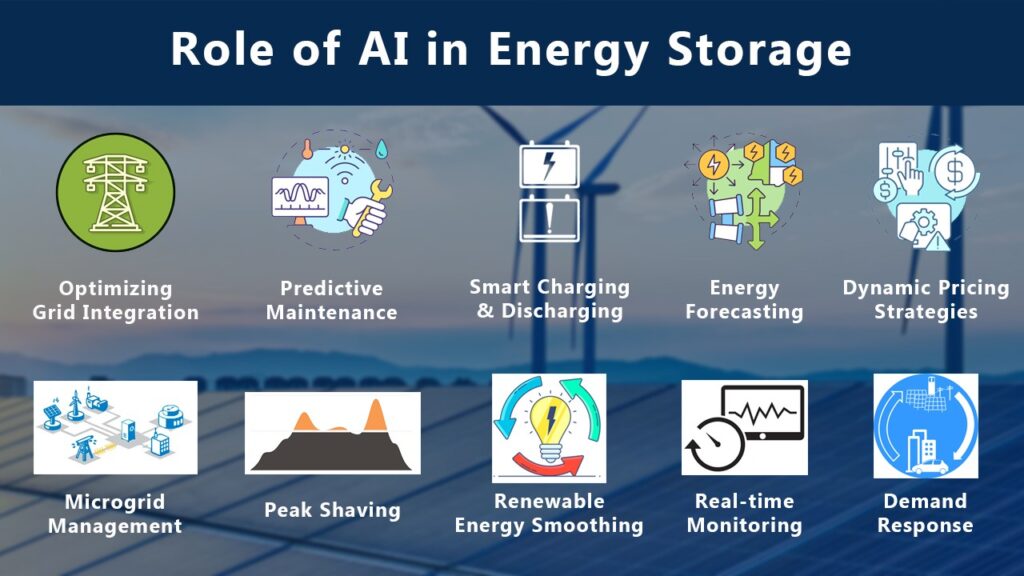
Role of AI in Energy Storage
1. Predictive Analytics
AI forecasts energy demand and solar generation based on weather patterns, usage history, and grid conditions. This allows better planning for charging and discharging cycles.
2. Battery Health Monitoring
AI models can detect early signs of cell degradation and predict remaining useful life. This helps avoid sudden failures and ensures maximum ROI.
3. Energy Optimization
AI balances when to store, when to use, and when to sell back to the grid, ensuring lower electricity bills and efficient usage.
4. Grid Interaction
In large-scale projects, AI manages grid balancing, demand response, and frequency regulation, making renewable energy more stable.
Role of IoT in Energy Storage
1. Real-Time Monitoring
IoT sensors continuously track voltage, current, temperature, and performance of each battery cell.
2. Remote Control
With IoT integration, users can monitor and control their solar + storage system through apps or dashboards — anytime, anywhere.
3. Fault Detection
IoT devices send alerts when abnormalities are detected, enabling quick intervention and reducing downtime.
4. Smart Home & EV Integration
IoT-enabled storage systems sync with smart appliances and electric vehicles, ensuring energy is used efficiently at the right time.
AI + IoT = Smarter Energy Systems
| Feature | With AI/IoT | Without AI/IoT |
|---|---|---|
| Energy Forecasting | Accurate demand/supply prediction | Manual estimation |
| Battery Life | Longer through predictive maintenance | Shortened due to misuse |
| Monitoring | Real-time, remote, proactive | Limited & reactive |
| Cost Savings | High (smart usage, peak shaving) | Lower, unpredictable |
| Grid Stability | Strong | Weak under high loads |
Benefits for Solar + Storage Users
- Lower Electricity Bills → Smarter charging/discharging cycles.
- Longer Battery Life → Predictive maintenance reduces replacement costs.
- Increased ROI → Energy savings + selling surplus to the grid.
- Peace of Mind → Real-time visibility and control.
- Future-Readiness → Seamless integration with EVs, smart homes, and microgrids.
VMJ Solar’s Smart Approach
At VMJ Solar, we integrate AI-powered analytics and IoT-enabled monitoring systems in our solar + storage projects. This ensures:
- Smarter energy management.
- Safer battery operation.
- Higher customer satisfaction through transparency and control.
We don’t just install solar systems — we deliver smart, future-proof energy solutions.
FAQs
1: How does AI help reduce electricity bills?
AI optimizes charging/discharging cycles, avoiding high-cost peak usage.
2: Can IoT really make a difference in home solar systems?
Yes, IoT allows you to monitor your solar + storage in real time and even control it remotely.
3: Is AI in solar storage expensive?
Costs are reducing, and the savings + extended battery life often outweigh the investment.
Conclusion
The combination of AI and IoT is revolutionizing solar + storage systems. From predictive analytics to real-time monitoring, these technologies ensure maximum efficiency, safety, and ROI.
At VMJ Solar, we are committed to delivering not just solar power — but smart solar power. Because the future of energy isn’t just renewable, it’s intelligent.