
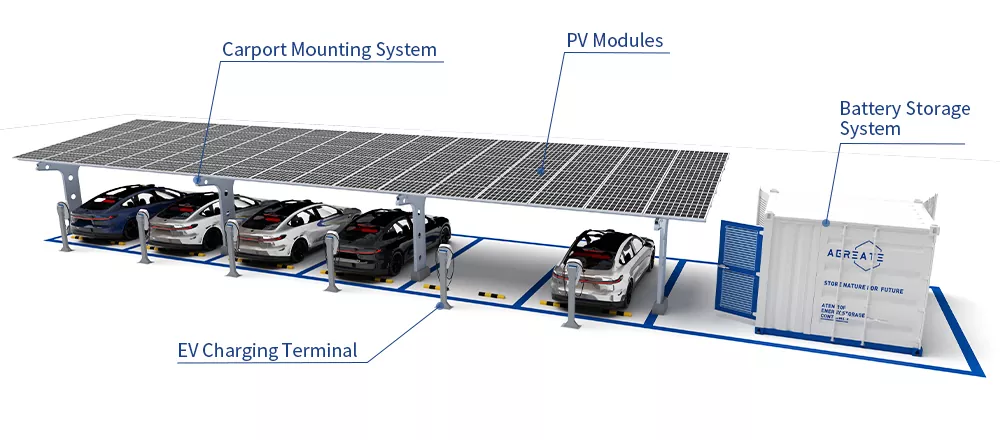
Electric Vehicles (EVs) are revolutionizing transportation, while Battery Energy Storage Systems (BESS) are transforming the way we produce and consume electricity. At first glance, they may seem like separate technologies — one powers your car, the other powers your home or business. But in reality, EVs and BESS are deeply connected, and together they are reshaping the future of clean energy.
At VMJ Solar, we see EVs and BESS as two sides of the same coin: both rely on advanced battery technology to deliver efficiency, reliability, and sustainability.
What is BESS?
BESS (Battery Energy Storage System) stores electricity from the grid or renewable sources like solar and wind, and discharges it when needed.
- Provides backup power during outages.
- Enables peak load management.
- Makes renewable energy available round the clock.
How EVs Work
EVs run on rechargeable lithium batteries. Instead of filling petrol or diesel, you charge the car from the grid or solar power.
- Clean, efficient transportation.
- Lower running costs compared to fossil fuels.
- Powered by the same battery technology as BESS.
Vehicle-to-Grid (V2G) & Vehicle-to-Home (V2H)
- EVs themselves can act like mobile BESS.
- V2G: EV batteries can send power back to the grid during peak hours.
- V2H: EVs can power homes during outages, just like a stationary battery system.
Sustainability Synergy
- Solar + BESS + EV creates a closed clean energy loop.
- Daytime → Solar charges BESS.
- Evening → BESS charges EV or powers home.
- Peak hours → EV or BESS supports the grid.
👉 Together, they maximize renewable energy use and minimize fossil fuel reliance.
Example: EV + Solar + BESS in Action
A household with a 5 kW solar system, 10 kWh BESS, and an EV:
- Daytime: Solar powers the home + charges the battery.
- Evening: Battery powers appliances + charges the EV.
- Night: Minimal grid use; next morning, EV is ready with clean, low-cost energy.
Commercial & Industrial Impact
- EV fleets + BESS = Lower charging costs + stable energy supply.
- Businesses can use EVs as mobile energy reserves during blackouts.
- Reduces dependency on costly diesel gensets for backup.
Environmental Benefits
- Cuts emissions from both transport and energy sectors.
- Reduces reliance on coal and petrol/diesel.
- Supports India’s goals of 30% EV adoption by 2030 and Net Zero by 2070.
Why VMJ Solar Believes in EV + BESS Integration
- Expertise in solar + storage systems that support EV charging.
- Knowledge of hybrid setups with V2G/V2H readiness.
- End-to-end solutions for homes, businesses, and EV fleets.
With VMJ Solar, you don’t just buy power — you create a smart energy ecosystem.
FAQs
1: Do I need BESS to charge an EV at home?
Not necessarily. But BESS lowers charging costs by using solar or off-peak power.
2: Can an EV battery power my home?
Yes. With V2H-enabled chargers, EVs can supply electricity to your home during outages.
3: Will EVs make the grid unstable?
If unmanaged, yes. But with BESS and smart charging, EV adoption can actually strengthen the grid.
Conclusion
EVs and BESS are not separate technologies — they are partners in the clean energy revolution. Together, they provide:
✅ Reliable backup power
✅ Lower energy costs
✅ Cleaner transportation
✅ A sustainable future
At VMJ Solar, we help customers build solar + storage + EV-ready systems, making sure your home, business, and vehicle are powered the smart way.
⚡ The future is electric. With BESS, it’s also reliable and affordable.