
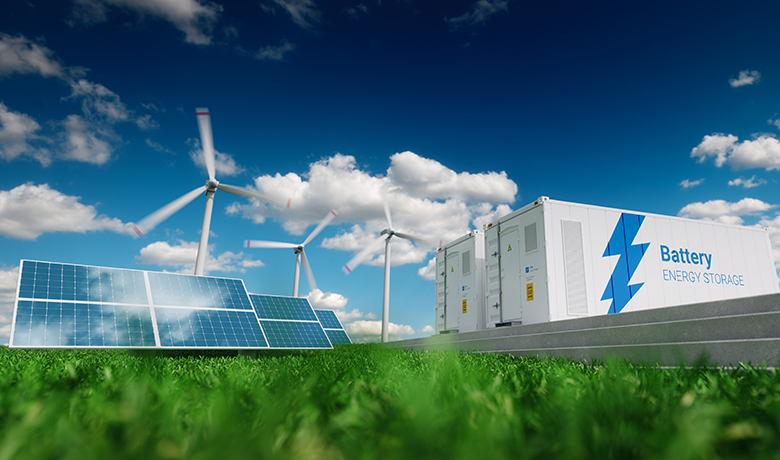
Renewable energy is the future, but it comes with a challenge: intermittency. Solar panels produce power only during the day, and wind turbines depend on weather conditions. This makes balancing supply and demand a key issue for modern grids.
The solution? Battery Energy Storage Systems (BESS). By pairing storage with renewable sources like solar and wind, we can create a stable, reliable, and round-the-clock clean energy supply. At VMJ Solar, we see BESS as the backbone of India’s transition to a greener, smarter power system.
Solar + Storage – Daytime to Nighttime Power
- Challenge: Solar produces peak energy in the afternoon, while households and businesses consume more in the evening.
- Solution with BESS:
- Store excess solar energy during the day.
- Discharge it at night when demand is highest.
- Avoid exporting power at low tariffs and instead use it for self-consumption.
👉 This makes solar systems more valuable by increasing ROI and reducing dependence on the grid.
Wind + Storage – Balancing Fluctuations
- Challenge: Wind generation can spike or drop suddenly, depending on wind speed.
- Solution with BESS:
- Smooths out fluctuations by storing surplus energy when winds are strong.
- Releases stored power when winds slow down.
- Keeps supply consistent for homes, businesses, and the grid.
👉 With wind + storage, utilities can ensure stable power delivery, reducing blackouts and grid instability.
Grid-Level Benefits of BESS with Renewables
- Peak Load Management – Store renewable energy during low-demand hours and discharge during peak hours.
- Frequency Regulation – Maintain grid stability by instantly responding to fluctuations.
- Reduced Curtailment – Prevent renewable energy from going to waste when production exceeds grid demand.
- Energy Independence – Reduces reliance on fossil-fuel peaker plants.
- Future-Ready Cities – Supports smart grids, EV charging, and decentralized energy.
Residential & Commercial Benefits
- For Homes: Solar + BESS ensures evening power, outage backup, and lower bills.
- For Businesses: Wind + solar hybrid with storage reduces demand charges and provides reliable power supply.
- For Communities: Microgrids powered by renewable + storage can bring reliable electricity to rural and remote areas.
Example: Solar + Storage Integration in Action
Let’s take a 5 kW solar + 10 kWh BESS home system:
- Daytime → Solar produces 20–25 kWh.
- Surplus 10 kWh stored in BESS.
- Evening → Stored power runs appliances like fans, fridge, lights, and TV.
👉 Outcome: 70–90% reduction in monthly electricity bills and 24/7 energy security.
Environmental Advantages
- Cuts down use of diesel generators for backup.
- Reduces fossil-fuel dependency for balancing the grid.
- Enables India to meet Net Zero 2070 goals with reliable renewable power.
Why VMJ Solar Recommends BESS with Renewables
- We design solar + storage systems that maximize self-consumption.
- Use of certified lithium batteries ensures long lifespan and safety.
- Seamless integration with net metering and hybrid inverters.
- Tailored solutions for homes, businesses, and industries.
FAQs
1: Can BESS be added to existing solar or wind setups?
Yes. Modern hybrid inverters allow integration with both new and existing systems.
2: How long can batteries store renewable energy?
Residential lithium batteries can store energy for 4–8 hours of daily use. Utility-scale storage can extend to several days.
3: Is solar + storage cost-effective?
Yes. With falling battery prices and government incentives, payback is now 5–7 years, followed by decades of savings.
Conclusion
The future of renewable energy lies not just in generation, but in storage. With BESS, solar and wind power become reliable, stable, and available 24/7.
At VMJ Solar, we believe every home, business, and community can benefit from solar + storage or wind + storage solutions — cutting costs, reducing pollution, and ensuring energy independence.
⚡ The sun and wind are free. With BESS, now the power they provide can be too.