
Solar Panels ఉత్పత్తి చేసిన అదనపు విద్యుత్ Gridకి పంపితే ఏమవుతుంది? | Tadepalligudem & West Godavari Guide
Solar Panels పెట్టించుకున్న తర్వాత చాలా మంది అడిగే ప్రశ్న:
“నేను ఉపయోగించని Solar కరెంట్ Gridకి వెళ్తే ప్రభుత్వం నాకు డబ్బులు ఇస్తుందా?”
ఇంకొందరు:
“నా Solar 500 units ఉత్పత్తి చేస్తే, నేను 300 units మాత్రమే వాడితే మిగిలిన 200 unitsకు డబ్బులు వస్తాయా?”
ఇక్కడే చాలామందికి Net Metering మరియు Net Billing మధ్య confusion వస్తుంది.
నిజానికి Solar నుంచి Gridకి పంపిన ప్రతి unitకు మీ retail electricity tariffతో సమానంగా డబ్బులు వస్తాయని అనుకోవడం తప్పు.
మీ connectionకు వర్తించే metering mechanism, APERC regulations మరియు applicable settlement/feed-in tariff ఆధారంగా surplus electricity ఎలా settle అవుతుందో నిర్ణయించబడుతుంది.
ఈ articleలో Andhra Pradesh, ముఖ్యంగా Tadepalligudem మరియు West Godavariలో rooftop solar usersకు ఇది ఎలా పనిచేస్తుందో సులభంగా తెలుసుకుందాం.
Quick Answer — Featured Snippet కోసం
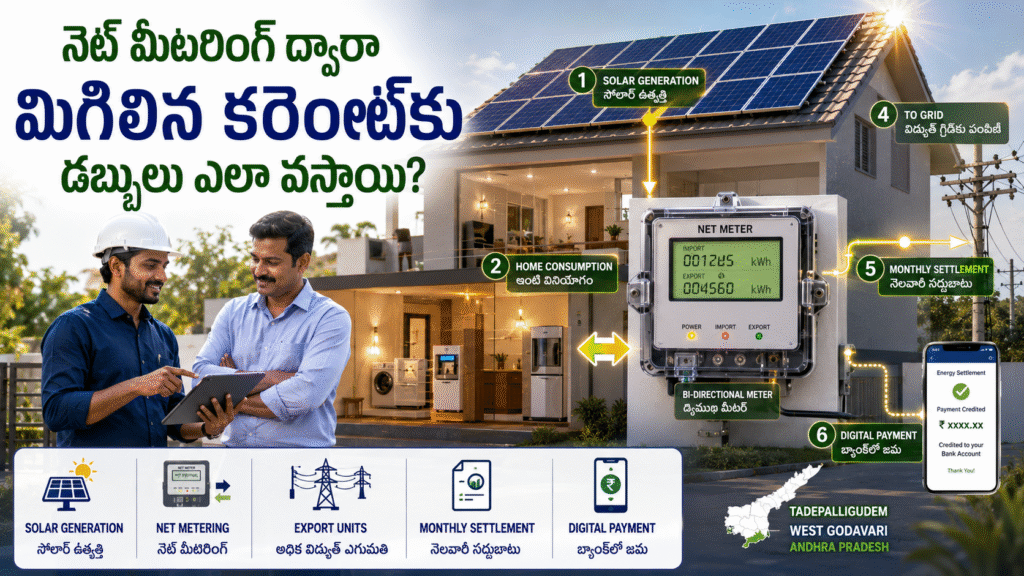
Net Meteringలో Solar నుంచి వచ్చిన విద్యుత్ను ముందుగా ఇంట్లోనే వినియోగిస్తారు. అదనంగా మిగిలిన విద్యుత్ Gridకి export అవుతుంది. Bidirectional Net Meter ఆ import మరియు export unitsను నమోదు చేస్తుంది. Billing cycleలో వర్తించే APERC settlement rules ప్రకారం net consumption లేదా net export లెక్కించబడుతుంది. Andhra Pradeshలో APERC 2026 ఆదేశం ప్రకారం Regulation 4 of 2023 కింద ఉన్న Solar Rooftop prosumersకు excess exported energyకి payments electronic transfer ద్వారా monthlyగా చేయాలని DISCOMలకు ఆదేశించింది.
Net Metering అంటే అసలు ఏమిటి?
సులభంగా అర్థం చేసుకోవాలంటే:
☀️ Solar ఎక్కువ ఉత్పత్తి చేస్తే
Solar → ఇంటి Load + Grid
🌥️ Solar తక్కువగా ఉత్పత్తి చేస్తే
Grid → ఇంటి Load
అంటే మీ ఇల్లు Gridతో ఒక two-way electricity relationshipలో ఉంటుంది.
APEPDCL కూడా Net Metering ద్వారా surplus Solar unitsను Gridకి export చేసే విధానం గురించి వినియోగదారులకు సమాచారం అందిస్తోంది.
Net Meter ఎలా పనిచేస్తుంది?
సాధారణ electricity meter ఒక దిశలో consumptionను కొలుస్తుంది.
కానీ Solar Net Meter:
Import + Export
రెండు directionsలో energy flowను నమోదు చేస్తుంది.
ఉదాహరణకు:
- Grid నుంచి తీసుకున్నది → 500 units
- Solar నుంచి Gridకి పంపింది → 300 units
అయితే net energy:
500 − 300 = 200 units
అనే ప్రాతిపదికన settlement జరుగుతుంది, వర్తించే regulatory rulesకు లోబడి. MNRE FAQ కూడా Net Meteringలో imported మరియు exported energyను bi-directional meter ద్వారా నమోదు చేసి billing cycle చివర net energyను లెక్కించే విధానాన్ని వివరిస్తుంది.
అయితే మిగిలిన Solar కరెంట్కు డబ్బులు ఎలా వస్తాయి?
ఇది ముఖ్యమైన విషయం.
Andhra Pradeshలో APERC 2026 ఫిబ్రవరి press note ప్రకారం Solar Rooftop Regulation 4 of 2023 మరియు 2025 amendment కింద ఉన్న prosumersకు monthly energy settlement and billing అమలు చేయాలని, అలాగే Gridకి export చేసిన excess energyకి సంబంధించిన paymentను electronic transfer ద్వారా consumerకు చేయాలని DISCOMలకు ఆదేశించింది.
అంటే eligible caseలో:
Solar Generation → Self Consumption → Export → Monthly Settlement → Applicable Payment → Bank/Electronic Transfer
అనే ప్రక్రియ ఉండవచ్చు.
అయితే ఒక ముఖ్యమైన విషయం: Retail Electricity Rate రావడం లేదు
ఇది చాలా మంది చేసే పెద్ద పొరపాటు.
మీరు Grid నుంచి electricity కొనుగోలు చేసే rate మరియు surplus Solarను DISCOM settle చేసే rate ఒకటే కావాల్సిన అవసరం లేదు.
APERC regulationsలో Feed-In Tariff వంటి settlement mechanismకు ప్రత్యేక provision ఉంటుంది. ఉదాహరణకు APERC Group Net Metering frameworkలో net exported energyకి DISCOM Commission నిర్ణయించిన Feed-In Tariff ప్రకారం payment చేయాలని పేర్కొంది.
అందువల్ల:
“నేను ₹X/unitకు electricity కొంటున్నాను కాబట్టి export చేసిన Solarకు కూడా ₹X/unit వస్తుంది” అని అనుకోవద్దు.
Net Metering vs Net Billing vs Gross Metering
ఈ మూడు termsను అర్థం చేసుకోవడం చాలా ముఖ్యం.
| విధానం | ఎలా పనిచేస్తుంది? |
|---|---|
| Net Metering | Solar ముందుగా self-consumptionకు, excess Gridకి; import/export ఆధారంగా net settlement |
| Net Billing | Billing cycleలో excess energy carry-forward కాకుండా predetermined tariffకు DISCOM purchase చేయవచ్చు |
| Gross Metering | Solar generation మొత్తాన్ని Gridకి export చేసి, predetermined tariff ప్రకారం payment పొందే విధానం |
MNRE FAQ కూడా ఈ మూడు mechanisms మధ్య తేడాలను వివరిస్తుంది.
ఒక Simple Example
ఒక ఇంట్లో ఒక నెలలో:
Solar Generation:
450 units
ఇంట్లో Solar Direct Consumption:
250 units
Gridకి Export:
200 units
అదే నెలలో ఇంటి మొత్తం electricity requirement:
400 units
అప్పుడు:
- Solar Direct Consumption = 250
- Grid Import = 150
- Grid Export = 200
ఇక్కడ final settlement మీ connectionకు వర్తించే APERC metering rules మరియు tariff mechanism ప్రకారం జరుగుతుంది.
అందువల్ల కేవలం:
450 − 400 = 50 units
అని చూసి “50 unitsకు నాకు retail electricity rate వస్తుంది” అని చెప్పడం సరైంది కాదు.
Solarలో Self-Consumption ఎందుకు ముఖ్యం?
ఇది Solar buyers తప్పక అర్థం చేసుకోవాల్సిన విషయం.
మీ Solar energyని ఇంట్లోనే వినియోగించడం సాధారణంగా చాలా విలువైనది.
ఉదాహరణకు పగటిపూట Solar ఉత్పత్తి అవుతున్న సమయంలో:
- Washing Machine
- Water Pump
- Refrigerator
- AC
- Computer
- EV Charger
వంటి loads నడిస్తే Solar generationలో ఎక్కువ భాగాన్ని ఇంట్లోనే ఉపయోగించుకోవచ్చు.
దీనివల్ల Grid నుంచి కొనాల్సిన electricity తగ్గుతుంది.
“Zero Bill” అంటే నిజంగా Zeroనా?
అవసరం లేదు.
MNRE FAQ ప్రకారం Solar system ద్వారా energy charges చాలా వరకు తగ్గవచ్చు, కానీ fixed charges వంటి ఇతర charges ఉండే అవకాశం ఉంది. కొన్ని రాష్ట్రాల్లో surplus powerకు revenue mechanism ఉంటే bill మరింత తగ్గవచ్చు.
అందువల్ల:
Solar పెట్టించుకుంటే ప్రతి నెల తప్పకుండా ₹0 electricity bill వస్తుంది
అనేది సరైన general claim కాదు.
Tadepalligudemలో Solar Users ఏం తెలుసుకోవాలి?
Tadepalligudemలో rooftop solar installation చేసుకునే వినియోగదారులు తమ connectionకు వర్తించే local DISCOM process, net-metering approval మరియు settlement mechanismను installationకు ముందు నిర్ధారించుకోవాలి.
APEPDCL తన official websiteలో:
- PM Surya Ghar Solar Registration
- New Solar Registration
- Solar Additional Capacity Registration
- Domestic Net Meter Payment
- Virtual Net Metering
వంటి Solar-related servicesను అందిస్తోంది.
అందువల్ల Tadepalligudem Solar Installation కోసం vendor మాటపైనే ఆధారపడకుండా official DISCOM processను కూడా cross-check చేయడం మంచిది.
West Godavariలో Solar పెట్టుకునే ముందు 5 విషయాలు
1. గత 12 నెలల Electricity Bills చూడండి
ఒక్క నెల bill ఆధారంగా Solar capacity నిర్ణయించవద్దు.
2. Daytime Consumption తెలుసుకోండి
మీరు Solar ఉత్పత్తి అయ్యే సమయంలో ఎంత electricity ఉపయోగిస్తున్నారో చూడండి.
3. Roof Shadow Analysis చేయించండి
నీడ ఎక్కువగా ఉంటే expected generation తగ్గవచ్చు.
4. Net Metering Eligibility తెలుసుకోండి
మీ connection category మరియు applicable rulesను నిర్ధారించుకోండి.
5. Export Settlementను ముందే అర్థం చేసుకోండి
“Excess unitsకు ఎంత settlement వస్తుంది?” అనే ప్రశ్నను vendorను మాత్రమే కాకుండా applicable DISCOM/APERC rules ద్వారా verify చేయండి.
APEPDCLలో Net Metering గురించి ఒక ముఖ్యమైన Update
APEPDCL official websiteలో ప్రస్తుతం Net Metering (Solar) మరియు Solar-related registration/payment services అందుబాటులో ఉన్నాయి.
అంతేకాకుండా, APERC July 2025లో PM Surya Ghar పరిధిలోని domestic consumersకు application fee మరియు net-metering cost exemptionను ఇతర eligible domestic consumersకూ extend చేయాలని DISCOMలకు ఆదేశించింది.
ఇలాంటి regulatory changes కారణంగా పాత YouTube videos లేదా పాత blog postsలో ఉన్న rates/processను blindly follow చేయకపోవడం మంచిది.
Solar Installationలో ఒక పెద్ద అపోహ
❌ తప్పు:
“Solar 1 unit generate చేస్తే Government నాకు 1 unit electricity price ఇస్తుంది.”
✅ సరైన అర్థం:
Solar generationలో మీకు అవసరం లేని energy Gridకి export అవుతుంది. దాని settlement మీకు వర్తించే metering mechanism, APERC rules మరియు applicable tariff/payment mechanism ప్రకారం జరుగుతుంది.
Apartment Societiesకు ఇది ఎలా వర్తిస్తుంది?
Apartment Solarలో విషయం మరింత interesting అవుతుంది.
ఒక Society:
- Common Area Solar
- Group Net Metering
- Virtual Net Metering
వంటి mechanismsలో ఏది వర్తిస్తుందో తెలుసుకోవాలి.
Andhra Pradeshలో APERC Group/Virtual Net Meteringకు సంబంధించిన frameworkను కూడా రూపొందించింది.
అందువల్ల Tadepalligudem Apartment Solar కోసం individual flat bill, common meter మరియు group metering arrangementలను కలిపి చూడాలి.
Solar System కొనుగోలు చేసే ముందు Vendorను అడగాల్సిన 7 ప్రశ్నలు
- నా connectionకు ఏ metering mechanism వర్తిస్తుంది?
- నా Solar system నుంచి excess energy ఎలా settle అవుతుంది?
- ప్రస్తుతం applicable export settlement/feed-in tariff ఏమిటి?
- Net meter installation process ఏమిటి?
- DISCOM approval ఎవరు coordinate చేస్తారు?
- Monthly settlement ఎలా కనిపిస్తుంది?
- Fixed charges మరియు ఇతర billing components ఏమవుతాయి?
ఈ ప్రశ్నలకు స్పష్టమైన సమాధానం ఇవ్వలేని vendor దగ్గర Solar project తీసుకునే ముందు రెండుసార్లు ఆలోచించండి.
VMJ Solar Solutions సూచన
VMJ Solar Solutionsను సంప్రదించే ముందు మీ:
- Latest Electricity Bill
- Previous 12 Months Bills
- Consumer Number
- Roof Details
- Daytime Electricity Usage
వంటి వివరాలు సిద్ధంగా ఉంచుకోవడం ఉపయోగకరం.
VMJ Solar Solutions Tadepalligudem మరియు West Godavariలో Solar feasibility, system sizing, rooftop assessment, net-metering documentation guidance మరియు professional installationకు సహాయం చేయగలదు.
అయితే export rate, subsidy లేదా government paymentను ముందుగానే guarantee చేయడం సరైనది కాదు. అవి వర్తించే regulatory framework మరియు DISCOM settlementపై ఆధారపడి ఉంటాయి.
తరచుగా అడిగే ప్రశ్నలు (FAQs)
1. Net Meteringలో మిగిలిన Solar కరెంట్కు డబ్బులు వస్తాయా?
Eligible casesలో excess exported energyకు applicable settlement rules ప్రకారం payment రావచ్చు. Andhra Pradeshలో APERC 2026 directions ప్రకారం eligible SRT prosumersకు excess export payments electronic transfer ద్వారా monthlyగా చేయాలని DISCOMలకు ఆదేశించింది.
2. Solar exportకు నా electricity bill rateనే ఇస్తారా?
అవసరం లేదు. Export settlementకు వర్తించే tariff/feed-in mechanism వేరుగా ఉండవచ్చు.
3. Net Meteringలో electricity bill పూర్తిగా zero అవుతుందా?
కొన్ని పరిస్థితుల్లో energy charges చాలా వరకు లేదా పూర్తిగా offset కావచ్చు. కానీ fixed charges మరియు ఇతర applicable charges ఉండవచ్చు.
4. Net Meter మరియు Gross Meter మధ్య తేడా ఏమిటి?
Net Meteringలో self-consumption మరియు Grid import/export రెండూ పరిగణనలోకి వస్తాయి. Gross Meteringలో Solar generation మొత్తాన్ని Gridకి export చేసి predetermined tariff ప్రకారం payment పొందే విధానం ఉంటుంది.
5. Tadepalligudemలో Net Metering కోసం ఎవరిని సంప్రదించాలి?
మీ connectionకు వర్తించే DISCOM processను అనుసరించాలి. APEPDCL official portalలో Solar మరియు Net Metering services అందుబాటులో ఉన్నాయి.
6. Solar ఎక్కువ electricity ఉత్పత్తి చేస్తే ఎక్కువ డబ్బులు వస్తాయా?
అవసరం లేదు. Solar capacityను కేవలం export income కోసం oversized చేయడం సరైన approach కాదు. మీ consumption pattern, applicable metering mechanism మరియు economic feasibility ఆధారంగా system size నిర్ణయించాలి.
7. Net Meteringలో Grid లేకపోతే Solar electricity వాడవచ్చా?
సాధారణ grid-tied system safety కారణాల వల్ల grid outage సమయంలో పనిచేయదు. Backup కోసం appropriately designed hybrid/battery system అవసరం కావచ్చు.
ముగింపు
Net Metering అంటే ప్రభుత్వం మీ Solar Panels నుంచి వచ్చిన ప్రతి అదనపు unitకు మీ electricity billలో ఉన్న అదే rate చెల్లిస్తుంది అనే అర్థం కాదు.
ముందుగా Solar electricityను ఇంట్లోనే వినియోగిస్తారు. అదనంగా మిగిలిన electricity Gridకి export అవుతుంది. ఆ తర్వాత metering mechanism, APERC regulations మరియు applicable tariff/settlement framework ఆధారంగా excess energyకు adjustment లేదా payment జరుగుతుంది.
Andhra Pradeshలో ఈ విషయం మరింత ముఖ్యమైనది, ఎందుకంటే APERC 6 February 2026న eligible Solar Rooftop prosumersకు monthly settlement మరియు excess export paymentను electronic transfer ద్వారా చేయాలని DISCOMలకు స్పష్టమైన directions ఇచ్చింది.
అందువల్ల Tadepalligudem మరియు West Godavariలో Solar పెట్టుకునే ముందు “నా bill ఎంత తగ్గుతుంది?” అనే ప్రశ్నతో పాటు “నా excess generation ఎలా settle అవుతుంది?” అనే ప్రశ్న కూడా తప్పకుండా అడగండి.
VMJ Solar Solutions స్థానిక Solar feasibility, system sizing, rooftop assessment మరియు net-metering process guidance ద్వారా మీ Solar investmentను సరైన technical మరియు financial assumptionsపై ప్లాన్ చేసుకోవడంలో సహాయపడుతుంది.