Most homeowners focus on three things when considering solar:
- Solar panel price
- System size
- Expected electricity savings
However, one of the most important factors affecting solar performance is often overlooked:
Shadow Analysis
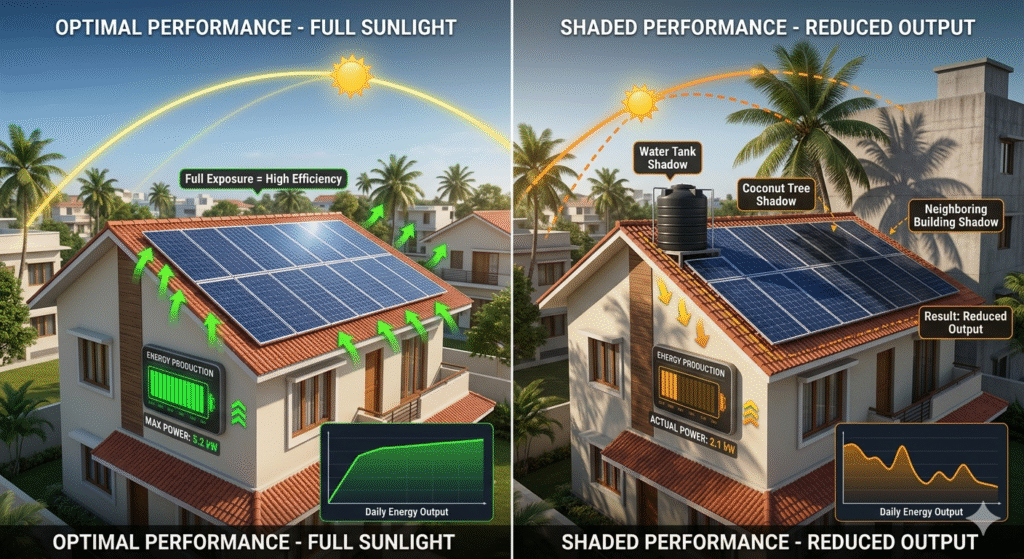
Even a high-quality solar system installed on a perfectly sized roof can underperform if shadows from nearby objects block sunlight.
Trees, water tanks, neighboring buildings, mobile towers, chimneys, and even future construction projects can significantly impact solar energy production.
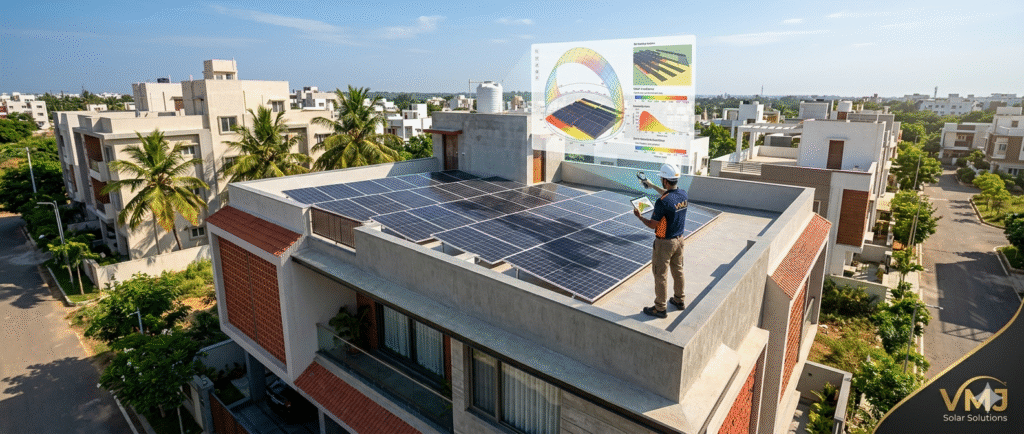
At VMJ Solar Solutions, shadow analysis is considered one of the most important steps during the solar site survey process because it helps ensure that homeowners get realistic performance and savings expectations.
This article explains:
- What solar shadow analysis is
- Why it matters
- How shadows affect solar panels
- Common sources of shading in Andhra Pradesh
- How professional installers evaluate solar suitability
Understanding shadow analysis before installation can help homeowners avoid costly mistakes and maximize long-term solar ROI.
What Is Solar Panel Shadow Analysis?
Solar shadow analysis is the process of identifying and evaluating objects that may block sunlight from reaching solar panels.
The goal is to determine:
- How much sunlight the roof receives
- Which areas remain shade-free
- When shadows occur during the day
- How seasonal sun movement affects solar generation
This information helps installers design the most efficient solar layout.
Why Sunlight Matters So Much
Solar panels generate electricity when sunlight reaches their photovoltaic cells.
More sunlight generally means:
✔ Higher electricity generation
✔ Better system performance
✔ Greater energy savings
✔ Faster return on investment
Less sunlight means reduced power production.
Even partial shading can affect overall system output.
Can a Small Shadow Really Make a Difference?
Yes — More Than Most People Realize
Many homeowners assume:
“Only a small portion of my panel is shaded, so the impact must be small.”
Unfortunately, solar systems do not always work that way.
In traditional panel configurations, shading on one section can reduce the performance of connected solar cells.
This is why even minor shadows deserve careful evaluation before installation.
Common Sources of Solar Panel Shadows
1. Water Tanks
One of the most common shading sources in Andhra Pradesh homes.
Overhead tanks often cast shadows during:
- Morning hours
- Late afternoon hours
depending on roof orientation.
2. Nearby Buildings
Urban areas frequently experience:
- Multi-story construction
- Apartment developments
- Commercial buildings
These structures may create seasonal shading patterns.
3. Trees
Large trees provide cooling and environmental benefits, but they can also create significant solar shading.
Common examples include:
- Coconut trees
- Mango trees
- Neem trees
- Palm trees
4. Mobile Towers
Telecommunication towers near residential areas can create unexpected shadow zones.
5. Chimneys and Ventilation Structures
Industrial and commercial buildings often have rooftop structures that interfere with solar panel placement.
6. Future Construction
A roof may appear ideal today but face shading issues later if nearby development occurs.
This is one reason professional assessments consider surrounding properties.
Why Shadow Analysis Is Especially Important in Andhra Pradesh
Andhra Pradesh enjoys excellent solar potential because of:
- High solar irradiation
- Long sunny seasons
- Favorable weather conditions
However, local environments also create shading challenges.
Examples include:
Urban Areas
Cities such as:
- Vijayawada
- Visakhapatnam
- Guntur
- Tirupati
often have closely spaced buildings.
Rural Areas
Homes may face shading from:
- Tall agricultural trees
- Water storage structures
- Farm buildings
Each site requires individual assessment.
How Shadows Affect Solar ROI
Reduced Energy Generation
When sunlight is blocked:
- Less electricity is generated
- Solar savings decrease
- Payback periods may increase
Lower Net Metering Benefits
A system producing less electricity will export less excess power to the grid.
This can affect overall financial returns.
Reduced Long-Term Value
Solar is a long-term investment.
Even small performance losses accumulated over many years can impact total energy production.
What Happens During Professional Shadow Analysis?
Professional solar installers use several methods to evaluate shading.
Roof Inspection
The first step involves assessing:
- Roof dimensions
- Available installation area
- Obstructions
- Sun exposure
Surrounding Environment Assessment
Installers examine:
- Neighboring structures
- Trees
- Utility poles
- Future shading risks
Seasonal Sun Path Evaluation
The sun does not follow the same path throughout the year.
A roof that appears sunny in summer may experience different shading patterns during winter months.
Professional analysis considers these seasonal variations.
Solar Design Optimization
After evaluating shading conditions, installers determine:
- Best panel locations
- Panel spacing
- System orientation
- Inverter configuration
to maximize production.
Can Shading Be Minimized?
Often, Yes
Several design strategies can reduce shading impact.
Better Panel Placement
Sometimes shifting panel placement by only a few feet can improve exposure significantly.
Tree Trimming
Responsible trimming may improve solar access while preserving landscape value.
Optimized System Design
Modern solar systems may use technologies that help reduce the effect of partial shading.
The suitability depends on the project’s technical requirements.
Roof Selection
Some properties have multiple roof sections.
Choosing the best roof surface often improves long-term performance.
Common Mistakes Homeowners Make
Mistake #1: Assuming All Roof Areas Are Equal
Different parts of the same roof may receive vastly different sunlight levels.
Mistake #2: Ignoring Future Growth of Trees
A small tree today may become a significant shading issue in a few years.
Mistake #3: Choosing Installers Without Site Analysis
Online estimates and remote quotations cannot replace an actual shadow assessment.
Mistake #4: Prioritizing Panel Quantity Over Sunlight Quality
More panels do not always mean more electricity if shading reduces performance.
Residential vs Commercial Shadow Analysis
Residential Systems
Homeowners typically deal with:
- Trees
- Water tanks
- Neighboring homes
Commercial and Industrial Systems
Commercial projects may face:
- Large rooftop equipment
- Cooling towers
- Chimneys
- Elevated structures
This makes shadow analysis even more critical for larger installations.
Why Accurate Solar Estimates Depend on Shadow Analysis
Many advertised solar savings figures assume:
- Perfect sunlight
- No shading
- Ideal installation conditions
Real-world performance varies.
Accurate shadow analysis helps provide realistic expectations regarding:
- Energy production
- Savings potential
- ROI projections
The Role of Smart Solar Design
Modern solar projects are no longer about simply placing panels wherever space is available.
Today’s solar design process considers:
- Sun path analysis
- Shading patterns
- Roof orientation
- Electrical optimization
- Future expansion possibilities
This approach improves long-term performance and customer satisfaction.
Frequently Asked Questions (FAQs)
1. What is solar shadow analysis?
It is the process of identifying and measuring shading that may affect solar panel performance before installation.
2. Can a small shadow reduce solar output?
Yes. Even partial shading can impact overall system performance depending on system design and panel configuration.
3. What causes solar panel shading?
Common sources include:
- Trees
- Buildings
- Water tanks
- Mobile towers
- Chimneys
- Utility structures
4. Can shadow problems be fixed after installation?
Some issues can be improved through redesign, relocation, trimming vegetation, or system upgrades, but prevention is usually more cost-effective.
5. Is shadow analysis necessary for every solar project?
Yes. Every property has unique conditions that should be evaluated before installation.
6. Does shading affect solar ROI?
Absolutely. Reduced sunlight means lower electricity generation, which can impact savings and long-term returns.
Final Thoughts
Solar panels perform best when they receive consistent, unobstructed sunlight.
That is why solar shadow analysis is one of the most important steps in the installation process.
A professional assessment helps homeowners:
✔ Maximize electricity generation
✔ Improve long-term savings
✔ Avoid costly design mistakes
✔ Increase solar ROI
✔ Ensure realistic performance expectations
The success of a solar system depends not only on the quality of the panels but also on where and how they are installed.
For homeowners and businesses in Andhra Pradesh considering rooftop solar installation, net metering, energy-efficient home upgrades, or commercial solar projects, working with experienced professionals like VMJ Solar Solutions can help ensure your solar investment starts with the right foundation: access to sunlight.