
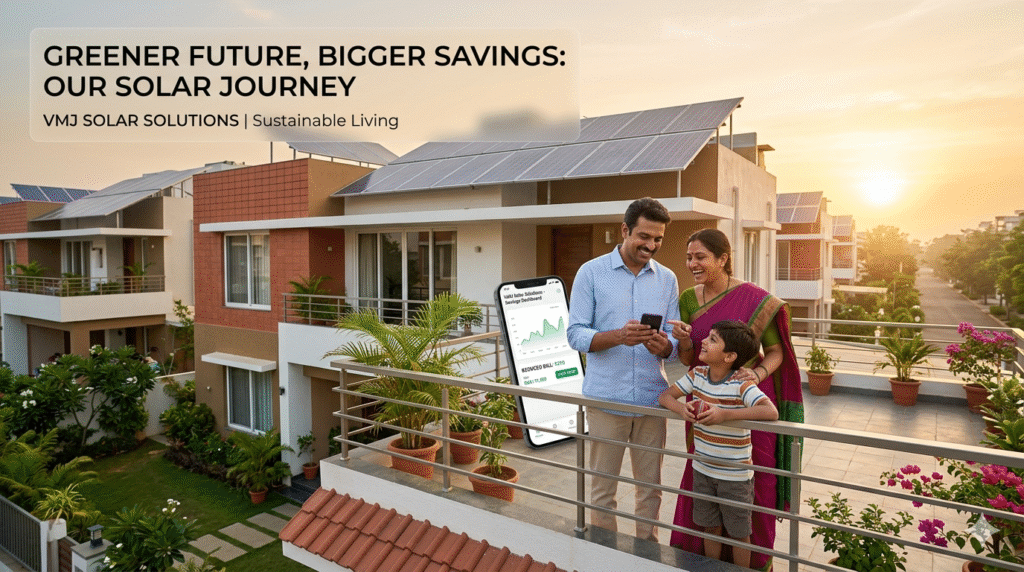
Is Solar Really Affordable for Andhra Pradesh Homeowners?
Electricity bills across Andhra Pradesh are steadily rising, especially for households using air conditioners, borewell motors, water heaters, and multiple appliances. From Vijayawada to Guntur, Nellore to Visakhapatnam, many homeowners are now asking the same question:
“Can I install solar panels without paying a huge upfront cost?”
The answer is increasingly becoming yes.
With the availability of solar EMI financing, homeowners no longer need to invest lakhs of rupees at once. Instead, they can install a rooftop solar system and pay for it through manageable monthly installments — often using the same money they were already spending on electricity bills.
At VMJ Solar Solutions, many customers across Andhra Pradesh are discovering that a properly designed solar system can significantly reduce their monthly EB bill while improving long-term energy security and property value.
This guide explains how solar EMI works, what realistic savings look like in Andhra Pradesh, and what homeowners should consider before making the switch.
What Is a Solar EMI?
A Solar EMI (Equated Monthly Installment) is a financing option that allows homeowners to install a solar power system and repay the cost over time through monthly payments.
Instead of paying Rs2 lakh–Rs5 lakh upfront for a rooftop solar installation, customers can choose financing plans offered by:
- Banks
- NBFCs (Non-Banking Financial Companies)
- Solar financing partners
- Green energy loan programs
This approach makes renewable energy adoption more accessible for middle-income households and independent homeowners.
How Solar EMI Works in Real Life
Let’s understand this with a realistic Andhra Pradesh example.
Example: 3kW Residential Solar System in Andhra Pradesh
A family in Vijayawada consumes around 350–450 units per month.
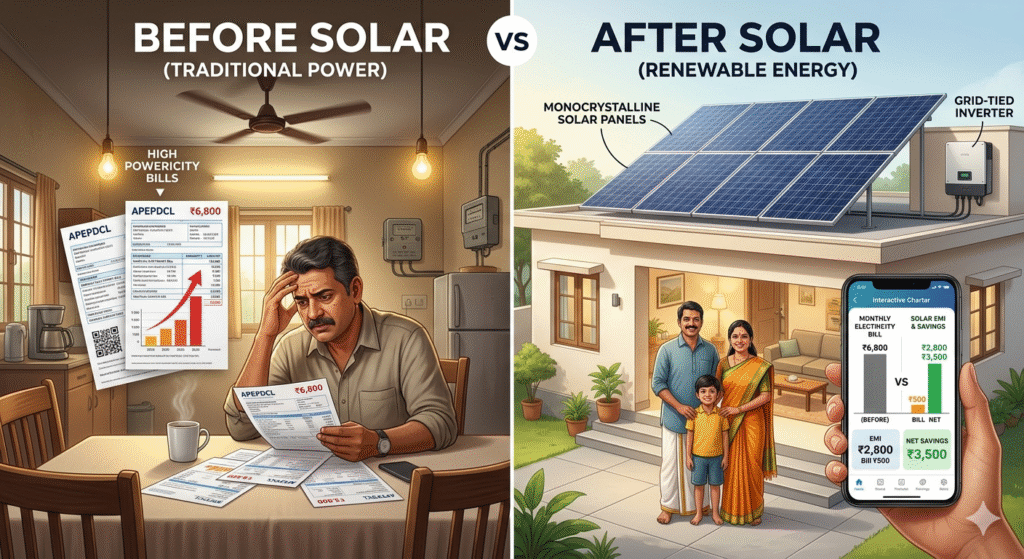
Before Solar
- Monthly electricity bill: Rs3,500–Rs5,000
- Annual power cost: Rs42,000–Rs60,000
After Installing Solar Panels
A properly installed 3kW rooftop solar system may reduce grid dependency substantially during daytime usage.
Approximate Scenario
- Solar EMI: Rs3,000–Rs4,500/month
- Reduced electricity bill: Rs500–Rs1,500/month
- Total monthly outgoing: Often comparable to previous EB bill
This is why many homeowners say:
“Instead of paying the electricity department every month, I’m investing in my own power system.”
However, savings vary based on:
- Roof size
- Sunlight exposure
- Household consumption
- Net metering approval
- Usage patterns
- Seasonal changes
A professional site inspection is essential before estimating returns.
Why Andhra Pradesh Is Ideal for Rooftop Solar
1. Strong Sunlight Availability
Andhra Pradesh receives high solar irradiation for most of the year, making it favorable for solar energy generation.
Cities like:
- Vijayawada
- Tirupati
- Rajahmundry
- Kurnool
- Guntur
- Visakhapatnam
experience long sunny periods that support efficient rooftop solar performance.
2. Rising Electricity Tariffs
Power tariffs for residential consumers have gradually increased over the years.
For households with:
- Air conditioners
- EV charging
- Water pumps
- Commercial home offices
- Apartments with high usage
solar becomes increasingly attractive as a long-term energy cost management solution.
3. Net Metering Benefits
Under Andhra Pradesh rooftop solar policies, eligible systems may qualify for net metering, allowing excess electricity to be exported back to the grid.
This can improve overall savings potential when used correctly.
However:
- Approval timelines vary
- Documentation is important
- DISCOM regulations may change over time
Working with an experienced installer like VMJ Solar Solutions can help simplify the process.
Can Electricity Savings Really Pay for the Solar Loan?
The Short Answer: Partially or Substantially — Depending on Usage
One of the biggest misconceptions is that solar eliminates electricity bills completely.
In reality:
What Solar Can Do
✔ Reduce daytime grid dependency
✔ Lower monthly electricity expenses
✔ Stabilize long-term energy costs
✔ Offset future tariff increases
What Solar Cannot Guarantee
✘ Zero bill in every season
✘ Full backup during power cuts without batteries
✘ Same savings for every household
The key idea is this:
Your electricity savings help offset your EMI burden.
Over time, once the loan is completed, the homeowner benefits from lower operating costs for many more years.
Key Benefits of Installing Solar Panels
1. Lower Monthly Electricity Bills
This is the primary reason most Andhra Pradesh homeowners invest in rooftop solar.
Homes with consistent daytime usage often benefit the most.
2. Long-Term Financial Predictability
Electricity prices may continue increasing over time.
Solar helps reduce exposure to future tariff hikes.
3. Improved Property Appeal
Energy-efficient homes are increasingly attractive in the Indian real estate market.
Features like:
- Rooftop solar
- Energy-efficient appliances
- EV readiness
can positively influence buyer perception.
While solar does not automatically guarantee higher resale value, it can improve overall marketability.
4. Sustainable Living
Solar energy supports:
- Reduced dependence on fossil fuels
- Lower carbon emissions
- Cleaner energy adoption
For environmentally conscious homeowners, this is an important lifestyle decision.
Important Factors to Consider Before Taking Solar EMI
Roof Condition Matters
A weak or shaded roof may reduce solar efficiency.
Before installation:
- Check roof age
- Identify shadow areas
- Ensure sufficient space
Understand the Loan Terms
Always review:
- Interest rate
- Processing fee
- EMI tenure
- Prepayment conditions
- Warranty terms
Low EMI plans may sometimes involve longer repayment periods.
Battery Backup Is Separate
Many homeowners assume solar automatically works during power cuts.
In reality:
- Standard on-grid systems shut down during outages for safety
- Battery storage requires additional investment
Discuss backup expectations clearly before purchase.
Choose the Right Solar Installer
Installation quality significantly affects long-term performance.
Look for:
- Proper system sizing
- Quality panels and inverter
- After-sales service
- Local experience
- Net metering assistance
Why Homeowners Prefer Local Solar Companies
Working with a local installer in Andhra Pradesh often provides advantages such as:
- Faster site visits
- Better service support
- Local DISCOM familiarity
- Regional climate understanding
VMJ Solar Solutions focuses on helping homeowners understand realistic savings instead of exaggerated promises.
That matters because solar is a long-term infrastructure investment, not a shortcut to instant profits.
Frequently Asked Questions (FAQs)
1. What is the average cost of rooftop solar in Andhra Pradesh?
The cost depends on:
- System size
- Panel type
- Roof structure
- Inverter quality
- Battery requirements
Residential systems commonly range from smaller 2kW setups to larger 5kW+ installations.
2. Will solar completely eliminate my electricity bill?
Not necessarily.
Savings depend on:
- Consumption habits
- Weather
- Net metering
- System size
- Night-time usage
Many homeowners still receive a smaller residual bill.
3. Is solar EMI better than paying upfront?
It depends on financial comfort.
EMI options help reduce upfront burden, while outright purchase may reduce total financing costs over time.
4. How long do solar panels last?
Most quality solar panels are designed for long operational lifespans, often 20–25 years or more, though efficiency gradually declines over time.
5. Does solar work during rainy season?
Yes, but generation is lower during cloudy or monsoon periods compared to peak summer months.
6. Can I install solar on an old house?
Possibly — if the roof is structurally suitable.
A technical inspection is recommended before installation.
7. Is net metering available in Andhra Pradesh?
Net metering policies exist, but approval processes and regulations may vary depending on the local electricity authority and current policy framework.
Final Thoughts
For many Andhra Pradesh homeowners, rooftop solar is no longer just an environmental decision — it is becoming a practical financial strategy.
The biggest shift is psychological:
Instead of treating electricity as a permanent monthly expense, homeowners are beginning to view solar as an asset that can gradually offset energy costs over time.
A well-planned solar installation combined with a suitable EMI option may help households:
- Improve energy efficiency
- Reduce long-term electricity dependency
- Support sustainable living
- Gain greater control over future utility expenses
The key is realistic expectations, quality installation, and choosing a system tailored to actual usage needs.
If you are exploring solar panels in Andhra Pradesh, solar EMI financing, or rooftop solar solutions for homes, consulting experienced local professionals like VMJ Solar Solutions can help you make an informed decision based on your property, energy consumption, and budget goals.