
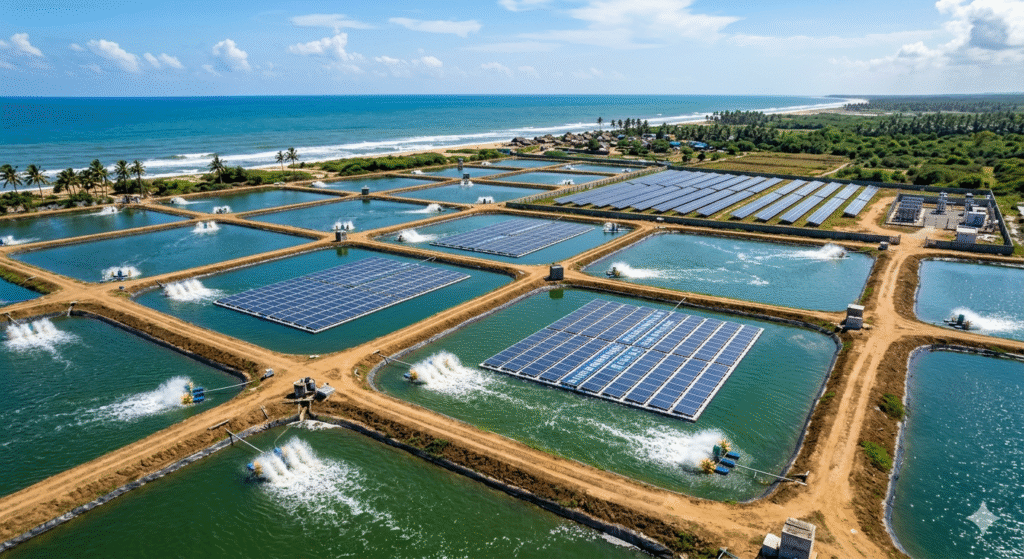
Aquaculture and prawn farming are among the most energy-dependent agricultural businesses in Andhra Pradesh.
From aerators and water pumps to lighting and monitoring systems, electricity is critical for maintaining healthy pond conditions and protecting productivity. But there’s a growing problem:
Energy costs are rising while power reliability remains inconsistent in many coastal and rural regions.
For prawn farmers, even short power interruptions can create serious operational risks.
That’s why more farm owners are beginning to explore solar energy—not as an environmental trend, but as a practical business decision.
For businesses working with providers like VMJ Solar Solutions, the real opportunity is not simply reducing electricity bills. It’s building more reliable and cost-efficient farm operations over the long term.
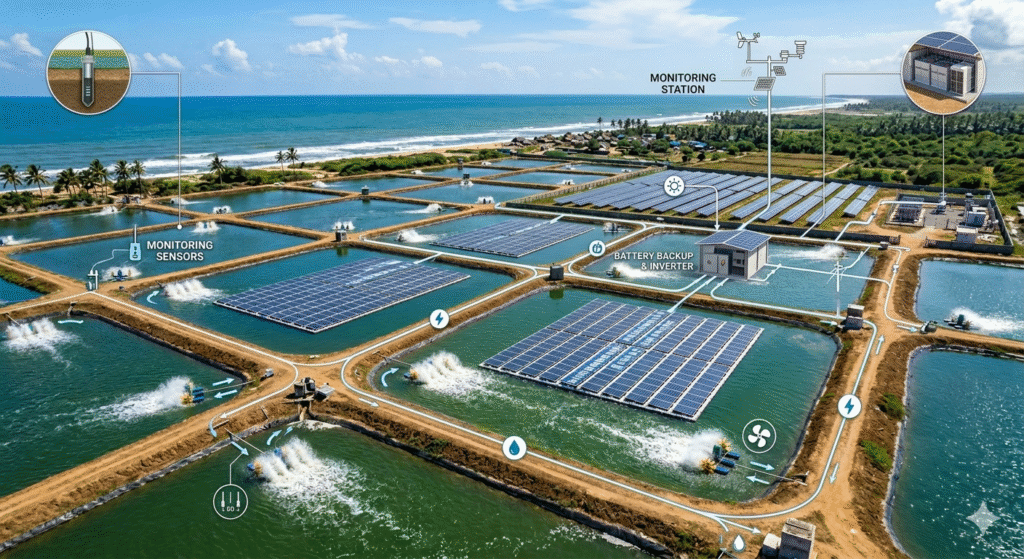
Why Aquaculture Requires So Much Electricity
Modern aquaculture systems depend heavily on electrical equipment.
Common energy-consuming systems include:
- Aerators
- Water circulation pumps
- Feed automation systems
- Pond lighting
- Monitoring and control equipment
In intensive prawn farming, aeration alone can consume significant electricity for long operating hours every day.
This creates two major problems:
- High operating expenses
- Dependence on stable power supply
Why Andhra Pradesh Is Ideal for Solar Aquaculture
Andhra Pradesh is one of India’s leading aquaculture and shrimp farming states.
It also has:
- Strong solar radiation throughout the year
- Large open land areas
- High daytime electricity usage in farms
This makes solar integration particularly practical for coastal farming operations.
How Solar Power Is Used in Prawn Farming
1. Running Aerators
Aerators are critical because they maintain dissolved oxygen levels in ponds.
Without proper aeration:
- Shrimp growth slows
- Disease risk increases
- Mortality rates can rise rapidly
Solar systems can help offset the heavy daytime energy usage from aerators.
2. Powering Water Pumps
Pumps are used for:
- Water exchange
- Pond filling
- Drainage operations
Solar-powered pumping systems reduce dependence on diesel generators and unstable grid supply.
3. Supporting Monitoring Systems
Modern farms increasingly use:
- Water quality sensors
- Automated monitoring equipment
- Smart farm management systems
Solar can reliably support these low-to-medium power applications.
4. Hybrid Backup Support
Many farms use solar in combination with:
- Grid electricity
- Battery storage
- Diesel generators
This hybrid approach improves reliability instead of depending entirely on one power source.
The Biggest Financial Advantage: Daytime Energy Offset
This is where solar aligns particularly well with aquaculture.
Most farm energy demand happens during daytime hours when:
- Solar generation is strongest
- Aerators and pumps are actively operating
This direct consumption model improves solar efficiency and reduces grid dependence.
Can Solar Completely Run a Prawn Farm?
In some cases, partially.
In most cases, not entirely.
Here’s the realistic view:
Solar works best for:
- Reducing daytime electricity costs
- Supporting essential equipment
- Lowering diesel dependency
Challenges include:
- Nighttime operations
- Continuous aeration needs
- Monsoon variability
That’s why many successful farms use hybrid energy systems, not solar-only setups.
Battery Storage: Is It Necessary?
Not always—but it can help.
Battery systems become useful when farms need:
- Backup during outages
- Nighttime operation support
- Stable power for sensitive equipment
However:
- Batteries significantly increase system cost
- Long-duration backup becomes expensive at larger scales
For many farms, partial battery integration is more practical than full storage dependency.
Key Factors Before Installing Solar on a Farm
✔ Understand Actual Energy Usage
Many farms install improperly sized systems because they underestimate or overestimate demand.
Energy audits are important.
✔ Prioritize Critical Loads
Not every system needs solar backup.
Start with:
- Aerators
- Pumps
- Monitoring systems
These provide the biggest operational impact.
✔ Consider Environmental Conditions
Coastal Andhra Pradesh presents challenges like:
- Salt exposure
- Humidity
- Corrosion risks
System design and component quality matter significantly in these environments.
✔ Plan for Future Expansion
Farm operations often scale over time.
A flexible solar design allows future additions without complete redesign.
Challenges Farmers Should Realistically Expect
❌ High Initial Investment
Commercial solar systems for aquaculture are not cheap upfront.
❌ Maintenance Requirements
Solar systems require:
- Panel cleaning
- Electrical inspections
- Monitoring
Coastal dust and salt conditions increase maintenance importance.
❌ Weather Dependence
Solar generation fluctuates during:
- Monsoons
- Cloudy periods
- Cyclonic weather conditions
Backup planning remains essential.
Why Diesel Dependency Is Becoming a Problem
Many farms still rely heavily on diesel generators during outages.
But diesel comes with growing disadvantages:
- Fuel price volatility
- High operating costs
- Noise and emissions
- Maintenance burden
Solar helps reduce—not necessarily eliminate—this dependency.
The Bigger Shift: Smarter Farm Infrastructure
This is the real long-term trend.
Aquaculture is becoming more technology-driven:
- Automated feeding
- Water quality monitoring
- Data-based farm management
- Energy optimization
Solar increasingly becomes part of a broader infrastructure modernization strategy—not just a utility upgrade.
Conclusion
Solar power is becoming an increasingly practical solution for aquaculture and prawn farming in Andhra Pradesh.
It helps farms:
- Reduce electricity costs
- Improve operational reliability
- Lower diesel dependency
- Support long-term sustainability
But the smartest approach is not blindly installing solar panels. It’s designing an energy system around the actual operational needs of the farm.
For providers like VMJ Solar Solutions, the real value lies in helping aquaculture businesses build energy infrastructure that supports both productivity and long-term financial stability.
Because in modern aquaculture, energy management is no longer a side issue—it’s part of operational success.
Frequently Asked Questions (FAQs)
1. Can solar power run aquaculture aerators?
Yes, especially during daytime operations when solar generation is strongest.
2. Is battery storage necessary for prawn farms?
Not always. Many farms use hybrid systems combining solar, grid power, and generators.
3. Does solar reduce diesel generator usage?
Yes. Solar can significantly reduce dependence on diesel for daytime operations
4. Are solar systems suitable for coastal areas?
Yes, but corrosion-resistant components and proper installation are important
5. How much maintenance does a farm solar system need?
Regular cleaning and periodic electrical inspections are necessary for reliable performance.
6. Is solar financially practical for small farms?
It depends on energy usage and system size, but even partial solar integration can help reduce operating costs.