
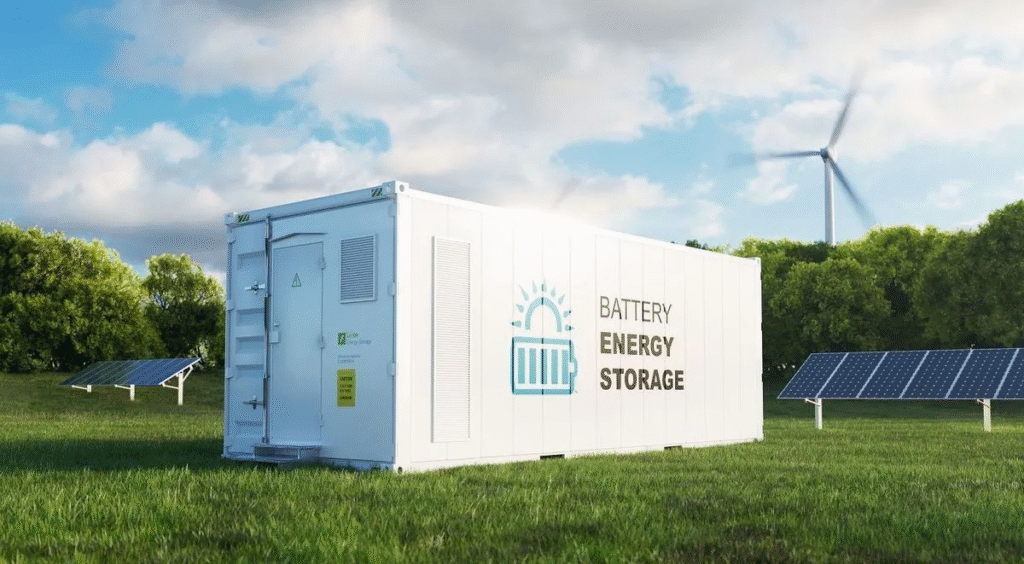
Battery Energy Storage Systems (BESS) are transforming how homes, businesses, and industries use energy. But here’s the most important question: How do you size a BESS correctly?
Sizing a BESS is not just about picking a battery with a big number. If your system is oversized, you waste money. If it’s undersized, you won’t get the performance you expect.
At VMJ Solar, we guide customers through the right calculations to ensure their solar + storage system delivers maximum value. This blog will help you understand the step-by-step process of sizing a BESS for your needs.
Step 1: Understand Your Energy Needs
The first step is analyzing how much energy you consume.
- Check your monthly electricity bills.
- Identify daily consumption (kWh/day).
- Note your peak usage hours (e.g., evenings for homes, daytime for industries).
👉 Example: A household consuming 15 kWh/day may want to back up 8–10 kWh with storage.
Step 2: Decide Your Application
The right size depends on what you want your BESS to do:
- Backup Power: Only store enough for essential appliances.
- Peak Shaving / Demand Shifting: Cover power during expensive tariff hours.
- 100% Off-Grid: Store enough to meet all your energy needs, even at night.
- Solar + Storage Optimization: Store daytime solar generation to use at night.
Step 3: Calculate Storage Capacity (kWh)
Storage capacity is measured in kilowatt-hours (kWh).
Formula:
Daily Load: Your average daily consumption.
- Days of Autonomy: How many days you want backup (usually 1–2 for homes, 0.5–1 for industries).
- Safety Factor: 1.2 to 1.3 (to account for inefficiencies).
Battery Size (kWh) = Daily Load (kWh) × Days of Autonomy × Safety Factor
👉 Example:
For a home using 10 kWh/day, with 1 day autonomy:10 × 1 × 1.2 = 12 kWh battery required
Step 4: Consider Depth of Discharge (DoD)
Not all batteries allow full usage of their capacity.
- Lithium-ion batteries: 80–90% usable DoD.
- Lead-acid batteries: 50–60% usable DoD.
👉 So, a 10 kWh usable need may require a 12–13 kWh lead-acid battery, but only an 11 kWh lithium battery.
Step 5: Match Power Rating (kW)
- Energy (kWh) tells you how much electricity you can store.
- Power (kW) tells you how fast you can use it.
👉 Example:
- Running a 2-ton AC (~2 kW) and a fridge (0.5 kW) simultaneously needs a 2.5 kW inverter + battery power rating.
Always ensure the battery inverter matches your peak load requirements.
Step 6: Factor in Solar PV Generation
If you are coupling solar with storage:
- Check daily solar generation (depends on system size, sunlight hours).
- Ensure battery can store excess solar that isn’t used immediately.
👉 Example:
A 5 kW solar system in India produces ~20 kWh/day. If daytime use is 12 kWh, the battery should store ~8 kWh.
Step 7: Plan for Future Expansion
Energy needs grow over time — EVs, more appliances, or business expansion.
👉 Always size with scalability in mind. Lithium-ion modular systems are great for this.
Example Sizing Scenarios
| Application | Daily Load | Required Battery Size | Recommended Battery Type |
|---|---|---|---|
| Home Backup | 8 kWh | 10 kWh | Lithium-ion |
| Small Business | 25 kWh | 30–35 kWh | Lithium-ion / LiFePO₄ |
| Off-Grid Farmhouse | 15 kWh | 20 kWh + 2 days backup | Lithium-ion / Lead-acid |
| Industry Peak Shave | 100 kWh | 120 kWh | LiFePO₄ / Advanced chem. |
Why Proper Sizing Matters
- Avoids overspending on extra capacity.
- Ensures batteries run at optimal cycles (longer life).
- Delivers the right ROI on your investment.
- Guarantees uninterrupted power when you need it most.
VMJ Solar’s Expertise in Sizing BESS
At VMJ Solar, we don’t just install batteries — we design tailor-made solar + storage solutions based on your exact needs:
- Load analysis
- ROI calculations
- Safety and compliance checks
- Scalable future-proof systems
FAQs
1: Can I add more batteries later if my needs grow?
Yes, modular lithium systems make expansion easy.
2: How long does a BESS last?
Lithium-ion typically lasts 10–15 years (4,000–6,000 cycles).
3: Is bigger always better?
No. Oversizing increases costs without improving efficiency. Right-sizing is key.
Conclusion
Sizing a Battery Energy Storage System is about balancing your energy needs, solar generation, and financial goals. By calculating correctly, you can achieve maximum savings, security, and sustainability.
At VMJ Solar, we help households, businesses, and industries design the perfect-sized BESS that ensures reliability today and flexibility for tomorrow.
⚡ The right battery size = the right power for your future.